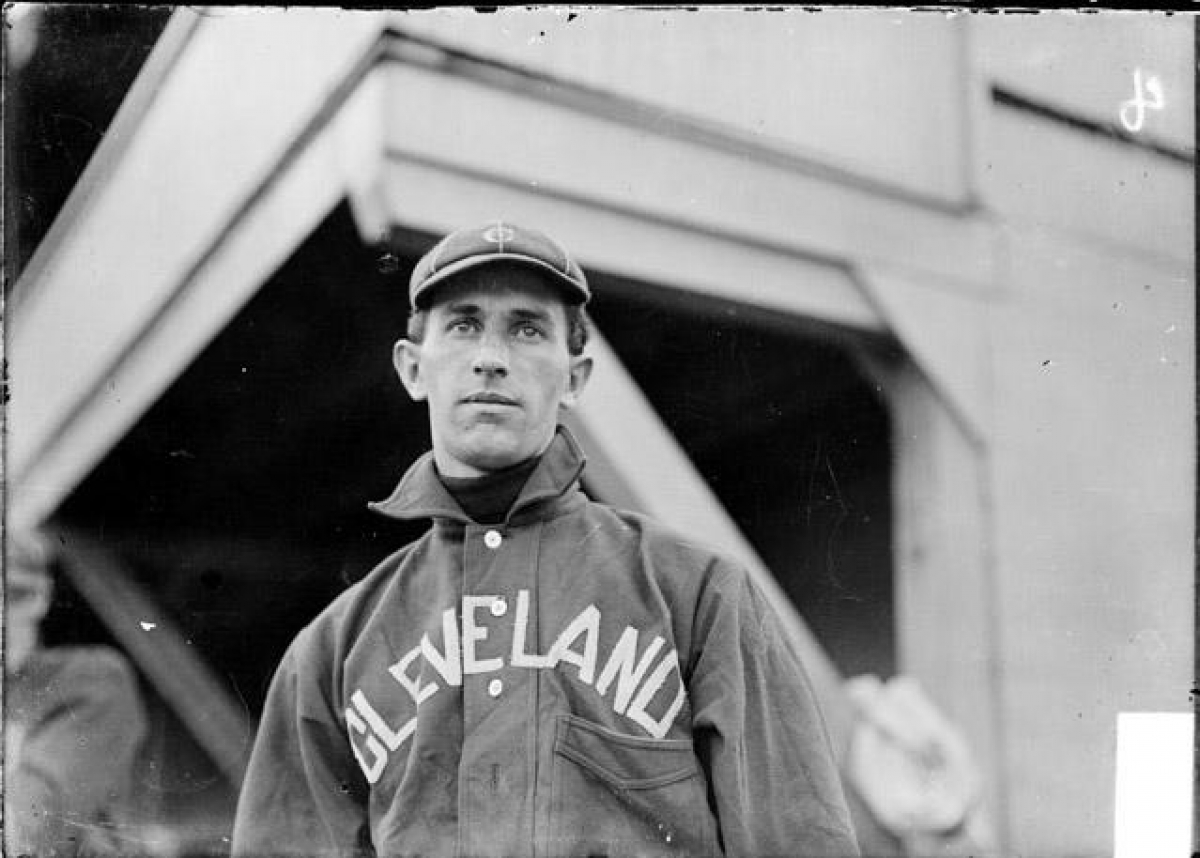
Bill Bradley’s migration to Cleveland in 1901 was a foundational moment for the fledgling American League club. He surfaced as the primary engine of the offense during the franchise's infancy, maturing instantly into one of the league’s most feared contact hitters. He authored a spectacular four-year run to open the century, surpassing 150 hits in each campaign and recording three different seasons with a batting average north of .300. His craftsmanship reached a unique level of dominance in 1902 when he became the first player in Major League history to hit a home run in four consecutive games, a feat of power that was almost unheard of in that low-scoring age.
The most impressive aspect of his longevity was a defensive capability that remained elite even as his offensive numbers began to subside. Bradley was a master of the barehanded play, a technician who patrolled third base with a specialized range that earned him a reputation as the finest defender of his generation. He was a model of specialized durability, serving as a high-frequency producer for a full decade and providing the veteran poise required to stabilize the infield. During his tenure, he was a high-leverage asset whose glove alone kept him at the center of the Cleveland lineup, consistently leading the league in putouts and double plays from third base.
His presence was defined by professional resilience and a physical style of play that earned him the respect of teammates and rivals alike. Bradley remained the heartbeat of the Cleveland infield through 1910, utilizing a workmanlike approach to navigate the demands of a decade that saw the team evolve from the "Blues" to the "Naps." Whether he was charging a bunt with a barehanded grab or maintaining his status as a .300 hitter during the peak of the deadball era, he competed with a focused intensity that made him a local favorite. He proved that a player could become a franchise pillar by mastering the specialized, high-stakes art of run prevention at the hot corner.
In 1910, he moved on to the International League, but he left the organization as a statistical titan of its earliest years. He departed with 1,265 hits in a Cleveland uniform, having established the defensive benchmarks that every third baseman in the city's history would eventually strive to reach.
Cleveland honored Bradley by inducting him into their franchise Hall of Fame.
Comments powered by CComment