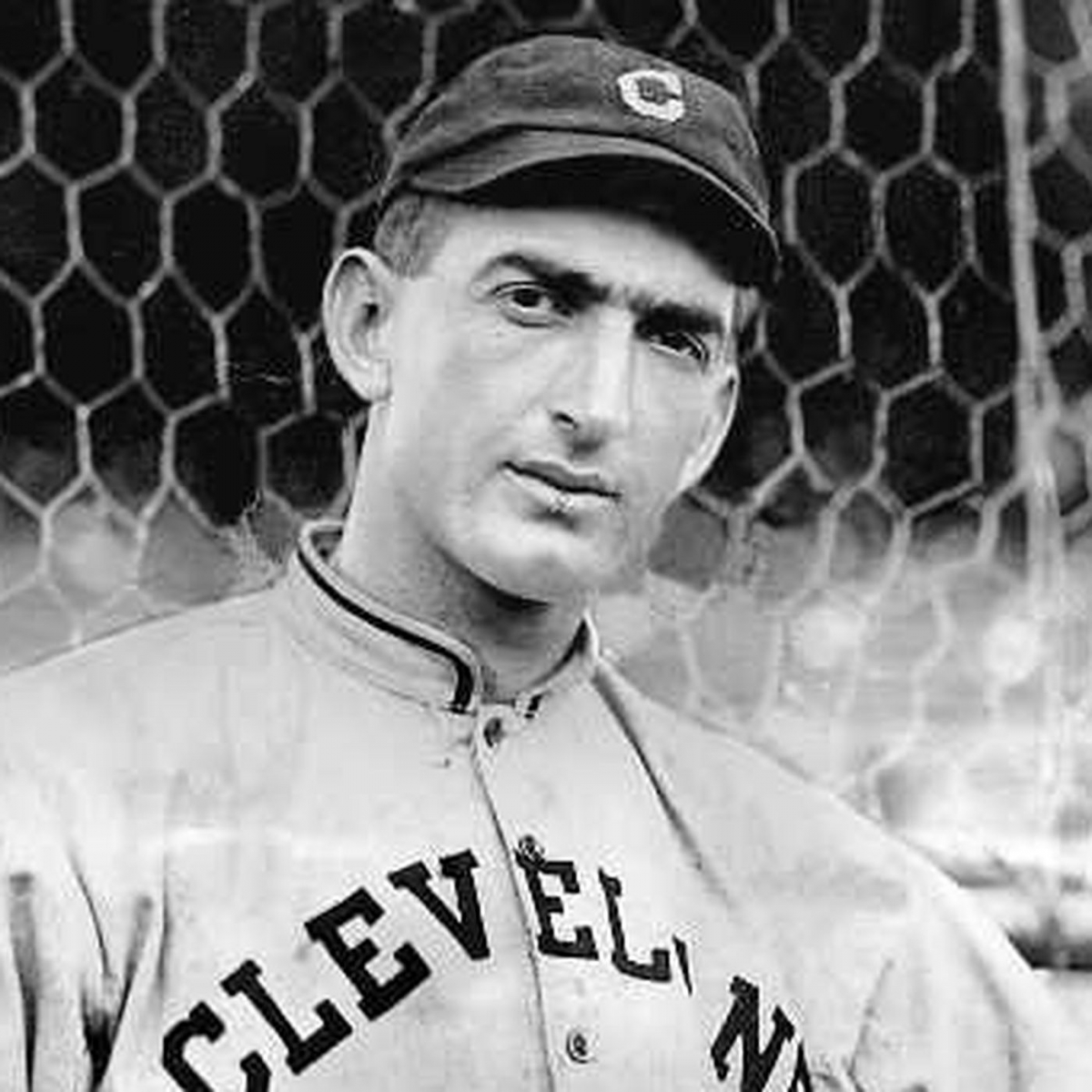
Shoeless Joe Jackson’s path to Cleveland was paved by his struggle to acclimate to the rigid environment of the Philadelphia Athletics. After appearing in just ten games across two seasons, his modest background and simple nature led to a disconnect with Connie Mack’s club. Regarded as an afterthought, he was sent to Cleveland as the "player to be named later" in a 1910 trade, a move that would become one of the most lopsided acquisitions in the history of the sport. Upon his arrival, Jackson found his footing and instantly matured into the most dangerous offensive force in the American League.
The three-year run that followed remains the high-water mark for hitting in a Cleveland uniform. In 1911, his first full campaign, Jackson produced a staggering .408 batting average with 233 hits and 19 triples, a performance that remains the franchise single-season record. He wasn't just a slap hitter; he was a master of the extra-base hit, leading the league in triples in 1912 and doubles in 1913. During this peak, he never saw his OPS dip below 1.000, and in 1913, he led the league in both on-base percentage and slugging, narrowly missing out on the MVP award. He treated the outfield gaps as his personal domain, punishing opposing pitchers with a level of consistency that defied the era’s low-scoring trends.
His presence on the field was defined by a quiet, uncomplicated brilliance and a defensive range in the outfield that often went overlooked because of his historic bat. Jackson was the heart of the Cleveland offense for six seasons, using "Black Betsy”, his legendary dark-stained bat, to command the respect of every peer in the game. Whether he was lacing a triple into the corner or maintaining a .375 career average with the club, he played with a raw, unrefined grace that made him a local immortal. He proved that a player could rise from the most humble beginnings to become the gold standard of professional hitting.
With the club struggling and Jackson’s production dipping slightly from his superhuman norms, the Indians traded their superstar to the Chicago White Sox for a package of players and cash. He left Cleveland as a statistical pillar whose .375 franchise average remains untouched to this day.
As a member of the Indians, Jackson compiled 937 hits, 168 doubles, and 89 triples with a historic .375/.441/.542 slash line.
Though the doors to Cooperstown were famously barred against him, the city where he truly flourished never forgot the man who made hitting look like art. In 1951, the organization provided the final punctuation to his local legacy by inducting "Shoeless" Joe Jackson into the inaugural class of the Cleveland Guardians Hall of Fame.
Comments powered by CComment