
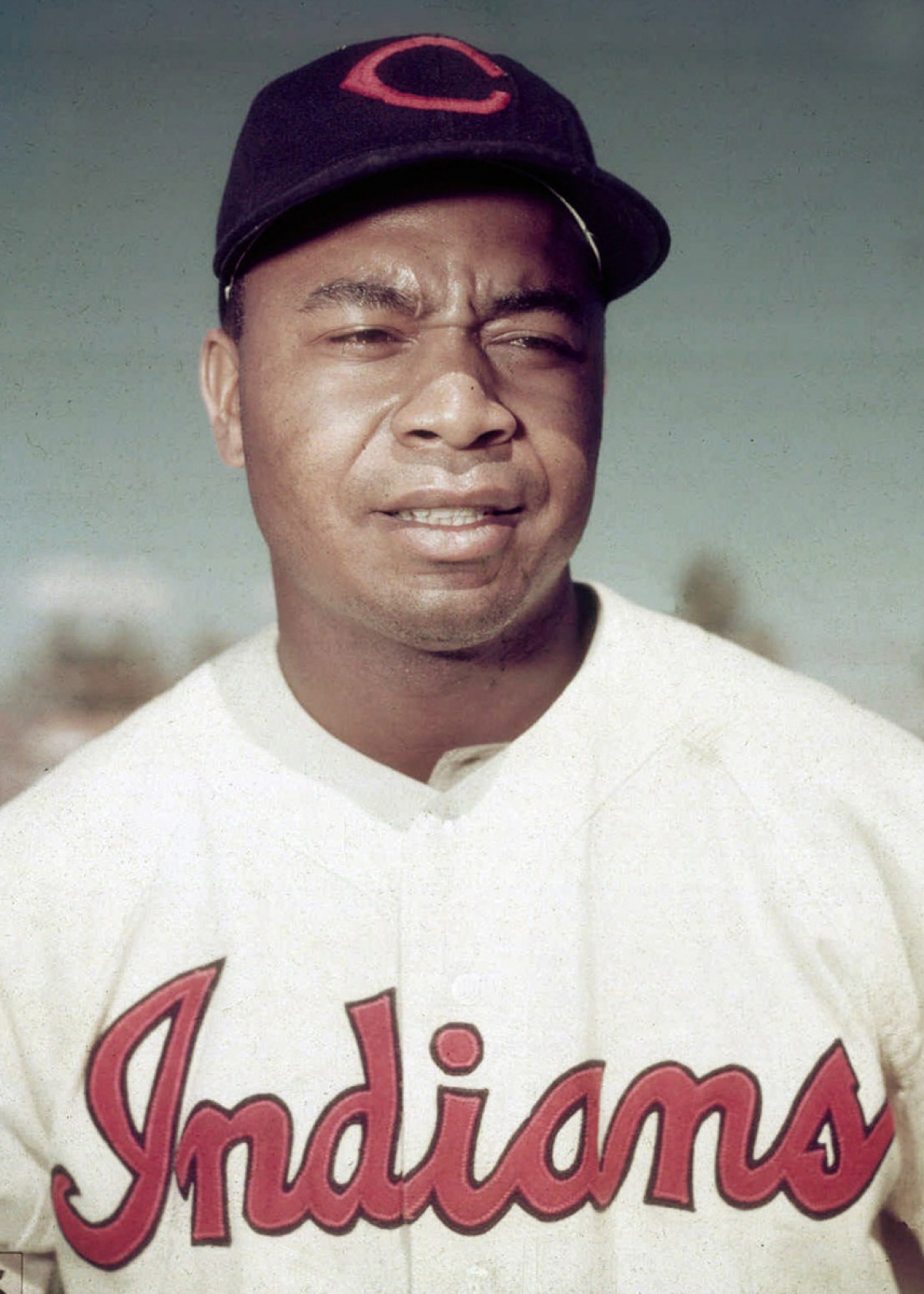

Doby’s journey in Cleveland began under the most intense scrutiny imaginable, but by 1948, he had matured into a foundational pillar of the franchise. He batted .301 that season, providing the offensive spark that helped propel the Indians to their historic World Series title. He arrived as a young star from the Newark Eagles and quickly evolved into a statistical titan, rattling off seven consecutive All-Star selections. During that remarkable stretch, Doby blasted at least 20 home runs in every single one of those seven seasons and twice captured the American League home run crown.
The peak of his efficiency was a masterclass in hitting. Doby was far more than a slugger; he was a sophisticated, patient technician at the plate. In 1950, he led the American League in both on-base percentage (.442) and OPS (.986), followed by a league-leading slugging percentage (.541) in 1952. He was a high-leverage nightmare for opposing pitchers, possessing a rare blend of plate discipline and raw strength that made him one of the most feared bats in the game. Whether he was tracking down fly balls in center or launching "taters" into the Cleveland night, he was the tactical engine of a lineup that consistently challenged for the pennant.
His identity was synonymous with a quiet dignity and a relentless pursuit of excellence. Doby spent the vast majority of his career in a Cleveland uniform, accumulating 215 home runs and serving as a model of consistency through the golden era of the franchise. Even after a brief stint with the White Sox, the pull of the lakefront brought him back for a second run in 1958, allowing him to add another chapter to a legacy built on breaking barriers and breaking records. He proved that greatness is the ultimate equalizer, silencing detractors with a swing that was as graceful as it was powerful.
The chapter of his playing days eventually transitioned into a period of historic reverence. The organization ensured his immortality by retiring his iconic number 14 in 1994, and he was inducted into the franchise Hall of Fame as early as 1964. The broader baseball world caught up in 1998 when the Veterans Committee elected him to the National Baseball Hall of Fame in Cooperstown.

Comments powered by CComment