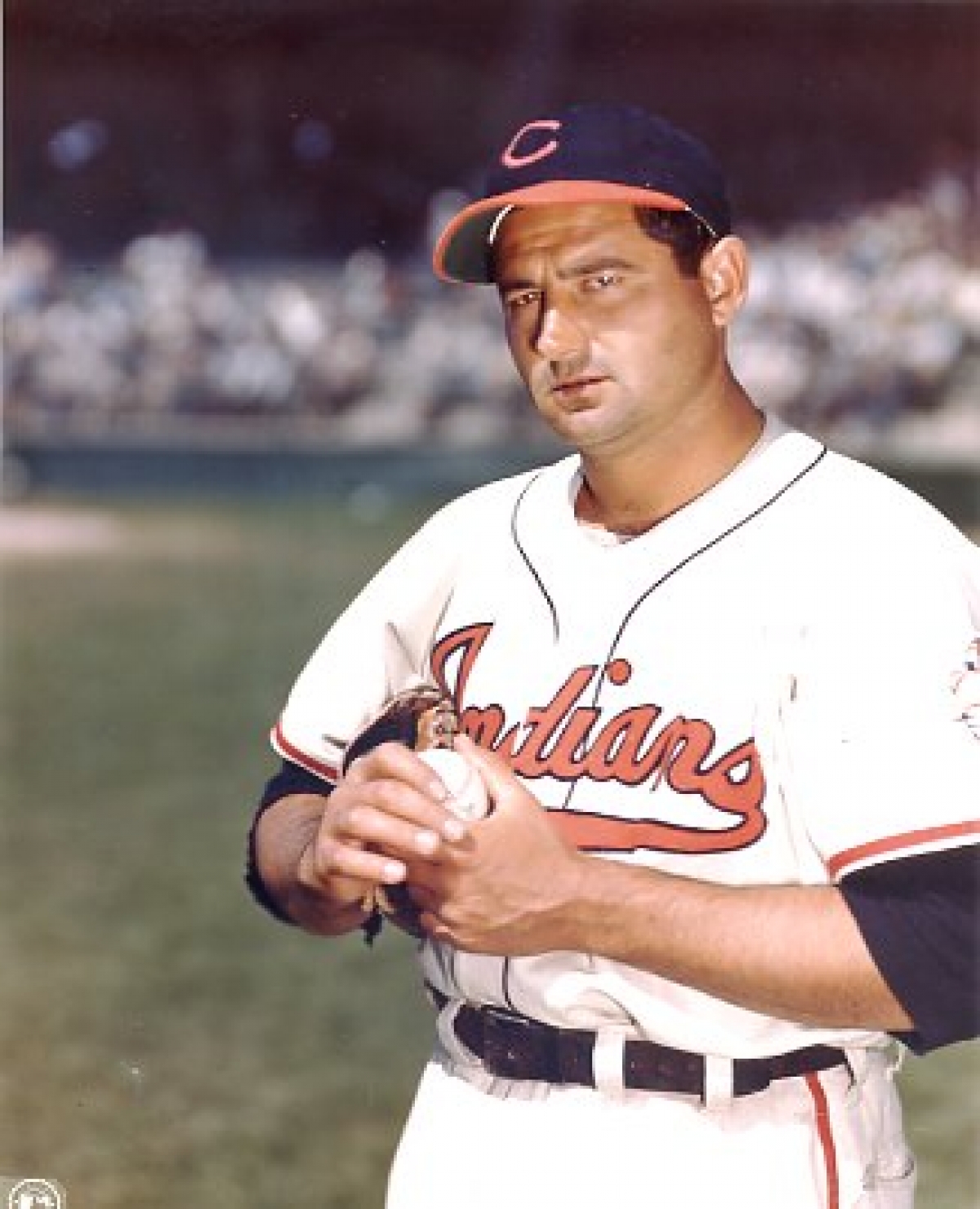
The American League landscape shifted in 1949 when Cleveland acquired Early Wynn, placing him alongside legends like Bob Feller and Bob Lemon. This environment pushed his game to a new stratosphere; after a solid debut season with the club, he authored a masterclass in efficiency in 1950. That year, he captured the ERA title while leading the league in WHIP, hits-per-nine innings, and strikeouts-per-nine. He arrived as a piece of the puzzle and instantly became an ace in his own right, providing a level of dominance that made the Cleveland staff the most feared unit in the sport.
The peak of his career was defined by a remarkable combination of durability and winning. Wynn rattled off four 20-win seasons in a Cleveland uniform, including a league-leading 23 victories during the historic 111-win campaign of 1954. His presence on the mound was defined by legendary toughness; he was a three-time All-Star for the Tribe and a perennial MVP candidate, finishing in the top six twice. He wasn't just piling up stats; he was the tactical hammer of the staff, a man who threw with a mean streak and a tireless arm that consistently led the league in innings pitched and batters faced.
Consistency remained his trademark even as he moved into his late thirties. Whether he was baffling hitters with a sharp curve or moving them off the plate with a purposeful fastball, Wynn was the ultimate professional workhorse. He concluded his primary stay in Cleveland following the 1957 season with a massive volume of production, including 164 wins and 1,277 strikeouts. His identity was that of a pitcher who refused to yield an inch of the plate, a mindset that eventually carried him through 23 Major League seasons.
The final chapter of his career offered a poetic return to the city where he enjoyed his greatest success. After being released by the White Sox in 1962, Wynn sat stuck at 299 career victories. Determined to reach the mountaintop, he signed back with the Indians for the 1963 season. In a moment of high-leverage drama, he secured that elusive 300th win in a Cleveland uniform before finally hanging up his cleats at the end of the year. It was a fitting conclusion for a man who had given his best years to the shores of Lake Erie.
The baseball world officially recognized his grit and greatness in 1972, electing him to the Hall of Fame in his fourth year of eligibility. That same year, the organization ensured his legacy would forever be part of the franchise fabric by inducting him into the Cleveland Indians Hall of Fame.
Comments powered by CComment