
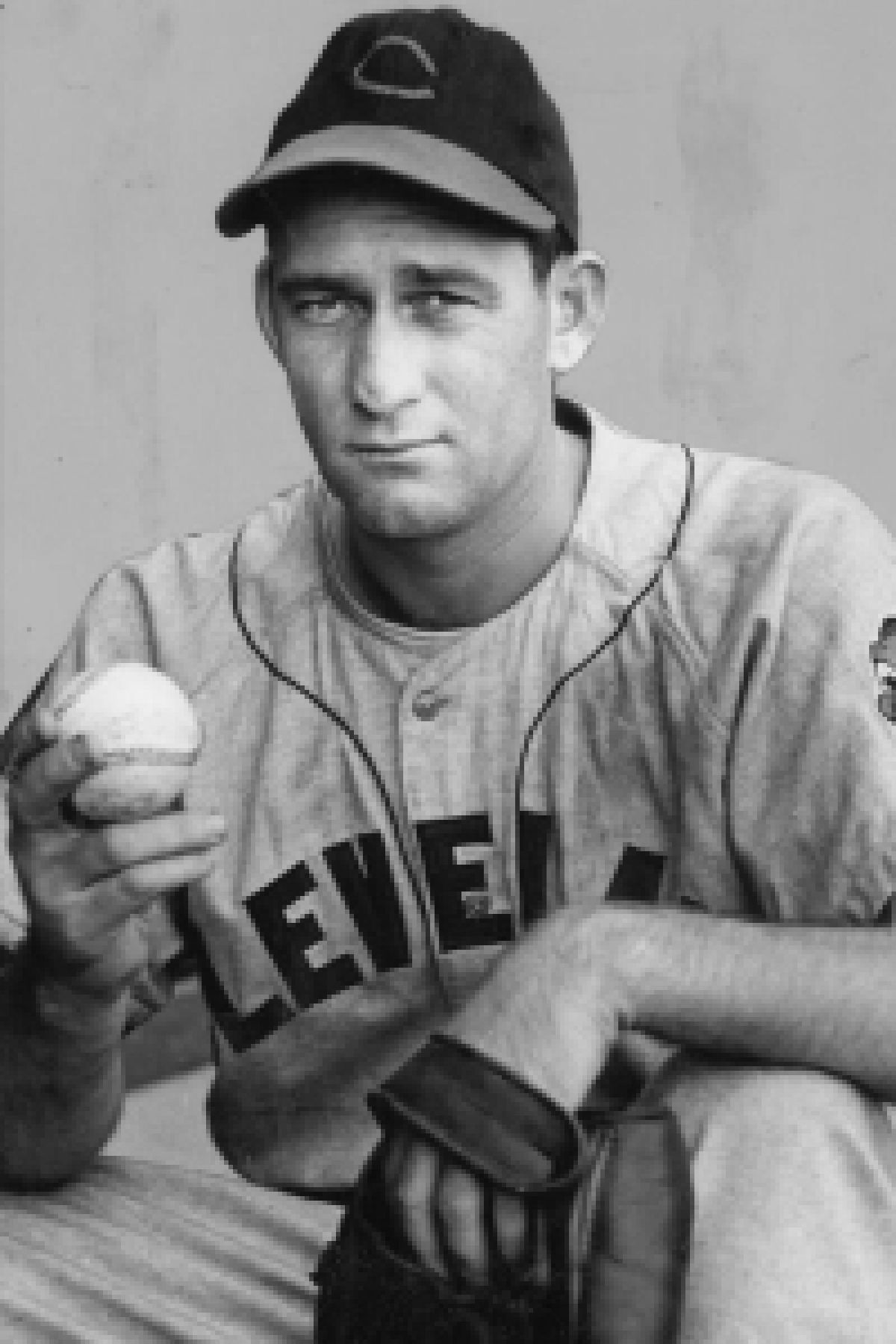




When Bob Lemon returned from military service in 1946, he had every intention of roaming center field for the Tribe. He even began the season with a spectacular diving catch that seemed to cement his future in the outfield. However, the Cleveland braintrust saw potential in his arm that surpassed his utility with a glove. In one of the most successful gambles in franchise history, they convinced Lemon to move to the mound full-time. He arrived as a middle-of-the-road outfielder and left his first few seasons as a developing project, but by 1948, the transformation was complete.
The peak of his residency, and the spark that ignited the last great Cleveland championship, arrived in 1948. Lemon didn't just transition to pitching; he dominated, tossing a no-hitter and winning 20 games while leading the American League in shutouts (10) and innings pitched (293.2). He was the high-efficiency engine of the World Series championship run, going 2-0 in the Fall Classic and proving that his run as a pitcher was no fluke. This began a staggering seven-year streak of All-Star selections, a period where Lemon became the definitive "Big Game" pitcher for the organization.
The middle of his journey was a masterclass in durability. Throughout the early 1950s, Lemon was a metronome of 20-win seasons, reaching that elite benchmark seven times in total. He was a workhorse in every sense of the word, leading the league in innings pitched four times and strikeouts once in 1950. While he was often overshadowed in the national media by flashier names, his peers knew the truth; he was named the Sporting News Pitcher of the Year three different times (1948, 1950, 1954). In the historic 111-win campaign of 1954, it was Lemon who led the staff with 23 wins, anchoring a rotation that is still whispered about in Cleveland as the greatest ever assembled.
Beyond the rubber, Lemon remained a dual-threat weapon. Because of his outfield roots, he was arguably the best-hitting pitcher of his era, batting .232 and collecting 274 hits as a Red. He spent all fifteen seasons of his playing career in a Cleveland uniform, finishing with 207 wins and a legacy of selflessness. He didn't just pitch for the Indians; he sacrificed his original dream to give the team the best chance to win.
The final walk toward the exit for Lemon came in 1958, but his relationship with the game was far from over, eventually leading him to a legendary managerial career. He was a first-ballot immortal in the hearts of Cleveland fans, entering the team Hall of Fame in 1960 and Cooperstown in 1976. The team rightfully retired his number 21 in 1998, a permanent tribute to the man who gave up his glove to give Cleveland a golden era.

Comments powered by CComment