
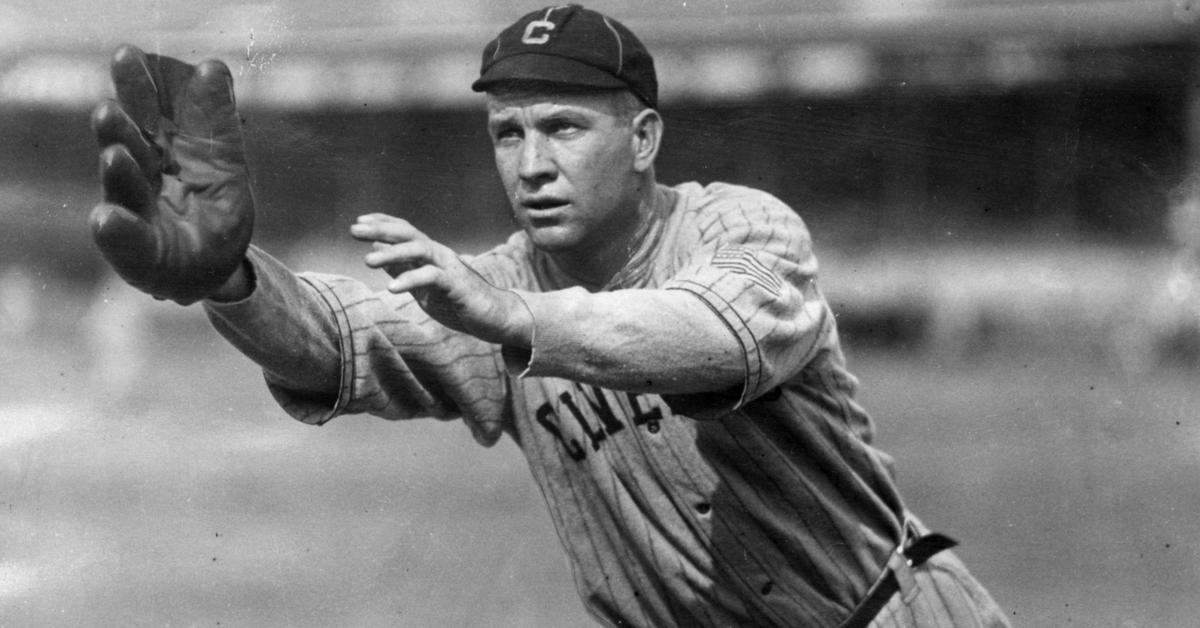


When Tris Speaker was traded to Cleveland in 1916, it was the result of a legendary insult. Despite batting .322, the Red Sox asked their superstar centerfielder to take a pay cut. Speaker’s refusal sent him to Cleveland, where he immediately set about dismantling American League pitching. In his debut season with the Indians, he proved his point with a thunderous campaign, capturing the 1916 Batting Title with a .386 average and leading the league in hits, doubles, and on-base percentage. He arrived as a disgruntled star and instantly became the premier face for a city hungry for a winner.
The peak of his residency saw Speaker revolutionize the way center field was played. Known as "The Gray Eagle," he played a notoriously shallow center field, so shallow that he frequently functioned as a fifth infielder, recording unassisted double plays and picking off runners at second base. He remains the all-time Major League leader in doubles, with 486 of his 792 career two-baggers coming in a Cleveland uniform. From 1916 to 1925, Speaker never batted below .310, serving as the most consistent high-volume producer in the organization's history.
The pinnacle of his leadership came in 1919, when he assumed the title of player-manager. Under the shadow of the tragic on-field death of teammate Ray Chapman in 1920, Speaker displayed a high level of leadership that willed the Indians to their first World Series title. He was a cerebral architect of the game, managing the rotation and the lineup while still batting .388 himself. He was the rare dual-threat who could out-think the opposing manager while simultaneously out-hitting the opposing pitcher.
However, the final walk toward the exit in 1926 was marked by a sudden resignation. While still a productive player, Speaker stepped down from his managerial post and was subsequently released, finishing his journey with brief stints in Washington and Philadelphia. He left Cleveland as a statistical titan, accumulating 1,965 hits and an incredible .354 average for the franchise, a mark that remains nearly untouchable in the record books.
Tris Speaker was a first-ballot immortal in the eyes of the baseball world, entering Cooperstown in 1937. Cleveland rightfully included him in their inaugural Hall of Fame class in 1951, forever cementing the "Gray Eagle" as the man who proved that loyalty is a two-way street, and that Boston’s loss was Cleveland’s eternal gain. He arrived as a man with a point to prove and left as a permanent monument to excellence on the lakefront.

Comments powered by CComment