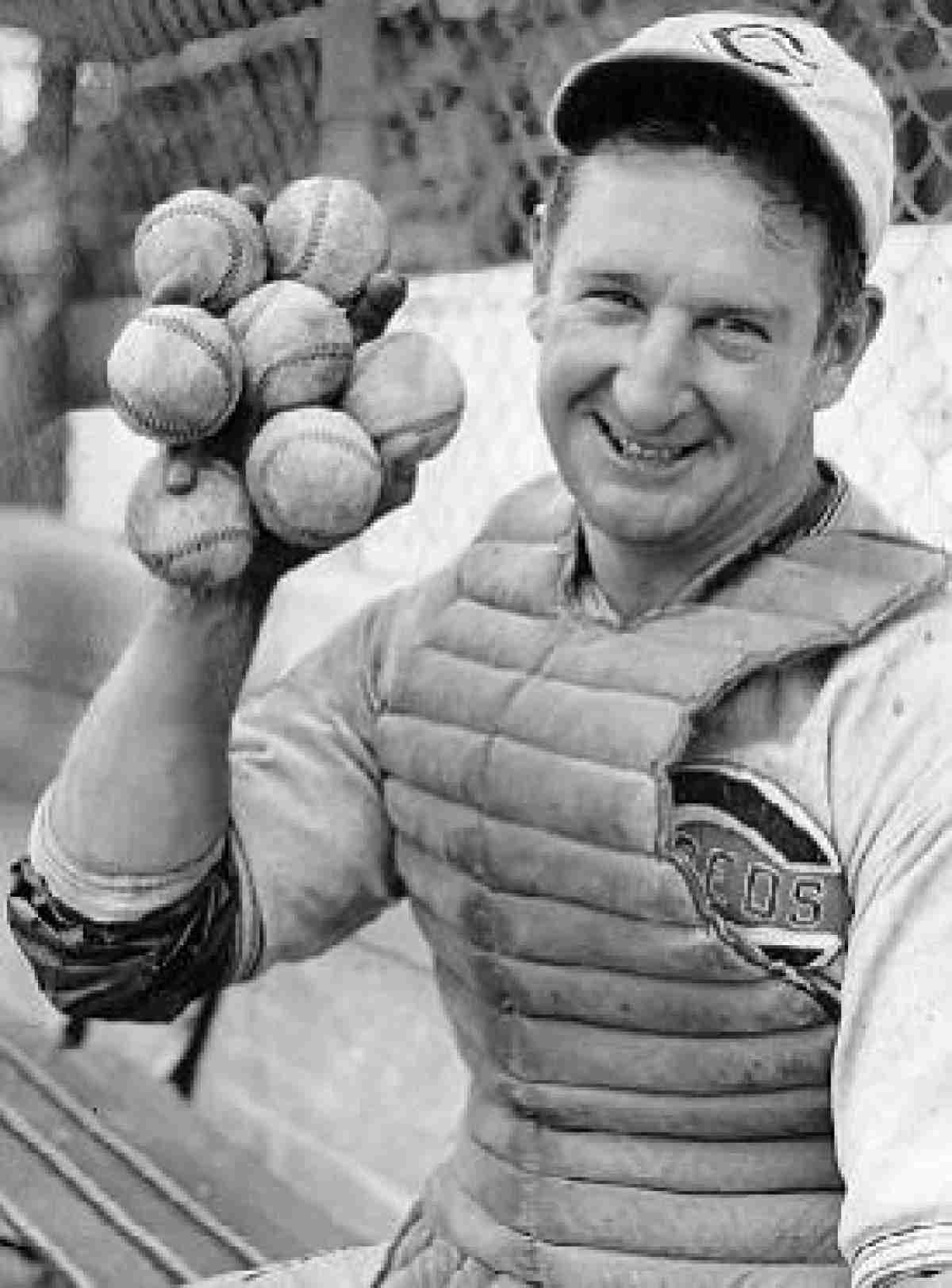
Arriving via Brooklyn in a trade, Ernie Lombardi established himself in the Cincinnati lineup in the early 30s and quickly morphed into the premier offensive catcher in the National League. He emerged with a specialized, interlocking grip and a swing that produced line drives of terrifying velocity, a necessity given that he had to hit the ball twice as hard as anyone else just to reach first base. Between 1935 and 1940, he authored a sustained stretch of excellence, recording seven different .300 campaigns for the Reds. He was a model of specialized efficiency, proving that a hitter could dominate the leaderboard without the benefit of speed, provided they possessed the most sophisticated hand-eye coordination of their generation.
The absolute high-water mark of his career arrived in 1938, a season of such profound dominance that he became a national icon. That summer, Lombardi stood as the undisputed king of the plate, capturing the National League Batting Title with a .342 average. His value was so undeniable that he was named the National League MVP, becoming a rare catcher to take home the hardware. He followed that masterpiece by serving as the tactical heartbeat of the 1939 and 1940 pennant-winning squads, providing the veteran poise and high-leverage bat that anchored the "Jungle Cats" through their 1940 World Series championship run.
Even though he lacked the "look" of a traditional athlete, he proved that a player could become the face of a franchise through a rare combination of raw power and elite contact skills. In 1942, Lombardi moved on to the Boston Braves, but he left as a World Series hero. He departed the city with a .311 average in a Reds uniform and a legacy as one of the most respected players to ever step onto the diamond.
The ultimate recognition of his impact arrived in waves, cementing his status as a permanent part of the game's architecture. In 1958, the organization selected him as one of the five legendary men comprising the inaugural Cincinnati Reds Hall of Fame class. The final punctuation on his storied career came in 1986, when Ernie Lombardi was posthumously inducted into the National Baseball Hall of Fame in Cooperstown.
Comments powered by CComment