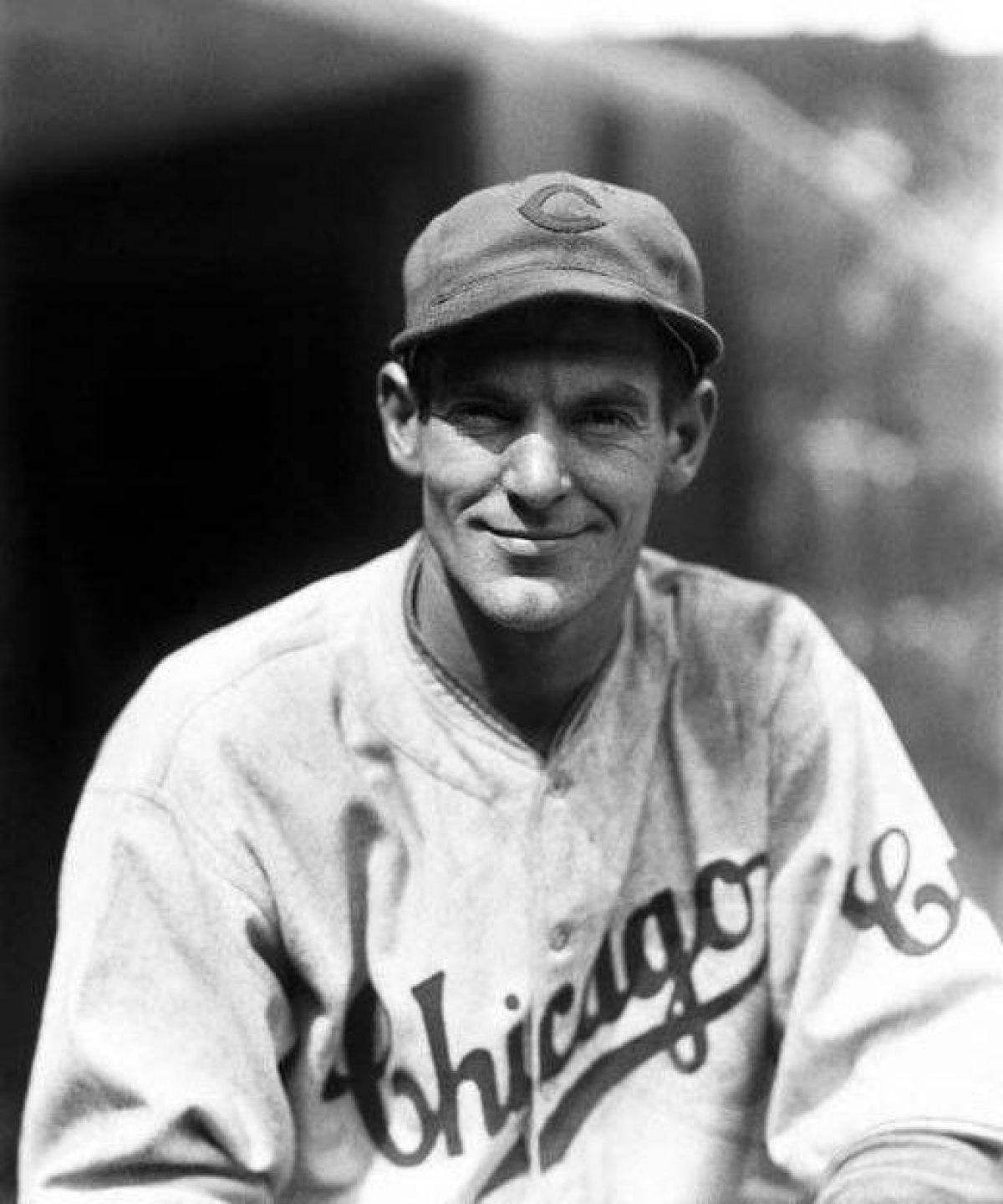
English joined the Cubs in 1927 and bypassed the usual maturation process, quickly maturing into a versatile defensive standout who split his time between shortstop and third base. He arrived with a vacuum glove and a rare internal clock, consistently shrinking the diamond against opposing hitters. He was an efficiency machine on the dirt, finishing in the top five in defensive bWAR five different times during his stay in Chicago. This defensive reliability provided the stability that allowed the organization to capture National League Pennants in 1929 and 1932.
The absolute pinnacle of his offensive career arrived during a blistering two-year stretch at the dawn of the 1930s. English was a model of consistency at the plate, eclipsing the .300 mark in back-to-back seasons (1930–1931) and remarkably reaching the 200-hit plateau in both campaigns. He wasn't just a slap hitter; he was a sophisticated, high-leverage producer who finished fourth in the National League MVP voting in 1931. He served as the disciplined engine at the top of the order, accumulating 1,248 hits and maintaining a career .291 average with the club, proving that his value was rooted in a rare balance of run production and elite run prevention.
His identity was synonymous with a blue-collar durability and a tactical flexibility that resonated with the Chicago faithful. English was a fixture in the lineup for nearly a decade, providing a level of professional calm that made him the emotional heartbeat of the infield. Whether he was turning a crucial double play or lacing a line drive into the gap to spark a rally, he played with a technical grace that defined the Cubs' success during the "Live-ball" era. He proved that a player could be a star through sheer defensive excellence and a high-contact bat, serving as the steady pulse of a championship-caliber team.
Comments powered by CComment