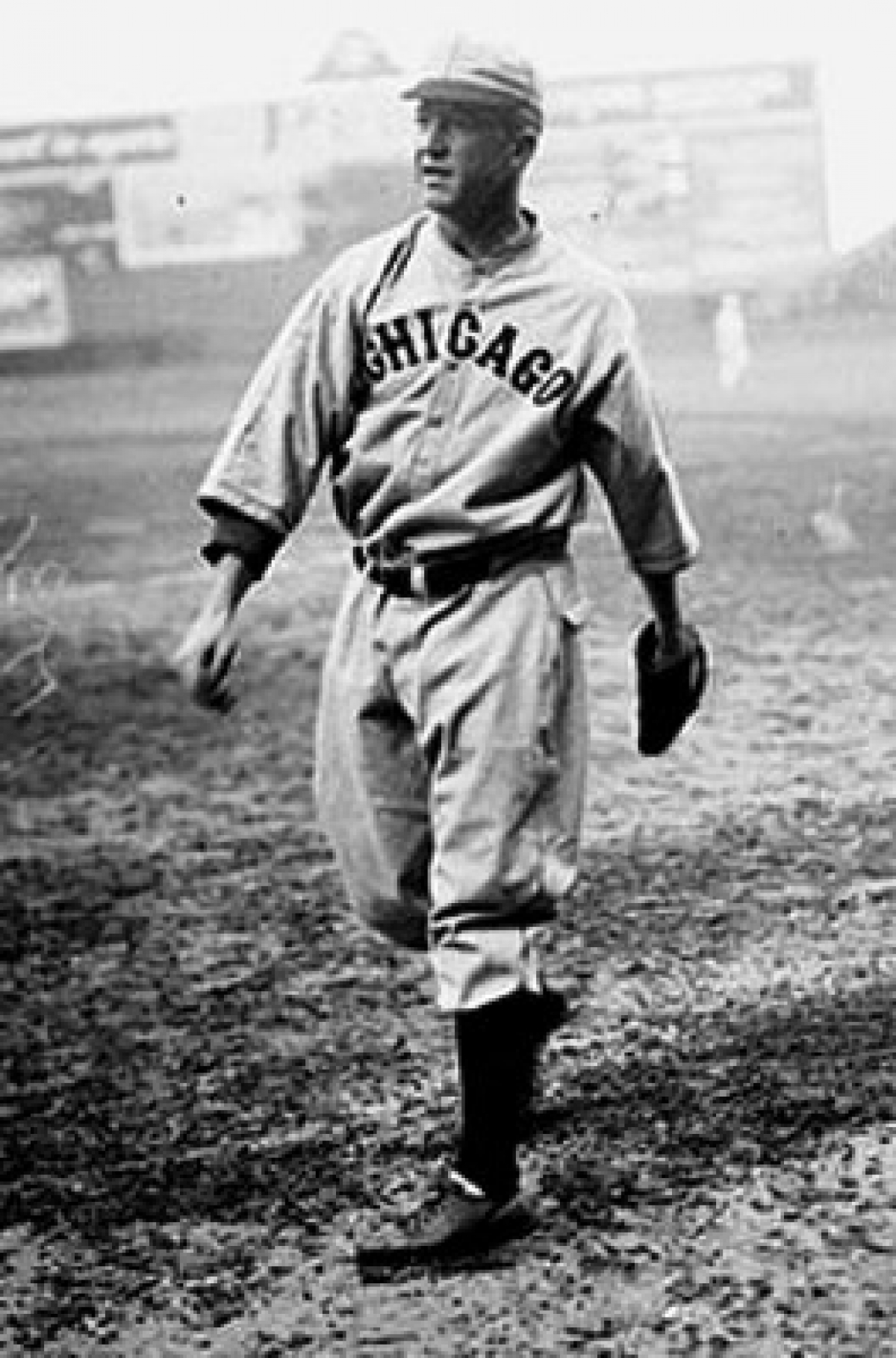
When Grover Cleveland Alexander arrived in Chicago in 1918, he didn't come by choice, and he didn't come whole. The Philadelphia Phillies, desperate for cash, had sold the greatest pitcher of the era to the Cubs just as the shadow of World War I loomed over the sport. Before he could throw a meaningful pitch for Chicago, Alexander was shipped to the front lines of France. He returned a year later, physically alive but mentally scarred—suffering from shell shock, partial deafness from the artillery fire, and a growing dependency on alcohol to quiet the ringing in his ears. It was a tragic transformation for a man who had already won two Triple Crowns.
But even a broken "Old Pete" was a marvel of the mound. His run with the Cubs from 1919 to 1920 remains one of the most improbable displays of pure, localized dominance in the history of the game. Despite the trauma and the seizures that began to plague him, he captured back-to-back ERA titles in his first two full seasons at Wrigley. In 1920, he authored a masterpiece: a 27-win season with a 1.91 ERA that secured his third career Triple Crown. It was a defiant statement from a veteran who was supposed to be washed up, a performance that proved his control and pinpoint accuracy were immune to the ghosts of the war.
The middle chapters of his Chicago story were defined by a steady, professional decline. While he never again touched the heights of 1920, he remained a formidable force for the next five years, anchoring a Cubs rotation that relied on his veteran savvy. However, his off-field struggles eventually wore thin with the front office. Midway through the 1926 season, he was unceremoniously waived and claimed by the St. Louis Cardinals, where, in a bit of poetic justice, he would go on to win the World Series that very autumn.
Alexander left Chicago with a sterling 128-83 record and a 2.84 ERA, marks that would be career-defining for any other pitcher but were merely a second act for him. His legacy was officially set in stone when he entered Cooperstown in 1938 as part of the Hall's third-ever class. Decades later, when the Cubs finally inaugurated their own Hall of Fame in 2021, "Old Pete" was an automatic selection for the first class. He arrived as a broken soldier and left as a testament to the enduring power of a master at work.
Comments powered by CComment