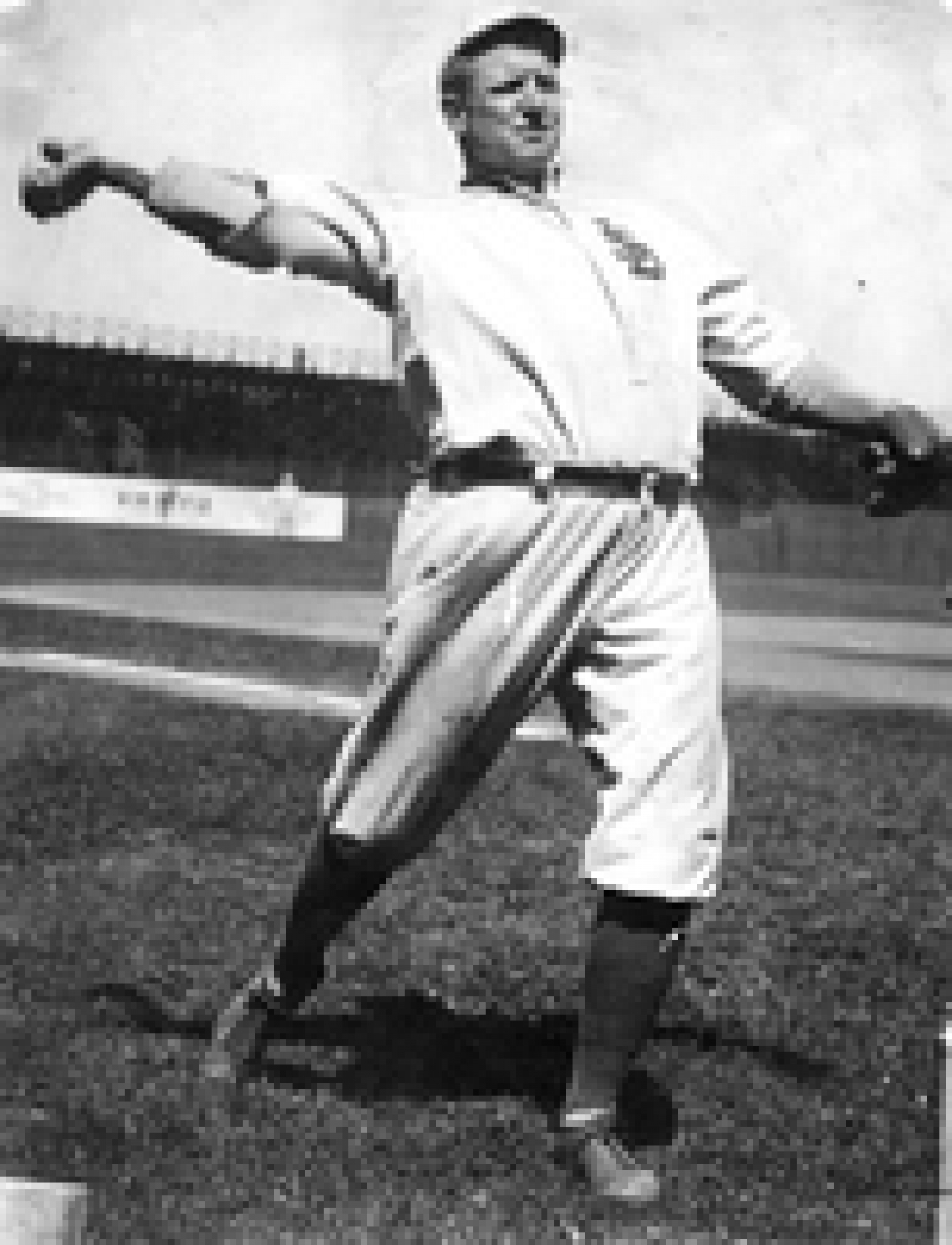
Jack Powell was a pillar of the St. Louis Browns' rotation for ten seasons across two separate stints, serving as the reliable engine of a team that often struggled to provide him with run support. While his 117–143 record with the Browns might suggest a mid-level starter, the underlying metrics reveal a pitcher who was consistently more effective than the teams behind him.
Powell lacked the dazzling velocity of the era’s "fireballers," instead relying on a unique, deceptive sideline delivery. What he lacked in arm speed, he made up for with craftiness and elite command. He joined the Browns during their inaugural American League season in 1902, immediately proving his mettle with a 22-win campaign. Though a brief trade sent him to the New York Highlanders, his 1904 return to St. Louis marked the beginning of a sustained period of efficiency.
Between 1905 and 1908, Powell was a fixture on the American League leaderboards. He finished in the top ten in WHIP four times, showcasing an ability to keep runners off the paths that rivaled the best in the game. His statistical peak arrived in 1906, when he finished fourth in the American League with a blistering 1.77 ERA. In an era defined by pitching, Powell’s ability to suppress scoring while throwing over 250 innings a year made him a workhorse of the highest order.
Powell remained a fixture in the St. Louis rotation until his release in 1912. He left the Browns as one of the franchise's most durable pioneers, proving that "craft" and control could be just as dominant as power. In the history of the St. Louis era, Powell stands as a testament to the "lonely excellence" of a premier pitcher on a sub-.500 team.
Comments powered by CComment