
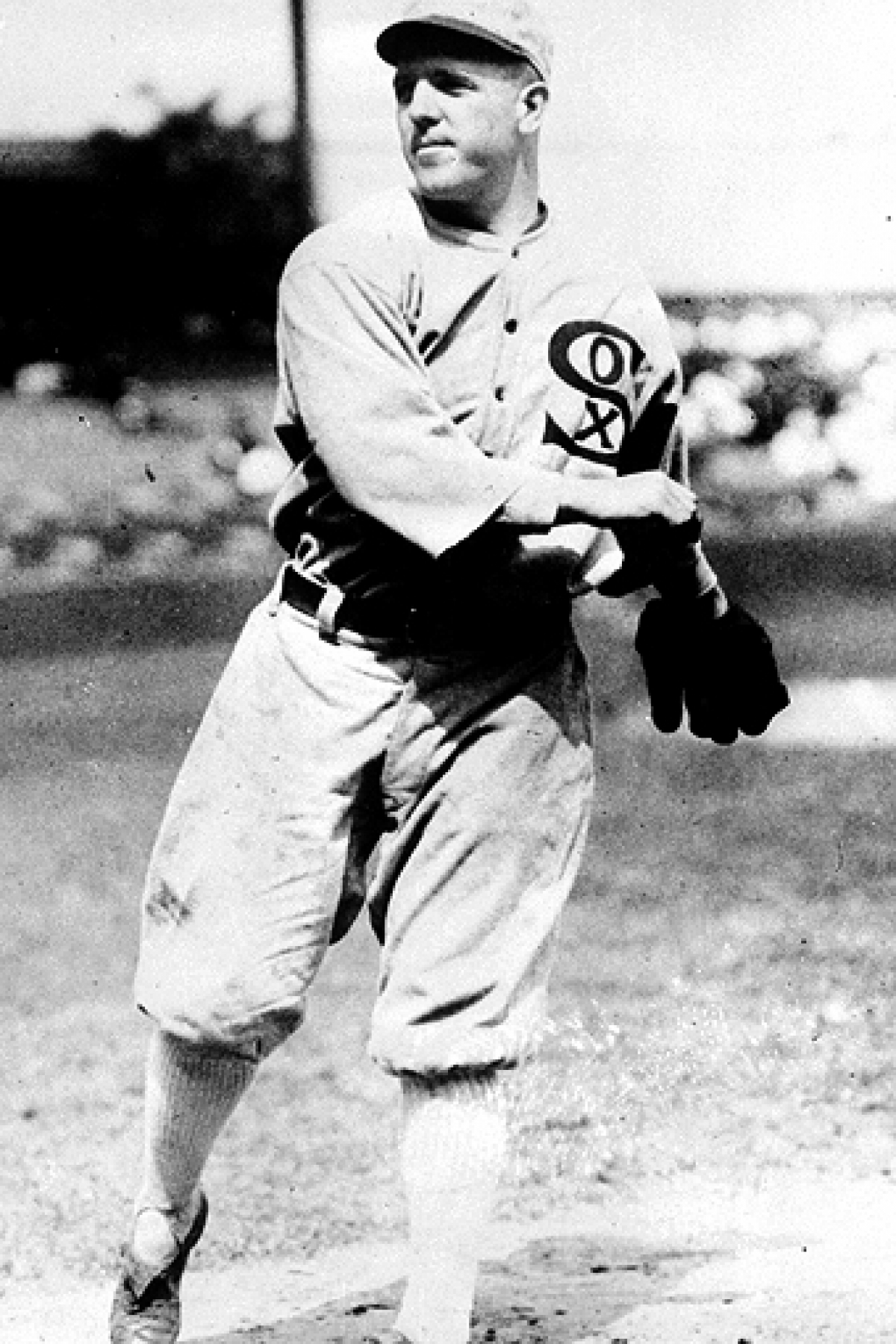


The Hall of Fame victim most often cited in the Black Sox Scandal is "Shoeless" Joe Jackson, but Pitcher Eddie Cicotte might also have cost a Cooperstown plaque.
After a brief stint with the Detroit Tigers in 1905, he went back to the minors, only to return three years later with the Boston Red Sox. Cicotte did better there, good enough to stay on the roster but far from a star. That changed when he was traded to the Chicago White Sox during the 1912 season.
With Chicago, he had his breakout season in 1913, when he went 18-11 with a 1.58 ERA, and a monster season in 1917, when he led the American League in Wins (28), ERA (1.53), and WHIP (0.912). Cicotte would help Chicago win the 1917 World Series, going 1-1 with a 1.57 ERA. 1919 was just as good as he again led the AL in Wins (29) and had a 1.82 ERA. Cicotte and the White Sox were heavily favored in the 1919 World Series against the Cincinnati Reds, but gamblers got into the palms of some White Sox players (allegedly), and Cicotte was one of them (allegedly). In that World Series, he went 1-2 and looked ineffective (or throwing the game) in his first two starts. Chicago would lose that series to the Reds.
After going 21-10 in 1920, the suspected White Sox players were brought to trial. Although the court would find the White Sox players innocent, Commissioner Kennesaw Mountain Landis banned the eight players from baseball after 1920, ending their careers at age 36.

Comments powered by CComment