Menu
A+ A A-
Site Admin

Site Admin

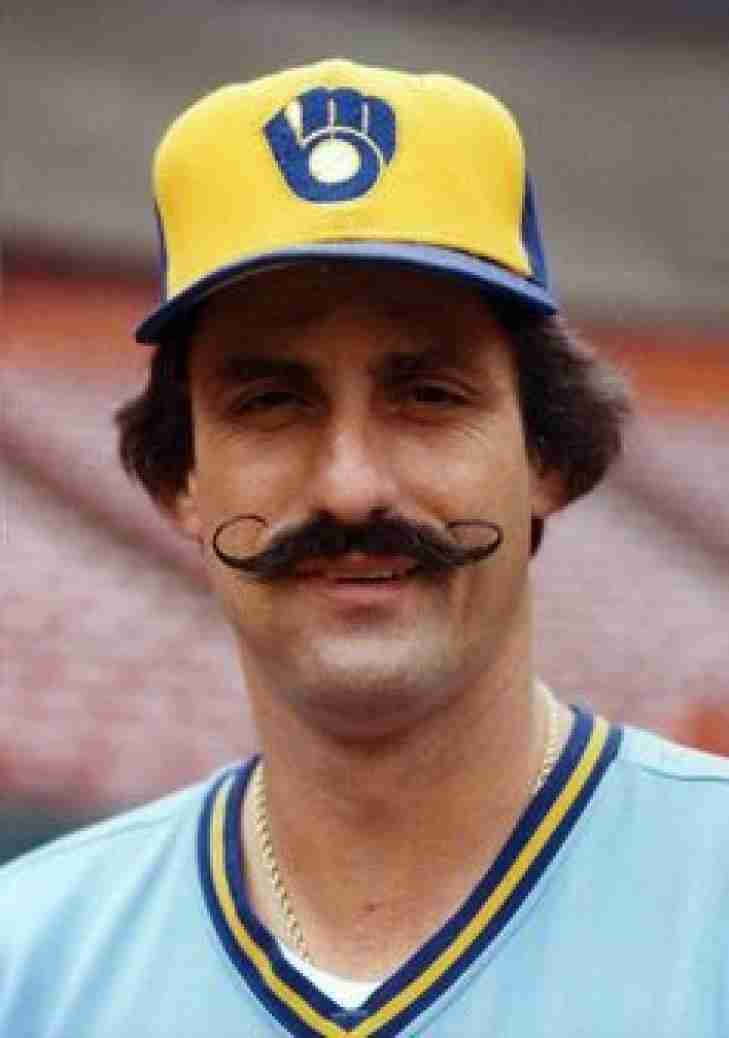
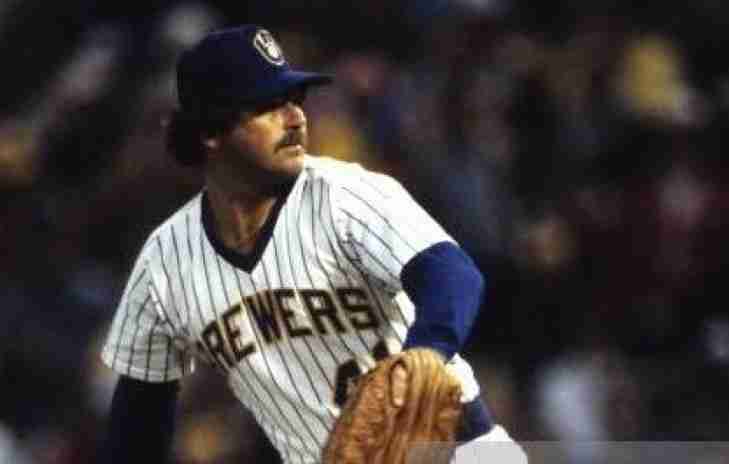
27. Rollie Fingers

Rollie Fingers arrived in Milwaukee in December 1980 through a major trade. His journey was quick; he had been with the St. Louis Cardinals for only four days. After acquiring Fingers from San Diego in an 11-player swap on December 8th, Cardinals GM Whitey Herzog, having also acquired Hall of Famer Bruce Sutter, decided to trade Fingers to Milwaukee on December 12th.

Fingers was sent to the Brewers alongside catcher Ted Simmons and starter Pete Vuckovich in exchange for a package that included Sixto Lezcano, Lary Sorensen, and prospects David Green and Dave LaPoint. While the Cardinals eventually won the 1982 World Series against Milwaukee, the Brewers essentially "won" the trade in the short term, as they netted the next two AL Cy Young winners in Fingers (1981) and Vuckovich (1982).

During the strike-shortened 1981 season, Fingers reached an absolute summit of performance that remains the gold standard for relief pitching. He authored a minuscule 1.04 ERA and led the league with 28 saves, allowing just nine earned runs over 78 innings of work. He showcased a total command of the American League, finishing the year with a 0.872 WHIP and proving to be the foundational spark that led the Brewers to their first-ever postseason berth. This masterpiece of a campaign made history; he became the first reliever to ever win the Cy Young Award and the MVP in the same season, a dual-honor plateau that remains one of the rarest feats in the game.

Fingers reached new postseason legend during the 1982 "Harvey's Wallbangers" run. Although he missed the World Series due to a torn forearm muscle, his regular-season contributions were vital to the team’s success. He recorded 29 saves with a 2.62 ERA, anchoring a bullpen that supported the team's potent offense. After a disabled list stint that caused him to miss the entire 1983 season, he returned with resilience, recording 23 saves in 1984, showing his veteran poise remained a key asset.

As his 17-year career's high-velocity innings took their toll, he finished his playing residency where it all started—in Milwaukee's Cactus League. He left with 97 saves and a 2.54 ERA, marking the final chapter of a Hall of Fame career. In 1992, the organization retired his number 34, symbolically honoring him.
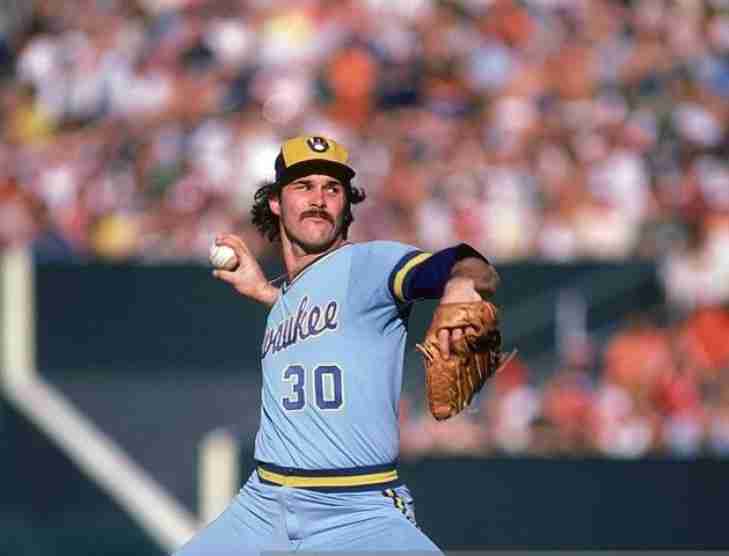
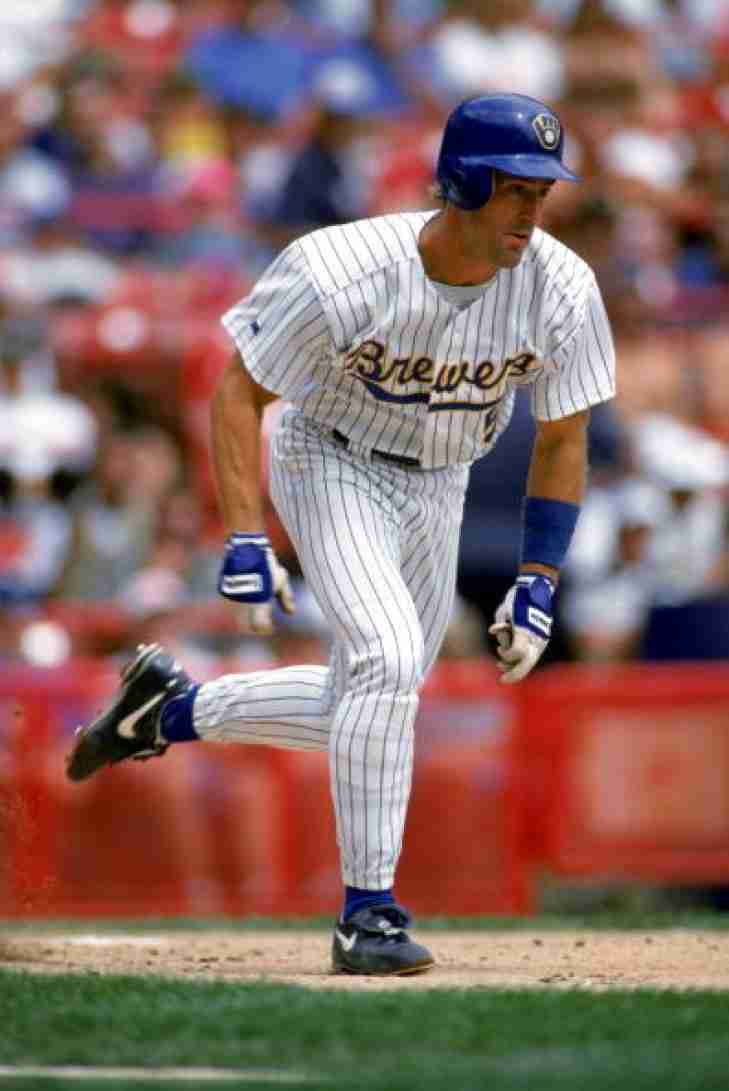
30. Moose Haas

Moose Haas arrived in Milwaukee in 1976 as a second-round pick from Maryland, a 20-year-old right-hander with a nickname suggesting a hulking presence he didn't quite possess in stature—though his arm frequently told a different story. He was not the most imposing figure, but he operated with durability and a "strike-throwing" mindset that led to the franchise's most successful decade.

In 1978, Haas achieved peak efficiency by striking out 14 New York Yankees in one game, setting a franchise record that stood for over 25 years. He demonstrated control of his repertoire and famously fanned Reggie Jackson four times. An arm injury shortened that season, but he made a strong comeback in 1980, with a career-high 16 wins and 252.1 innings pitched. That year, he posted a 3.10 ERA, finishing in the league's top ten.

Haas achieved a new milestone in 1982 during the "Harvey's Wallbangers" campaign. His regular-season stats were steady, but he peaked in the postseason, winning Game 4 of the ALCS to keep Milwaukee’s hopes alive. In 1983, he led the American League in Winning Percentage (.813), with a 13-3 record and 3.27 ERA. Known for efficiency, he ranked in the top ten for BB/9 four times during his career.

Haas was traded to the Oakland Athletics in 1986.  As a Brewer, Haas compiled a 91-79 record, a 4.02 ERA, and 800 strikeouts.

31. B. J. Surhoff

B.J. Surhoff joined Milwaukee in 1987 as the top overall pick from the 1985 draft, a highly regarded prospect known for his unique blend of college success and defensive skill. Although he reached the height of his statistics in Baltimore later on, he spent almost ten years with the Brewers, where he was a key contact hitter and an important part of the team’s lineup.

In 1987, Surhoff hit a remarkable milestone for a rookie catcher by batting .299 and playing a key role in igniting the team's memorable 13-0 start to the season. He demonstrated an impressive mastery of the strike zone right from the beginning, earning a reputation as one of the most challenging outs in the American League. Although he was initially drafted as a catcher, he showed incredible versatility by eventually playing at third base and in the outfield.

Between 1988 and 1991, Surhoff was a key catcher, playing over 125 games each season. He displayed excellent strike zone control, never striking out more than 49 times annually. In 1990, he hit a peak in situational hitting, stealing 18 bases and hitting 21 doubles. 

In 1992, the organization started to shift behind the plate. While he remained a key player, with 121 hits and helping Milwaukee vie for the AL East title until the final weekend, he also began to make a special move across the diamond. By 1993, he had become remarkably versatile, taking on the role of the team's main third baseman. That year, he delivered a remarkable display of resilience. After a slow start, he soared to a career-high 38 doubles and 79 RBIs, earning the Brewers' Unsung Hero Award for his smooth transition to the hot corner.

After the 1995 season, Surhoff departed for Baltimore as a free agent.  He batted .274 with 1,064 hits for the Blue Brew Crew.

23. Jim Slaton

Jim Slaton didn't just play for the Brewers; he essentially grew up with them. Drafted by the Seattle Pilots before they packed up for Milwaukee, the right-hander arrived in 1971 as a 20-year-old and spent the better part of the next 13 years becoming the most prolific workhorse in franchise history.

In the mid-70s, Slaton established a durability benchmark of the era, throwing at least 217 innings for five straight seasons. His first major individual accolade came in 1977 when he earned his only All-Star nod after a strong first half that helped stabilize a transitioning rotation. He demonstrated complete mastery over his pitches, finishing 1976 with 14 wins, a 3.44 ERA, and an impressive 292.2 innings pitched.

After a one-year stint in Detroit, Slaton returned to the 414 in 1979 and quickly achieved a new level of efficiency. He posted a 15-9 record with a 3.63 ERA, helping to bridge the gap to the most celebrated period in Brewers history. His career reached its most memorable point during the 1982 "Harvey's Wallbangers" season. Although his role had shifted to the bullpen, he remained a key part of the team, and his legacy was cemented when he earned the win in Game 4 of the 1982 World Series against St. Louis.

Following the 1983 season, he finalized a deal to join the California Angels. Slaton compiled a 117-121 record, a 3.83 ERA, and 929 strikeouts with Milwaukee.