

34. Bobby Bonilla
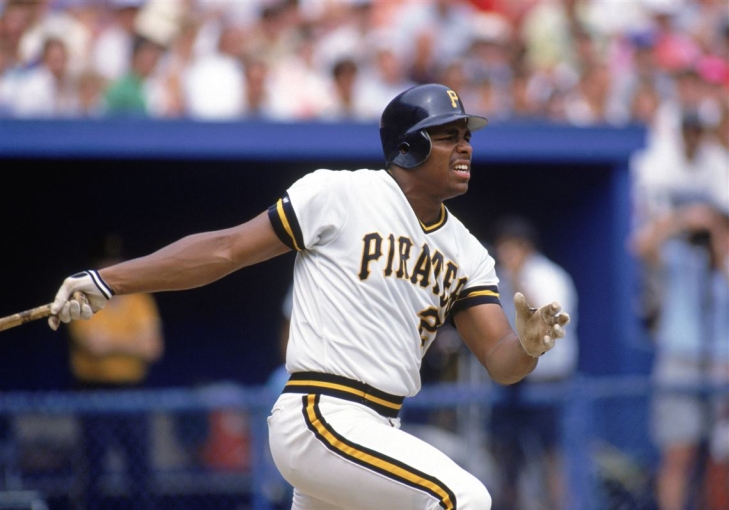
The broader pop-culture lexicon of modern baseball will inevitably associate Robert Anthony Bonilla with the historic deferred-salary contract he signed with the New York Mets, an arrangement that annually prompts headlines surrounding "Bobby Bonilla Day" each July. However, reducing his entire athletic identity to a post-career financial spreadsheet severely underestimates his exceptional on-field performance. Long before becoming a symbol of front-office accounting, the switch-hitting native of the Bronx was among the most physically formidable and explosive run-producers in the sport. Playing under the lights of Three Rivers Stadium, Bonilla employed a powerful bat as a pivotal component of a formidable lineup, leading a distinguished multi-year period of MVP-like excellence that characterized a generation of baseball in Pittsburgh.
His journey to major league stardom followed a unique, circular route. Initially signed by the Pirates as an amateur free agent in 1981, he was then selected by the Chicago White Sox in the 1985 Rule 5 draft. Recognizing their mistake in letting him go, Pittsburgh's front office traded for him in mid-1986, making him a key part of their long-term plans. By the start of the 1987 season, Bonilla had established himself as the regular third baseman, consistently contributing extra-base hits throughout the season.
His large, physical build caused significant defensive challenges at third base, prompting a permanent shift to right field. However, his offensive performance flourished. In 1988, he won his first Silver Slugger award and went on a remarkable streak with four straight All-Star selections from 1988 to 1991. Playing in the outfield alongside Barry Bonds and Andy Van Slyke, Bonilla completed a legendary, high-powered outfield trio that overwhelmed National League pitchers and helped secure consecutive division titles.
During the 1990 pennant race, Bonilla showcased his powerful batting skills, hitting 32 home runs, driving in 120 RBIs, and leading the major leagues with 44 doubles. He earned his second Silver Slugger Award and was the runner-up for the National League MVP, finishing behind only his teammate Bonds in a notable franchise one-two finish.
He replicated that elite, high-leverage efficiency during the 1991 campaign, batting a career-high .302 with 18 home runs and 100 RBIs to secure his third consecutive Silver Slugger and a third-place finish in the MVP balloting.
Tragically, the cold realities of the pre-salary-cap landscape quickly forced a low-variance parting of ways. With his market value reaching an all-time peak and the small-market Pirates facing severe financial limitations, Bonilla officially walked away from town following the 1991 campaign, signing a record-setting free-agent contract with the Mets. While he would celebrate a world title later in his career with Florida, he never quite replicated the raw, sustained offensive dominance that defined his primary residency in PGH.
With Pittsburgh, Bonilla belted 114 home runs with 500 RBI with a .284 batting average.
37. Starling Marte
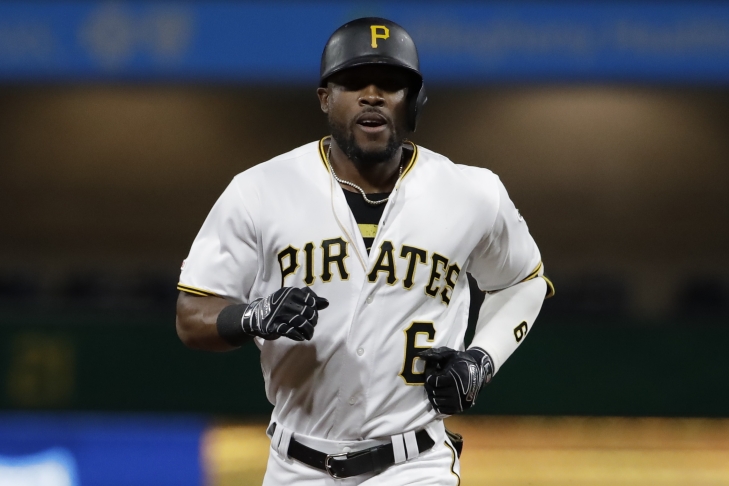
When tracking baseball's resurgence in Western Pennsylvania during the mid-2010s, talk often focuses on Andrew McCutchen. However, the key to those wild card teams’ edge was Santo Domingo's Starling Javier Marte. Signed from the Dominican Republic as a free agent in 2007, Marte entered the majors with extraordinary physical talents. He played with a fierce, high-energy style, combining speed, power, and fearless defense, becoming one of the most dynamic outfielders of the modern PNC Park era.
His introductory appearance midway through the 2012 campaign constituted an immediate shock to the system, marked by a historic first-pitch home run in his very first major league at-bat. From 2013 to 2016, Marte transformed baseline volume into a consistent regular-season performer, achieving four consecutive seasons with no fewer than 140 hits. He developed a highly effective, high-velocity approach at the plate that yielded 53 home runs over that four-year period, culminating in a remarkable 2016 season during which he achieved a career-high batting average of .311, thus earning his first National League All-Star selection.
Focusing solely on Marte’s offensive stats overlooks his remarkable defensive performance on the field. Starting in left field with McCutchen and later moving to center, Marte turned his area into a death zone for extra-base hits. Using exceptional tracking skills and a powerful throwing arm, he consistently disrupted opposing third-base coaches, earning consecutive Gold Gloves in 2015 and 2016, as well as the Wilson Defensive Player of the Year awards.
Tragically, his steady rise encountered a significant obstacle before the 2017 season. Marte tested positive for Nandrolone, leading to an 80-game suspension for performance-enhancing drugs, which caused considerable controversy and temporarily tarnished his reputation.
Showing deep competitive resilience upon his return, he immediately set about rebuilding his profile. He swiped 21 bases over the remainder of that shortened summer, following it up with consecutive 20-plus steal campaigns to stretch an incredible streak of seven straight seasons with at least 20 stolen bases.
With his contract coming due, Marte was traded to Arizona after the 2019 Season, leaving his numbers as a Pirate at .287 with 1,047 Hits, 108 Home Runs, and 239 Stolen Bases.
38. Bob Elliott
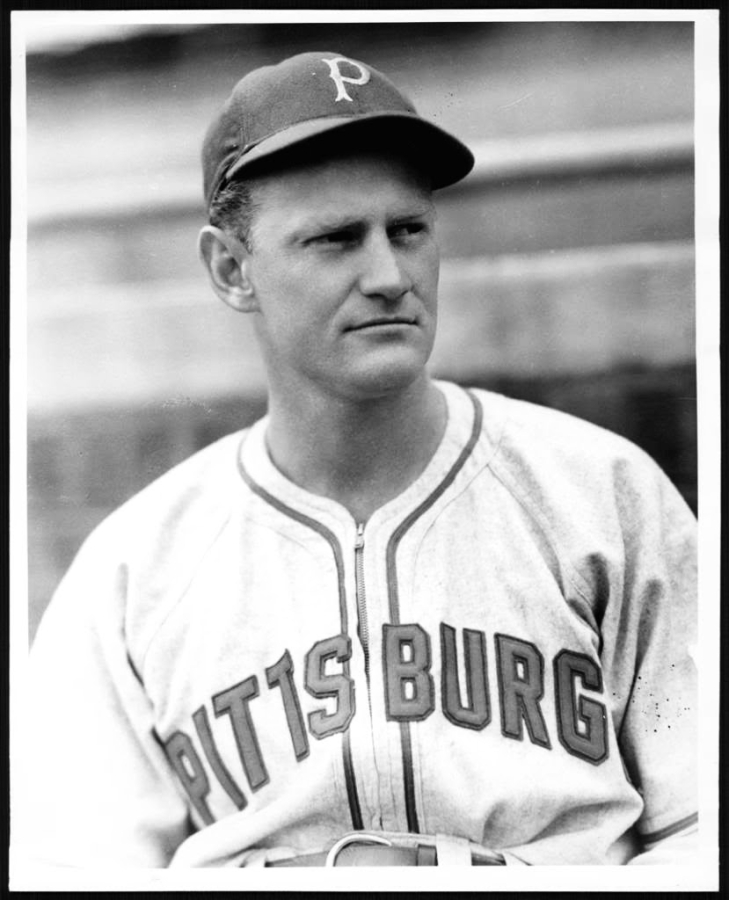
Bob Elliott built an elite career by anchoring the intangible fabric of the clubhouse, long before his fame in New England. The California product was a quiet, efficient engine for the Pittsburgh Pirates in the 1940s, with a disciplined right-handed stroke and a team-first focus at Forbes Field. His situational skill made him a top run-producer in the National League, but his reputation as the ultimate unselfish teammate earned him the nickname "Mr. Team.”
Elliott made his Major League debut with the Pirates at the end of the 1939 season, playing a brief 32-game stint during which he quickly demonstrated his frontline potential by hitting .333. Initially breaking into the regular lineup as an outfielder, his career path changed significantly before the 1942 season when manager Frankie Frisch shifted him to third base to leverage his strong throwing arm.
The positional change led to an extraordinary multi-year peak, during which Elliott made run-production a regular-season habit. He achieved five straight summers batting over .290 while with Pittsburgh, becoming a crucial, volume-heavy anchor in the lineup. His stellar bat control and spatial awareness at the plate yielded three magnificent 100-RBI masterclasses as a Pirate, racking up 101 in 1943, 108 in 1944, and 108 again in 1945.
Exempted from military duty after a serious head injury caused by a batted ball, Elliott led the franchise through wartime rosters that were low on talent. He was selected as an All-Star four years in a row from 1941 to 1945. His advanced efficiency metrics earned wide respect in the National League, leading to three straight top-ten finishes in the National League MVP voting, including eighth place in 1943, and two dominant seasons with high run production, during which he ranked second in RBIs.
After a relatively quiet 1946 season where his performance declined, the front office indicated a major shift. In a winter trade that surprised many locally, management traded their key franchise player to the Boston Braves for 37-year-old player-manager Billy Herman, a move that famously left Herman himself stunned at the high cost paid by the Pirates to acquire him. Elliott quickly proved his former team wrong, delivering an exceptional 1947 season in his first year with Boston, hitting 22 home runs and driving in 113 RBIs to earn the National League Most Valuable Player award and cement his reputation as ‘Mr. Team.'
With the Pirates, Elliott collected 1,142 hits with a slash line of 292/.365/.423.
36. Elbie Fletcher
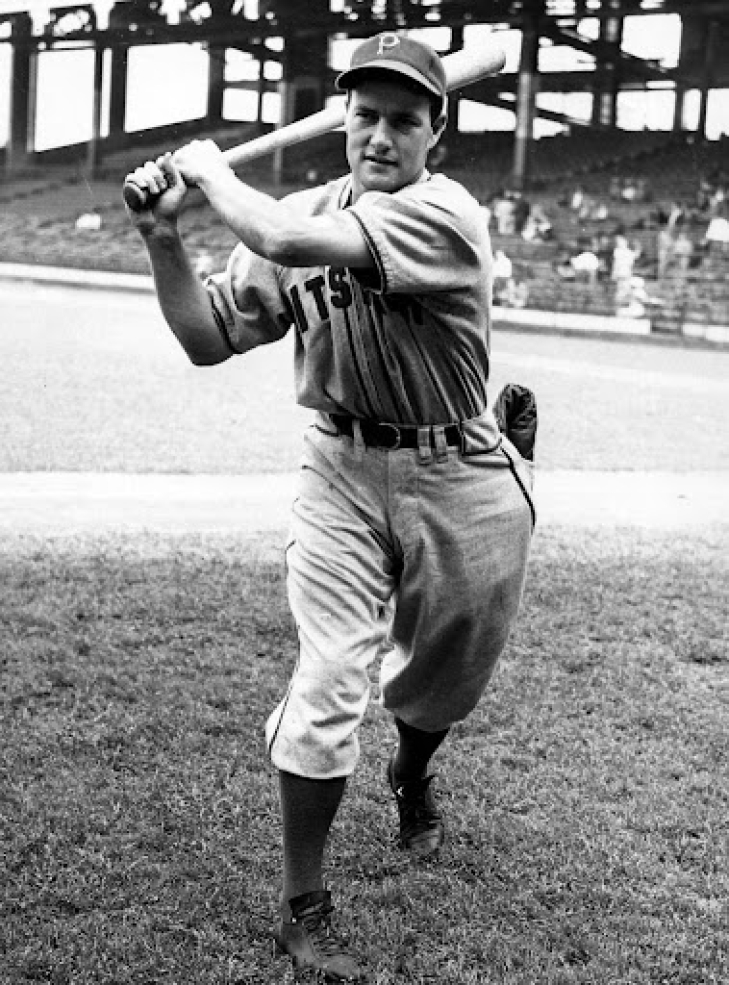
Elbie Fletcher was traded to Pittsburgh from Boston during the 1939 Season, where in Western Pennsylvania, he developed one of the keenest batting eyes of the game.
Fletcher finished the year strong, batting .303 for Pittsburgh, and though he would not bat over .300 again, he learned how to take pitches and would top the NL leaderboard in Walks twice (1940 & 1941) and On Base Percentage three straight years (1940-42). He went into the U.S. Navy for two years, missing two seasons, but was not the same player when he returned and was traded after the 1947 Season.
Fletcher had 875 Hits for the Pirates along with a .403 OBP.
32. Ginger Beaumont
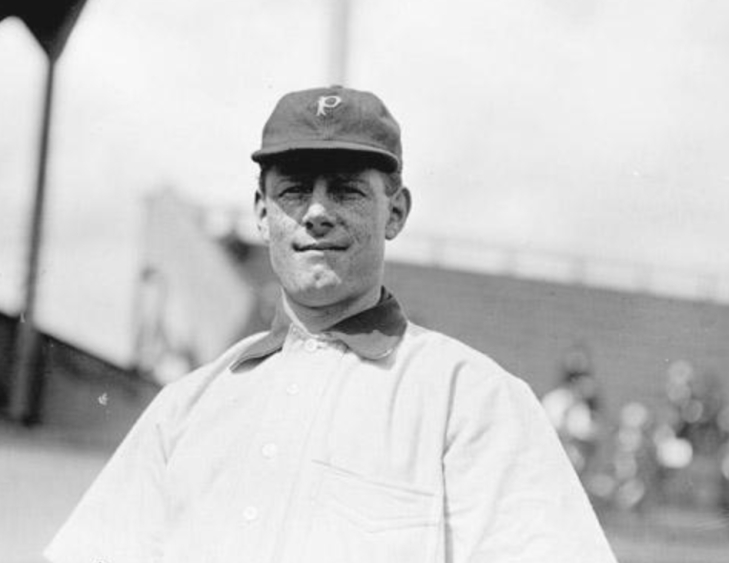
The dawn of 20th-century Western Pennsylvania was defined by Fred Clarke’s aggressive, contact-hitting dynasty, with Clarence Howeth "Ginger" Beaumont at its center. His heavy frame earned him a nickname, but he defied athletic stereotypes using quick first steps and a strong left-handed swing to excel at the top of the order.
His initial appearance during the 1899 campaign is regarded as one of the most remarkable debuts in the extensive history of the organization. As a 24-year-old novice, Beaumont methodically incapacitated National League pitching staffs, achieving an impressive .352 batting average that promptly established his position as a key player. He swiftly transformed accumulating hits into a consistent and reliable offensive contribution, offering a substantial volume of scoring opportunities directly preceding the legendary Honus Wagner.
His quintessential individual peak and superior efficiency metrics converged during a historic three-year period from 1902 to 1904. Beaumont demonstrated exceptional batting prowess, securing the 1902 National League batting title with an impressive .357 average, and establishing a record as the first player in the Senior Circuit to lead the major leagues in total hits for three consecutive summers.
While many modern observers were often misled by his bulky appearance, he was a formidable force on the basepaths, using exceptional speed to steal at least 20 bases across seven different campaigns for the city. His dynamic base-running firmly established his legend during the high-stakes 1903 Fall Classic against Boston. As the fleet-footed center fielder, he stepped up to hit the first pitch in World Series history, helping to elevate Pittsburgh's national profile.
The Pirates traded Beaumont to Boston after his disappointing 1906 Season, but Beaumont proved them wrong by finishing first in hits in 1907. Beaumont, overall as a Pirate, batted .321 with 1,292 hits and 200 stolen bases.
30. Manny Sanguillen
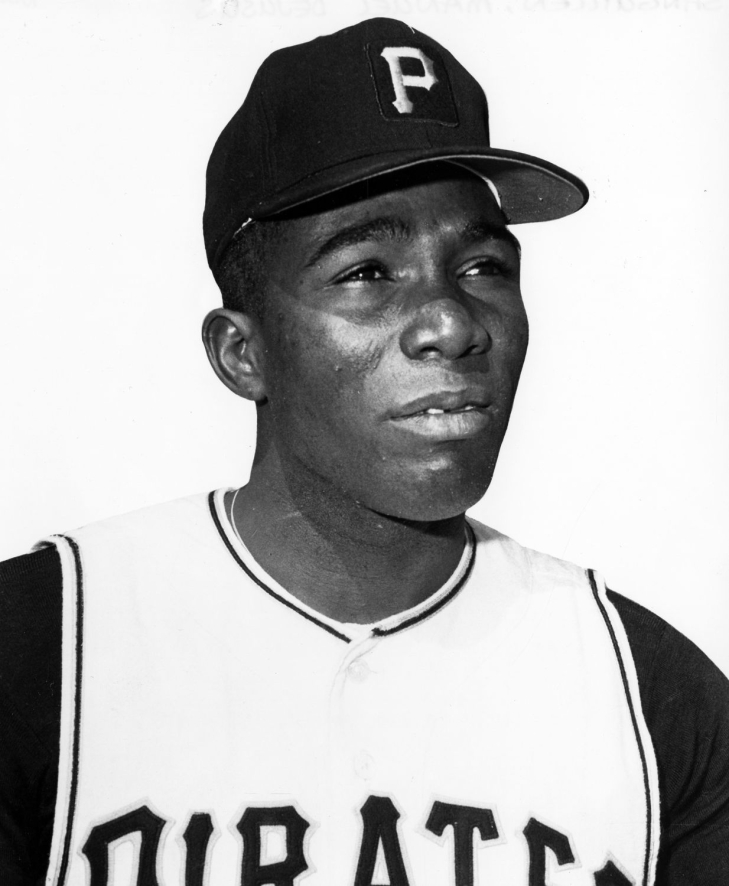
The 1970s baseball scene in Pittsburgh is often seen as dominated by larger-than-life figures who captured national attention. However, behind the legendary "Lumber Company" lineup from behind the plate was a lively, free-swinging artist from Panama, known for playing with a joy that brightened the entire field. Manny Sanguillén, popularly called “Sangy," had a smile as broad as the three rivers and an unorthodox, highly aggressive batting style that challenged traditional hitting methods. Instead of waiting for walks or the perfect pitch, he approached anything within a five-foot radius of home plate as a chance to make solid contact, making him one of the top offensive catchers of his era.
He made his initial appearance in 1967, but it wasn't until 1969 that Sanguillen secured the full-time starting catcher position. He became a consistent hitter during the regular season, managing to succeed in an era filled with top-tier pitching, thanks to his quick, short right-handed swing.
Sanguillen listed four seasons with a batting average over .300, an impressive feat for a catcher in the low-offense era of the 1970s. He was a key contributor to the legendary 1971 World Series champion team, batting .319 in the regular season and delivering 11 crucial hits in the seven-game series victory against Baltimore.
Despite his significant multi-dimensional value, Sanguillen spent much of his prime in the background of a competitive shadow. Nationally, his individual recognition was limited since Johnny Bench dominated the position as the gold standard. Locally, his steady performance was sometimes overshadowed by the star power of his legendary close friend Roberto Clemente and the towering Willie Stargell.
His exceptional defensive skills and quickness behind the plate earned him three consecutive All-Star selections from 1971 to 1973. Notably, in 1972, he had a standout season, finishing eleventh in the National League MVP voting after achieving a career-high .321 batting average.
To tackle structural needs on the mound, management made a bold trade after the 1976 season, sending the franchise's key player to the Oakland Athletics in exchange for manager Chuck Tanner. Reflecting his strong ties to Western Pennsylvania, Tanner later orchestrated a trade that brought Sanguillen back to the Steel City just before the 1978 season.
Although he served as a respected veteran reserve behind Ed Ott during his final three summers in town, his remarkable longevity paid off in the memorable 1979 "We Are Family" season. Off the bench in the crucial late innings of Game 2 in the World Series, he hit a legendary, game-winning pinch-hit single off Baltimore's Don Stanhouse, sparking the team's historic comeback and earning a place in club folklore as one of the few players to win world championship rings in both of the franchise's 1970s dynasties.
Sanguillen retired after the 1980 season, accumulating 1,343 hits and a .299 batting average for Pittsburgh.
35. Dick Groat
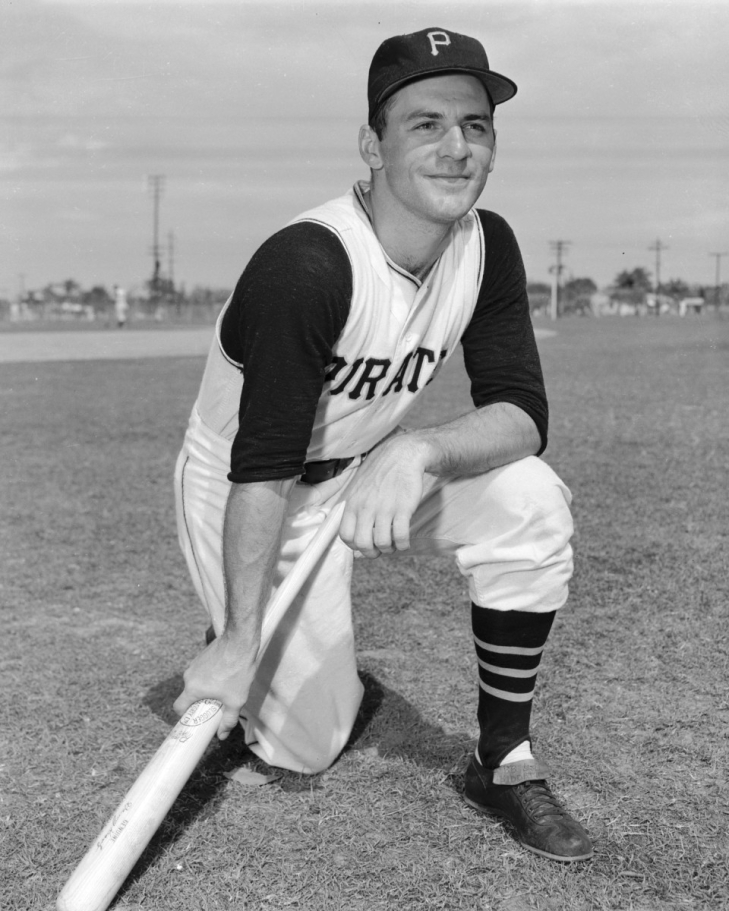
Achieving excellence at the top level of a single sport is rare, but excelling in two vastly different athletic fields requires a unique kind of talent. Richard Morrow Groat exemplified this multi-sport mastery. At Duke University, this talented athlete excelled in both basketball and baseball for several years, setting scoring records in basketball and dominating opposing pitchers in baseball. His exceptional talent led him to become the first athlete inducted into both the College Basketball and College Baseball Halls of Fame. Although he briefly played a season in the NBA with the Fort Wayne Pistons, he ultimately focused on baseball, a choice that significantly impacted Pittsburgh's baseball scene.
He made his major league debut before the 1952 season, quickly demonstrating his top-tier talent and finishing third in the National League Rookie of the Year voting. However, as his career started to gain momentum, Groat had to pause for two years to serve in the military. He returned to the club full-time for the 1955 campaign, instantly anchoring the shortstop position and turning middle-infield stability into an absolute regular-season routine.
While he lacked explosive, over-the-fence power, Groat weaponized an incredibly short, right-handed contact stroke and peerless internal clock, developing into the ultimate table-setter and clubhouse leader for manager Danny Murtaugh. The peak of his national fame and extraordinary efficiency came together during the unforgettable 1960 world championship run. Groat delivered a remarkable display of skill in clutch situations, winning the National League batting title with a superb .325 average that energized the entire offense.
Focusing only on Groat’s offensive stats ignores a significant part of his contributions; he was a defensive genius, leading the entire Senior Circuit with a top-tier 2.6 defensive bWAR. He achieved this by masterfully positioning himself and utilizing keen spatial awareness to shut down opponents’ running threats. His versatile mastery earned him the National League Most Valuable Player award, culminating in his remarkable season where he helped the Bucs secure a memorable seven-game World Series victory against the formidable New York Yankees.
A five-time All-Star, Groat was traded to St. Louis after the 1962 campaign, where he would later win another World Series Championship. With Pittsburgh, Groat batted .290 with 1,435 hits.
26. Jesse Tannehill
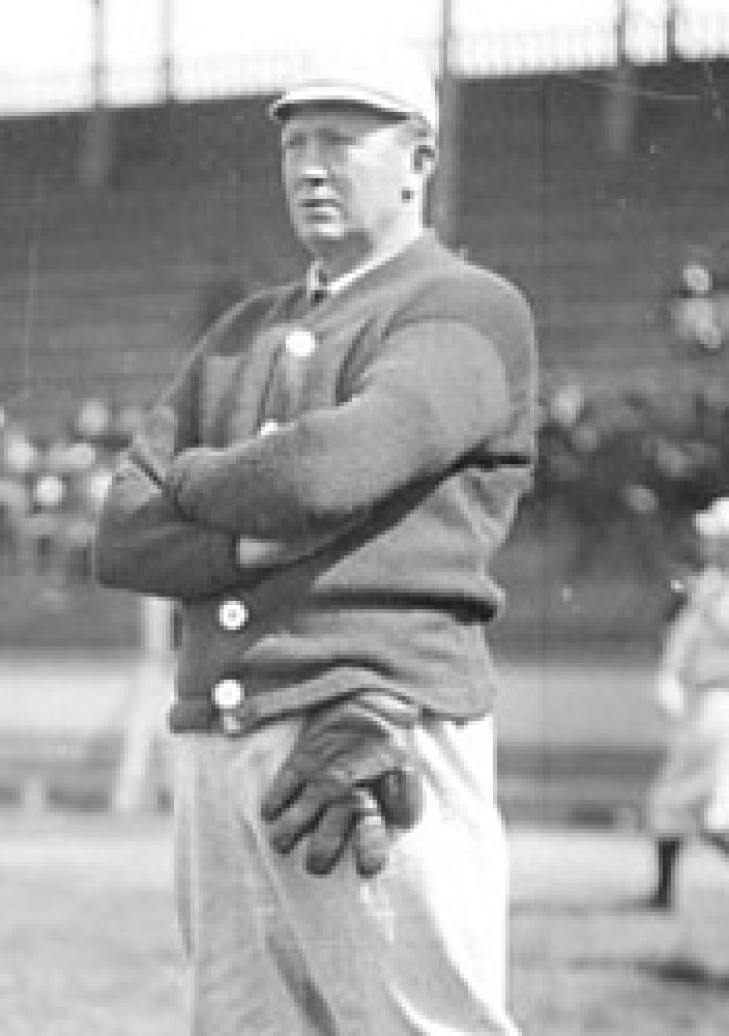
The early history of baseball has many specialized pitchers who saw their batting as a minor distraction, but Jesse Welborn Tannehill viewed the game differently. A gifted athlete with sharp reflexes, the slender left-hander from Kentucky was a double threat before the term was popular. He was known for a deceptive curveball and control on the mound, and also played outfield between starts. For five years around 1900, Tannehill was a key player for the rising Pittsburgh teams.
His introductory full year in the rotation was a rather nondescript affair, yielding a modest 9–9 record and a bloated 4.25 ERA as he adjusted to the dimensions of National League hitters.
Over the next five summers, Tannehill became one of Major League Baseball’s most reliable and dominant southpaws, leading a star-packed team with unwavering, consistent excellence. He achieved five straight seasons with at least 18 wins, including four seasons with 20 or more wins, demonstrating remarkable longevity. During this period, he consistently prevented runs, maintaining a single-season ERA below 3.00 each year.
His standout masterpiece came during the historic 1901 pennant race, where his cutting-edge efficiency stats hit league highs. Tannehill delivered an exceptional run-prevention performance to win the National League ERA title with a tiny 2.18, while leading the Senior Circuit with an elite 2.59 Fielding Independent Pitching (FIP) rating, helping him achieve a 21–11 record and 28 complete games.
However, focusing only on his throwing shoulder overlooks half of his actual contributions. Due to his natural bat control and spatial awareness, manager Fred Clarke often skipped standard bench players and moved Tannehill directly into the outfield when an offensive boost was needed. In 865 career at-bats with the Pirates, he demonstrated impressive contact ability, posting a .277 batting average, along with 29 extra-base hits and 96 RBIs, adding valuable run production that made the Pirates especially tough to face.
His historic tenure in Western Pennsylvania ended abruptly with the creation of the American League, which dramatically changed the landscape. Drawn by the large, unregulated financial incentives from the new league, Tannehill formally switched to the New York Highlanders before the 1903 season, marking the end of his main time in the National League as the modern World Series was being formed.
Tannehill had a 116-58 record with a 2.75 ERA and 466 strikeouts.
31. Jason Kendall
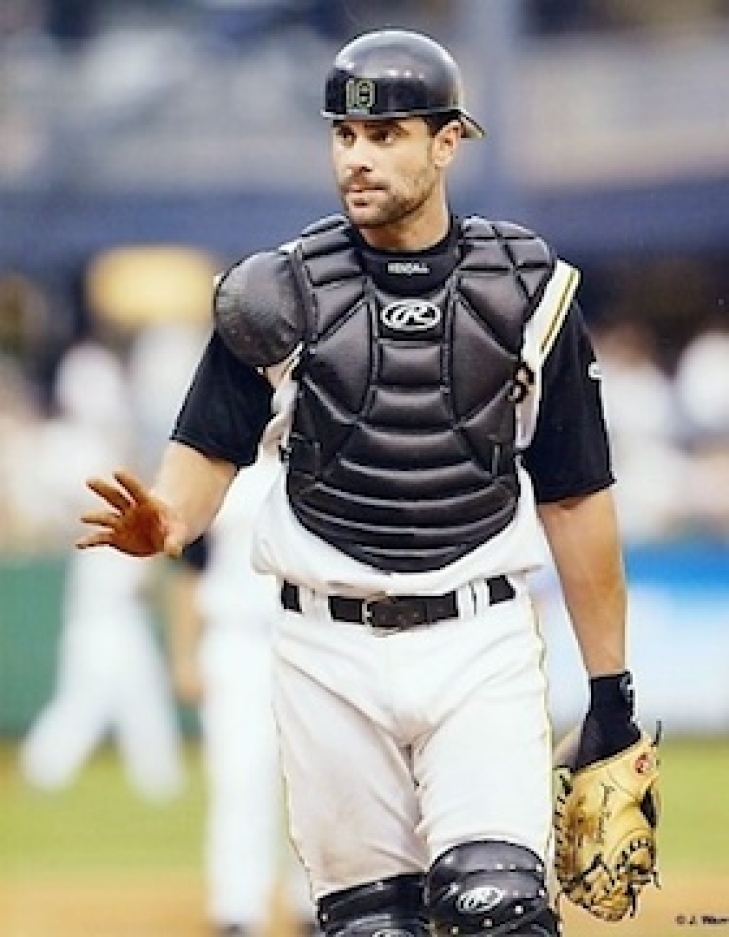
Understanding the difficulties of catching in the Major League involves considering family background. Jason Kendall, the son of 12-year veteran Fred Kendall, was raised in big-league settings, which naturally exposed him to the position’s intense, demanding nature. When the Pittsburgh Pirates selected this resilient high school prospect in the first round of the 1992 draft, they were investing in a rare form of blue-collar grit. After refining his skills across four minor league levels, Kendall not only earned the starting catcher role as a rookie in 1996 but also redefined what a contemporary offensive catcher can achieve.
His debut appearance during the 1996 campaign instantly highlighted his status as a top-tier player. During a time when catchers were usually viewed as low-efficiency, power-focused players, the 22-year-old rookie made contact hitting and on-base skills his regular game plan. He posted a .300 batting average over 130 games, earned a place on the National League All-Star team, and finished third in the Rookie of the Year voting.
The pinnacle of his personal efficiency and resilience was reached during a remarkable period at the turn of the millennium. Kendall surpassed the esteemed .300 batting average on five additional occasions while playing for Pittsburgh, notably in 1998, when he posted a .327 batting average with 12 home runs and 26 stolen bases, and in 2000, when he recorded a career-high .320 batting average, complemented by 14 home runs and an exceptional .412 on-base percentage.
He was a nightmare for opposing teams at the baseline, leveraging rare, high-speed accelerations to steal 140 bases as a Pirate, making him one of baseball's most prolific base-stealing catchers. Defensively, the three-time All-Star was highly skilled. Although he never won a Gold Glove, his quick release and fearless blocking made him a valued defender who effectively reduced the running game, despite the significant physical strain he endured.
Tragically, his unmatched durability was severely tested on July 4, 1999, when he endured a gruesome ankle dislocation while sprinting for a bunt at Three Rivers Stadium. While a less resilient athlete might have seen a sharp decline afterward, Kendall's renowned work ethic enabled him to fully recover and go on to catch over 140 games in each of the following five seasons.
With the franchise stuck in a small-market rebuild, the front office signaled a change after 2004. To shed his large contract, management traded the cornerstone to Oakland for Arthur Rhodes and Mark Redman. As a Pirate, Kendall batted .309 with 1,409 hits.
29. Al Oliver
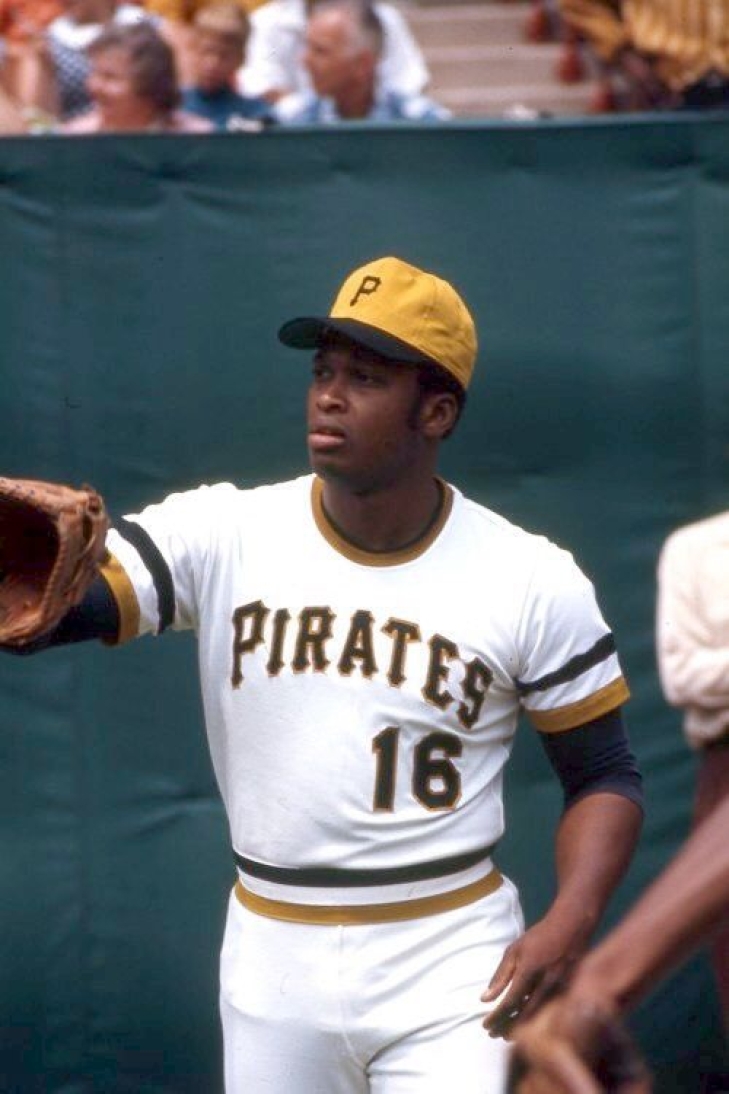
The 1970s "Lumber Company" in Pittsburgh celebrated its power, but maintaining offensive pressure required precise mechanics. Al Oliver signed in 1964, exemplifying this consistency. The left-handed hitter brought focus and aggression, with a fast swing and high socks, aiming to smash baseballs into the gaps of Three Rivers Stadium. He became a respected hitter of his era.
His debut as a consistent everyday player in 1969 immediately demonstrated his frontline potential, earning him a close second in the National League Rookie of the Year voting. Oliver swiftly made his extra-base hits and run production a regular part of his game. He was a key, high-impact player for the renowned 1971 world championship team, hitting a crucial two-run double off Mike Cuellar in Game 3 of the World Series, which helped spark the Pirates' historic comeback victory over Baltimore.
Oliver largely avoided long slumps, providing a steady and powerful presence in manager Danny Murtaugh’s lineups. He hit at least 11 home runs each season for nine straight years, reaching a career high of 20 in 1973, and established himself as a top run-producer with back-to-back seasons of over 100 RBIs. His outstanding bat control led to a batting average of .300 or higher in four different seasons while playing for Pittsburgh, which earned him three All-Star selections and two notable seventh-place finishes in the National League MVP voting.
By the end of 1977, front-office priorities changed. To overhaul their pitching roster, management carried out a large four-team mega-trade, sending the franchise icon to the Texas Rangers, where he would maintain his elite contact ability for another decade. During his time with the Pirates, Oliver accumulated 1,490 hits, 248 doubles, 135 home runs, and 717 RBIs, boasting a solid .296/.331/452 slash line over 1,280 games.
28. Rip Sewell
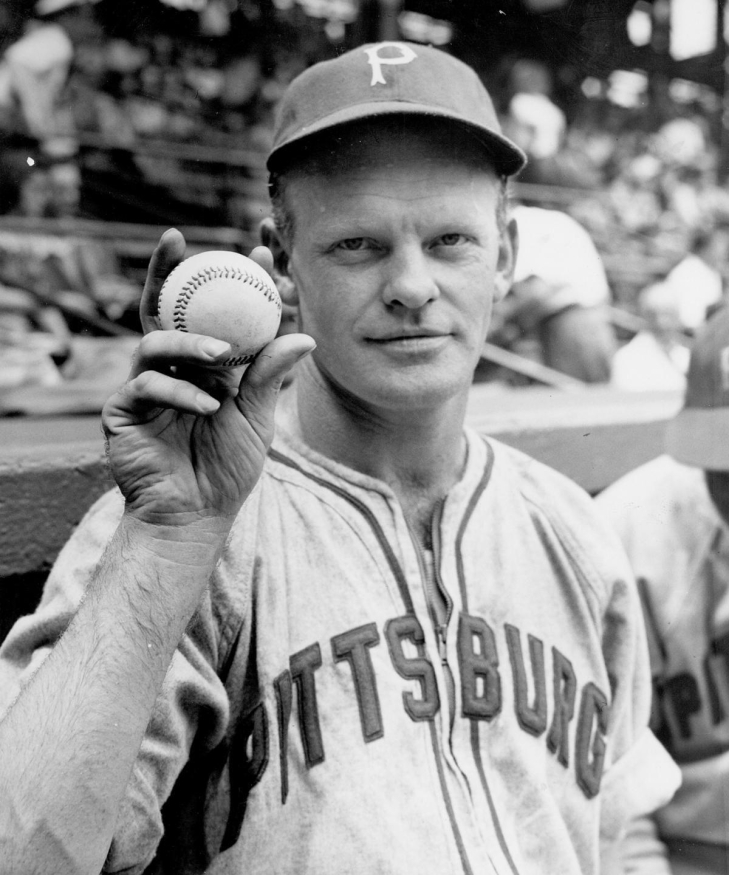
The history of baseball features many pitchers known for their overwhelming velocity, yet Truett"Rip" Sewell crafted an enduring legacy by defying physics. After a brief, five-game stint with Detroit in 1932, primarily remembered for a locker-room altercation with Hank Greenberg, Sewell spent years in the minors. By 1938, when he finally joined the Pirates, he was 31 and recovering from a serious, nearly fatal hunting accident that permanently damaged his feet. Facing physical limitations, the resourceful right-hander relied on cleverness, precise spatial control, and a unique pitching style that revolutionized the game: the "Eephus."
His breakthrough into the regular starting rotation happened during the 1940 season, but it was his use of the bloop pitch that made him famous nationwide. Gripping the baseball seams with his fingertips, Sewell would toss a high-velocity arc that sent the ball soaring 25 feet into the air, leaving hitters, who were expecting fast pitches, completely frozen.
Far from a mere gimmick, the Eephus was a highly sophisticated weapon of timing disruption, helping him turn run prevention into an absolute regular-season routine. Sewell rattled off a spectacular run of longevity, earning four consecutive All-Star selections from 1943 through 1946.
His peak performance during World War II marked the pinnacle of his individual dominance and powerful execution. In the 1943 pennant race, Sewell delivered an exceptional display, leading the National League with a career-high 21 wins, 25 complete games, and a remarkable 2.54 ERA. He repeated this impressive 21-win season the following summer, pitching an exhausting 285.2 innings. Although some critics argue that his best years came against weakened wartime teams, judging his skills unfairly ignores his true ability; Sewell consistently outperformed the competition in front of him.
His reputation as a big-game player was famously established during the 1946 All-Star Game, when Ted Williams became the only player to hit a home run off the Eephus pitch, a memorable, high-pressure moment Sewell took pride in, later mentioning that Williams had to almost run out of the batter's box to produce enough lower-body power to clear the fence.
Sewell remained an unshakeable pillar of the staff until his final walk off the diamond at the conclusion of the 1949 schedule, spending 12 summers serving as the undisputed heartbeat of the pitching staff. He left the Pirates possessing a magnificent, highly efficient localized baseline: a 143–97 record, a respectable 3.43 ERA, 148 complete games, and 23 shutouts across 390 appearances.
23. Andy Van Slyke
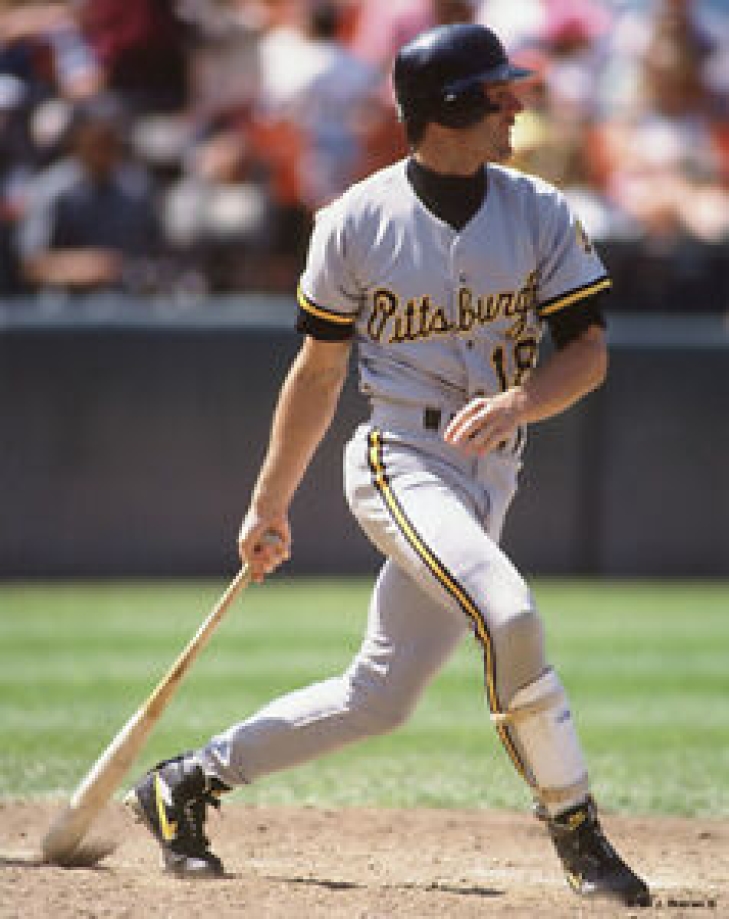
The early 1990s Pittsburgh Pirates are often remembered for Barry Bonds' rise, but the team's emotional and defensive anchor patrolled beside him. Coming from the St. Louis Cardinals in a 1987 trade for Tony Peña, Andy Van Slyke made Three Rivers Stadium his home. With sharp wit, a strong work ethic, and determination to catch every fly ball, the blonde center fielder became a fan favorite in Western Pennsylvania.
His true breakthrough as a versatile star occurred during an exceptional 1988 season, where his offensive output hit a league-leading peak. Van Slyke delivered an impressive at-bat performance, leading the National League with 14 triples and setting personal bests with 25 home runs, 100 RBIs, and an impressive .506 slugging percentage. He dominated the postseason awards, earning his first Gold Glove and Silver Slugger awards, and finished a notable fourth in the NL MVP voting.
Although a severe offensive decline slowed his batting that summer, his defense stayed an elite, high-impact asset that changed games fundamentally. Van Slyke established center field as a true no-fly zone, leveraging an exceptional, powerful throwing arm and perfect tracking instincts to earn five straight Gold Gloves from 1988 to 1992.
As the Pirates became the leading force in the National League East, Van Slyke regained his top-tier status at the plate. He secured consecutive All-Star selections in 1992 and 1993, shining brightly during the 1992 pennant race. Acting as the spark for a team that won its third straight division title, he led all of Major League Baseball with 199 hits and 45 doubles, achieving a career-high .324 batting average. This performance earned him his second Silver Slugger award and a fourth-place finish in MVP voting.
Sadly, the devastating loss in the 1992 NLCS against Atlanta marked the beginning of the decline of that legendary team core. During his last two seasons with the team, Van Slyke was significantly hampered by a series of severe lower-body injuries that diminished his famous speed and lower-half strength. As the franchise entered a cold, small-market rebuilding phase, he officially left club duty earlier than planned, signing a free-agent deal with the Baltimore Orioles before quietly retiring a year later.
He accrued 1,108 Hits, batted .284 with 127 Home Runs for Pittsburgh.
21. John Candelaria
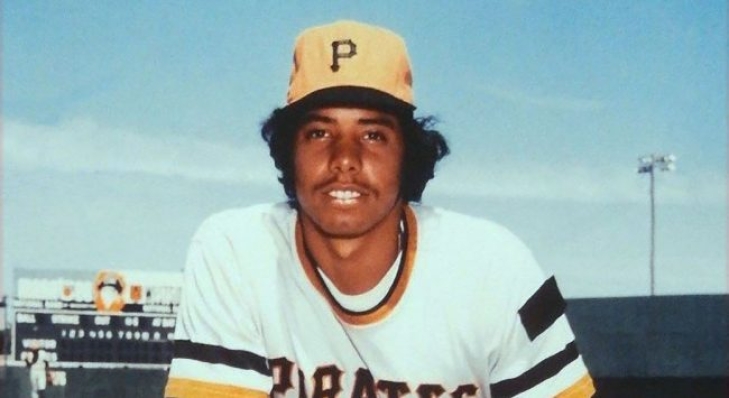
The 1970s "Lumber Company" era of Pittsburgh baseball is celebrated for its powerful, high-speed offense, with star sluggers often taking center stage. Behind that strong offense was a 6-foot-7 left-handed pitcher who methodically dominated National League lineups with calm, precise skill. John Robert Candelaria, known as "The Candy Man" by fans, brought a distinctive Brooklyn-inspired confidence to the mound. Drafted in 1972 after walking away from basketball, the lanky southpaw used an unorthodox, high-leverage cross-fire pitch that effectively neutralized opposing hitters, making him one of the most underrated starting pitchers in franchise history.
His quick rise through the farm system led to a remarkable debut in 1975, but it was his second season in 1976 that truly established his status as a top-tier pitcher. Candelaria made run prevention a consistent part of his game, highlighted by a historic moment on August 9 when he baffled the division-rival Cincinnati Reds with a stunning 2-0 no-hitter at Three Rivers Stadium, the first no-hitter by a Pirate in the city since 1907.
His peak physical performance and individual dominance reached its height in a stunning 1977 showcase, which remains a classic example of analysis. Candelaria delivered an exceptional pitching performance, achieving an impressive 20-5 record that led all major leagues with an .800 winning percentage. He dominated the National League by posting a league-leading 2.34 ERA and a flawless 1.071 WHIP, while consistently overpowering hitters and leading the league with a low 2.0 walks per nine innings, earning his first All-Star selection and finishing fifth in the Cy Young voting.
Candelaria's impact extended beyond a brief peak, offering exceptional durability to the rotation for ten years. He was a crucial, high-impact leader on the memorable 1979 "We Are Family" world championship team, winning 14 regular-season games and pitching six outstanding one-run innings to help secure a key win over Cincinnati in Game 1 of the NLCS. During his long initial tenure in Steel City, he recorded six more seasons with at least 11 wins, consistently dominating top hitters with precise control.
Tragically, rising tensions with management over his playing time and salary demands led to a mid-season trade to the California Angels in 1985, marking the end of his main tenure with the black and gold. However, demonstrating his strong emotional connection to the community, Candelaria returned to the Pirates for a short, nostalgic stint in the 1993 season to conclude his extensive major league career.
With the Pirates, Candelaria had a 124-87 Record, a 3.17 ERA, and fanned 1,159 batters.
25. Lloyd Waner
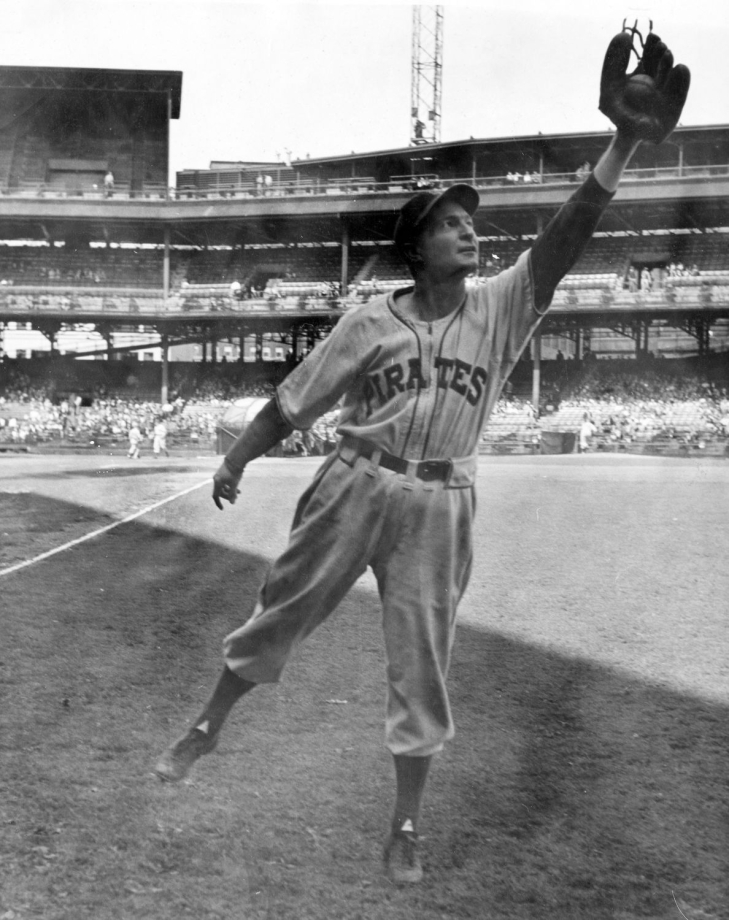
Lloyd Waner, a 5-foot-9, 150-pound Oklahoma native, was a contact hitter known as "Little Poison,” with a short, quick right-handed swing. Often paired with his Hall of Fame brother Paul, he specialized in line drives and contact hitting, contrasting with power sluggers and making contact hitting a season-long routine.
His debut appearance during the 1927 campaign remains one of the most explosive and prolific in Major League history. If the Rookie of the Year award had been available then, Waner would have won it by an overwhelming margin. As a 21-year-old rookie, he consistently overwhelmed National League pitchers, hitting a career-best .355 and leading the league with an impressive 133 runs scored. He achieved an astonishing 223 hits, establishing a rookie benchmark that kicked off a remarkable decade of leading the lineup with outstanding table-setting skills.
While he never quite eclipsed that spectacular rookie batting average again, Waner remained a model of unshakeable, low-variance consistency for the next ten summers. He cleared the coveted .300 threshold nine more times in a Pittsburgh uniform and orchestrated four distinct 200-hit masterclasses.
He possessed elite spatial awareness on the basepaths, routinely stretching singles into extra bases, as highlighted by a brilliant 1929 season in which he paced all of baseball with a career-high 20 triples.
However, when examined with modern, advanced run-creation filters, his overall analytical evaluation hits a clear limit. Despite his localized hit volume, "Little Poison’ lacked the power to clear the fence, hitting only 24 home runs in his extensive career. Additionally, his highly aggressive style meant he seldom took free passes, drawing just 151 walks in total, resulting in a low walk rate and a career on-base percentage of .354. Although he had excellent speed on the field, he was surprisingly cautious on the bases, rarely posting large stolen base numbers.
As aging and declining contact skills appeared in the late 1930s, the organization signaled a transition, trading the franchise icon to the Boston Braves in early 1941. Waner, showing his strong community ties, returned to the Bucs briefly during 1944-1945 World War II rosters to finish his career.
With Pittsburgh, Waner had 2,317 hits, 1,143 runs scored, and a stellar .319 batting average across 1,803 games. He entered the Baseball Hall of Fame in 1967 via the Veterans Committee.
24. Roy Face
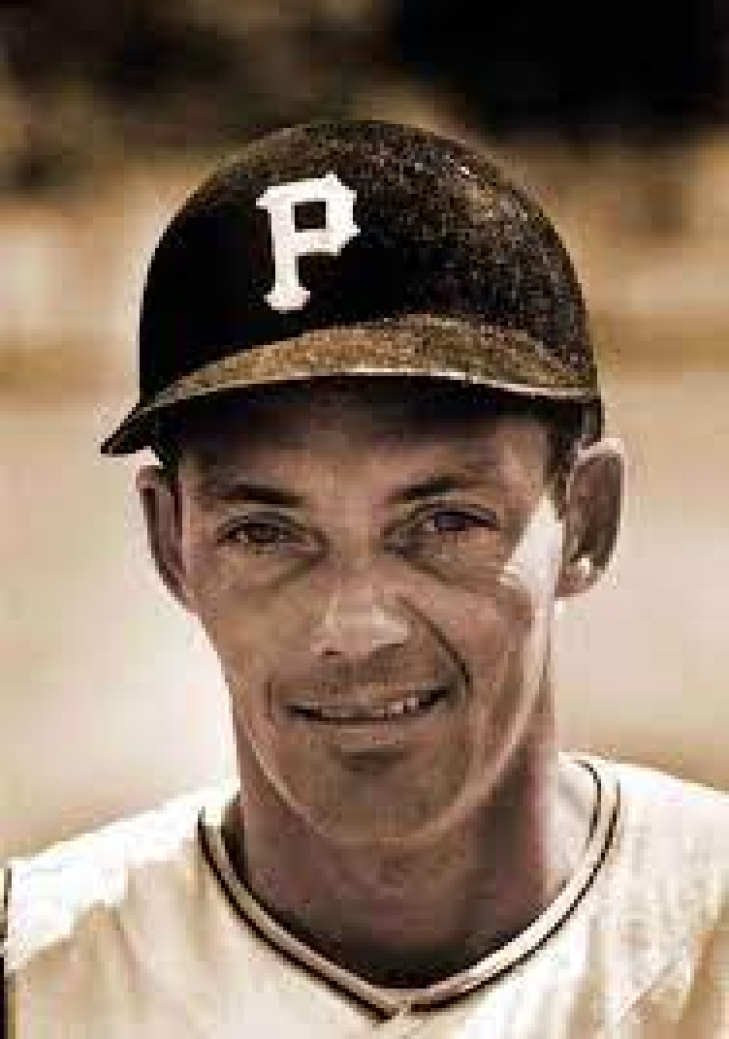
The development of the modern bullpen is often credited to a well-known knuckleball pitcher, but history tends to overlook the man who actually laid the foundation for today's closer role. Roy Face didn't just gather stats for the Pirates’ bullpen; he transformed the relief role into a potent weapon. Despite being only 5-foot-8 and 150 pounds, this former mechanical worker arrived in Pittsburgh with a reserved, icy demeanor and introduced a game-changing pitch: the forkball. By slipping the ball between his index and middle fingers, Face produced a fast, late-sinking pitch that completely baffled top hitters of the post-war era, making high-pressure situations his personal stage for mastery.
Initially, during the 1953 and 1955 seasons, he moved between the rotation and the bullpen. However, once manager Danny Murtaugh took over, Face was consistently used as a late-game reliever. This marked the beginning of a peak where he made preventing runs in the final innings a regular part of the season. In 1958, he made history by becoming the first pitcher in baseball to achieve 20 saves in a single season.
The peak of his national acclaim and unique efficiency coincided with a remarkable 1959 season that still stands out as a statistical marvel. Working solely from the bullpen, Face delivered an incredible high-pressure performance, winning 17 straight decisions in an extraordinary stretch. That summer, he concluded with an impressive 18–1 record, a stunning .947 winning percentage that remains an unbroken single-season major league record to this day.
Face was far from a one-summer anomaly, maintaining his status as the top reliever for more than ten years. He led the Senior Circuit in saves three times and was named an All-Star for three straight years from 1959 to 1961. His flawless spatial control and clutch late-inning performance culminated in the team's historic 1960 World Series victory. In a tense, seven-game series against the dominant New York Yankees, Face served as Murtaugh’s key safety net, participating in four games and securing three vital saves to secure Pittsburgh's renowned championship.
He remained with the Pirates until his contract was sold to Detroit during the 1968 season. With Pittsburgh, Face finished 547 games with 186 saves. He might be one of the most influential hurlers ever.
22. Vern Law
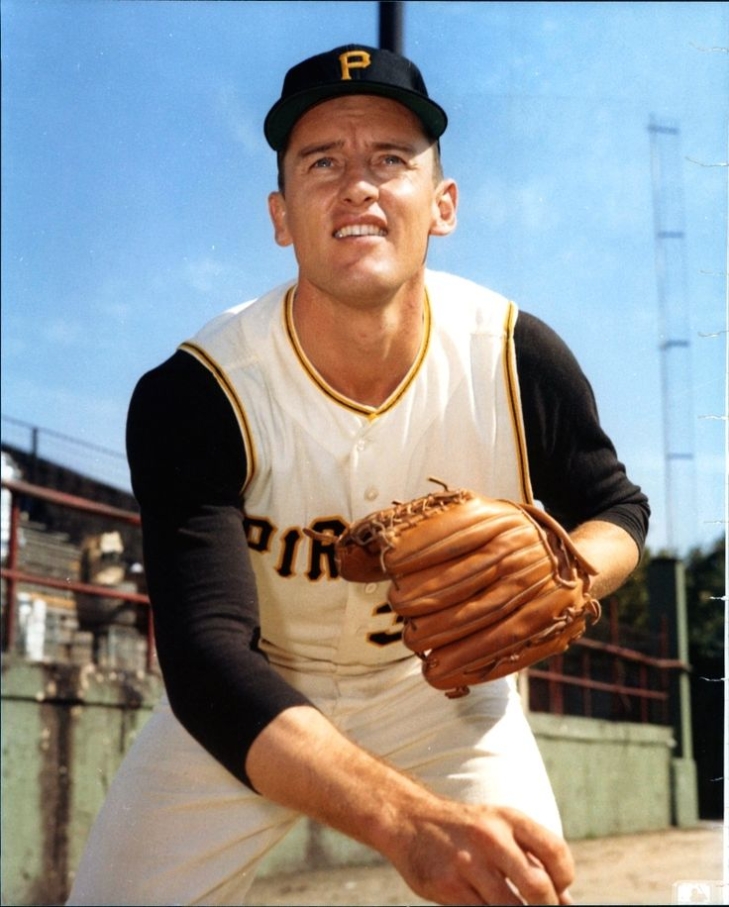
An athlete's greatness often extends beyond their skills, reflected in their character. Vern Law embodied this with unwavering faith and respect in sport. Known as "The Deacon" for his integrity and calm, he led Western Pennsylvania's rotation for nearly two decades, symbolizing blue-collar reliability. Despite tough times in the 1950s, he achieved peak performance when it mattered most.
His initial appearance during the 1950 schedule offered a brief glimpse of his frontline potential, but his development was suddenly interrupted when he was called away for a multi-year military service. Law rejoined the club before the 1954 season, and over the next five summers, he moved smoothly within a transitional pitching staff as the front office gradually built a competitive team.
His rise to elite efficiency truly occurred during a remarkable 1959 breakout, when he achieved 18 wins and maintained a spotless 2.98 ERA, solidifying his national reputation.
The pinnacle of his career was during the memorable 1960 regular season. Law showcased incredible control and resilience, pitching despite a painful ankle injury to earn the prestigious Cy Young Award, the first in franchise history. He made taking the mound a symbol of consistent excellence, winning a personal-best 20 games and leading all major league pitchers with 18 complete games.
When the Pirates faced the formidable New York Yankees in the Fall Classic, "The Deacon" secured his everlasting place in Steel City lore by starting three games and earning two crucial wins, outshining the American League champions and leading Pittsburgh to a historic world title.
Far from a one-summer wonder, Law demonstrated remarkable longevity by overcoming a severe shoulder tear that could have ended a lesser player's career, maintaining his role on the staff until 1967. His 16-year tenure as a “Lifer" included nine seasons with double-digit wins, during which he consistently outsmarted hitters with a sharp breaking ball and excellent control of the strike zone.
He left the game after 1967, leaving a strong local baseline. In 483 games for Pittsburgh, Law had 162 wins, 119 complete games, 28 shutouts, and 1,092 strikeouts over 2,672 innings.
27. Ray Kremer
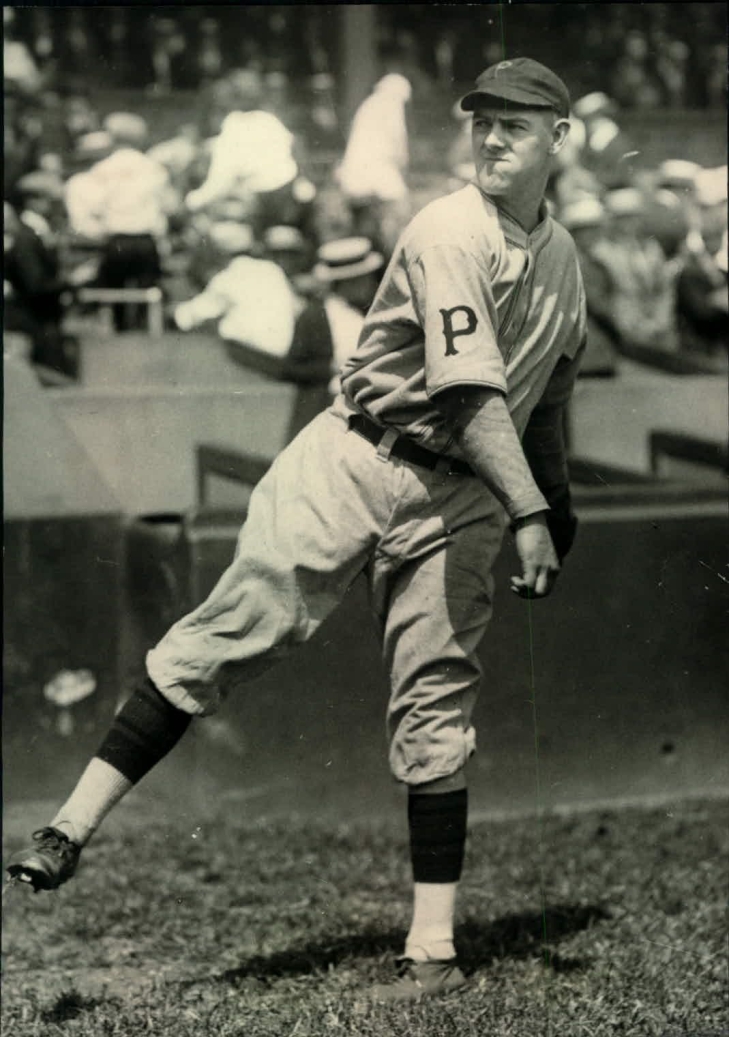
The history of baseball is filled with young prospects showing quick, elite talent by age twenty, but Ray Kremer's journey to major league fame was quite different. He spent nearly ten years working his way through the minor leagues and didn't pitch in the majors until he was 28. Kremer brought a mature, strategic approach to the mound, outsmarting hitters during the high-scoring 1920s. With smooth, reliable delivery, he spent his entire 10-season career in Pittsburgh, becoming a model of efficiency and the star of a small dynasty.
His debut campaign in 1924 immediately demonstrated his reliability. At just 28, rookie Kremer made pitching a consistent part of the season, finishing with an impressive 18–10 record and a flawless 3.19 ERA in 31 starts. This solid foundation paved the way for a remarkable peak, during which he played a crucial role in leading the team through some of the most intense pennant races of the decade.
During the historic 1925 campaign, his unwavering control helped the Pirates win the National League pennant. This laid the foundation for his exceptional performance in the Fall Classic, where he achieved two crucial wins against Washington, securing the World Series.
Over the next two summers, Kremer continued to excel. In 1926, he delivered an exceptional performance, showcasing excellent control to win his first National League ERA title with a tiny 2.61, and achieving a career-high 20 wins, finishing third in the National League MVP voting. He built on that success in 1927 by defending his ERA title during the pennant race, leading all of Major League Baseball with a 2.47 ERA, finishing in the top ten in MVP voting again, and helping the Bucs return to the World Series.
Even as the league's offensive surge peaked at the start of the decade, Kremer continued to be a leading winner. In the 1930 season, he leveraged his notable durability to lead the National League in wins for the second time, finishing with an impressive 20–12 record over 276 innings pitched.
Tragically, after extensive physical effort at an advanced age, natural decline caught up with him quickly by early 1931. His usual efficiency declined, and by the summer of 1933, he was no longer a major league contributor. He retired from the sport after the 1933 season, leaving behind a remarkable record: 143 wins and 85 losses, a solid 3.76 ERA, 140 complete games, and 233 appearances, all in a black-and-gold uniform.
20. Ed Morris
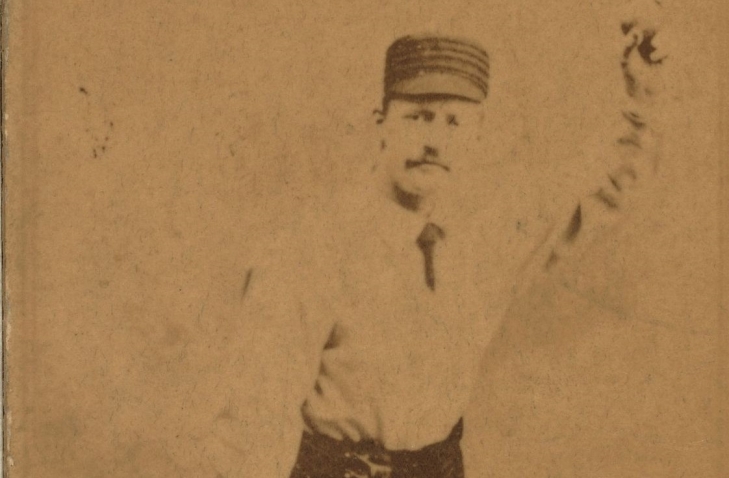
To truly understand the origins of professional baseball in western Pennsylvania, it’s necessary to go back to the 1880s—a time of grueling workloads, rough schedules, and primitive equipment that could break a modern athlete in just weeks. Ed "Cannonball" Morris exemplified this rugged, pioneering era. After the 1884 season, the Pittsburgh Alleghenys (later known as the Pirates) acquired him in a major asset deal from the collapsing Columbus Buckeyes. The broad-shouldered left-hander arrived in Pittsburgh with a fastball that revolutionized the way teams approached preventing runs.
What followed was a short but intense multi-year peak, still regarded as one of the most remarkable displays of raw endurance in local history. Morris made handling the ball an almost daily habit, recording workloads that are hard to imagine today. During his initial two summers in Pittsburgh (1885 and 1886), he led the pitching staff alone, securing 80 wins and pitching over 1,100 innings.
He consistently shut down American Association offenses, leading the league in shutouts in consecutive summers while keeping a remarkably low ERA below 2.50. His precise effectiveness was also confirmed by winning back-to-back league WHIP titles and recording a league-high 298 strikeouts in 1885.
When the franchise moved to the National League in 1887, Morris struggled with the changing competition and rules, posting a challenging 14–22 record and a high 4.31 ERA. However, demonstrating remarkable resilience, he mounted an impressive comeback in the 1888 season. Morris pitched an exhausting 480 innings, finishing with a strong 28–23 record and an outstanding 2.31 ERA, briefly regaining his national recognition.
Sadly, his heavy workload ultimately compromised his physical longevity. The intense strain led to his throwing arm failing the next summer. In a desperate attempt for financial stability, Morris left to join the rogue Pittsburgh Burghers of the newly formed Players' League in 1890, but he performed poorly on the mound and soon retired quietly.
He stepped away from the sport, leaving behind a remarkable, high-concentration localized baseline. During his five summers representing the city, Morris achieved 129 wins, a stellar 2.81 ERA, and 890 strikeouts over 233 complete games and 2,106 innings pitched.
Since his groundbreaking achievements occurred at the very beginning of professional baseball, his legacy has been greatly diminished over time, leading to his complete omission from current Cooperstown discussions. Nonetheless, he stays the original franchise ace, the formidable, brief-lived workhorse who first established the standard for pitching excellence in Pittsburgh.
With Pittsburgh, Morris went 129-102 with a 2.81 ERA and 890 strikeouts.
19. Deacon Phillippe
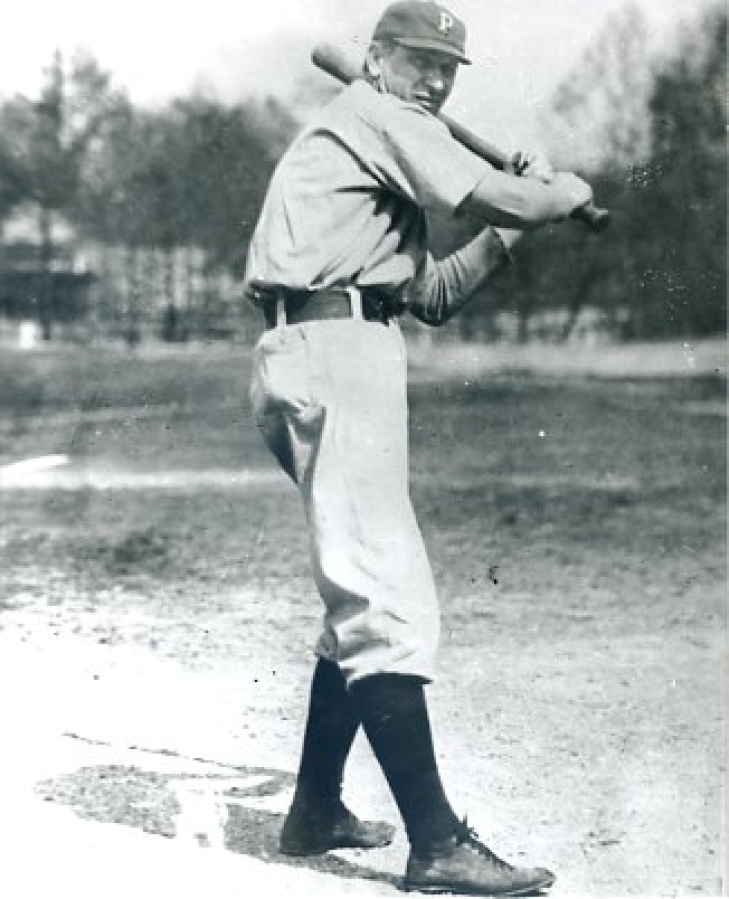
The corporations’ merging that ended the Louisville Colonels around 1900 significantly changed the course of Pittsburgh baseball. While many focus on the players who arrived, Deacon Phillippe was essential as the main pitcher. Born in Virginia and raised in rural South Dakota, this humble, religious, soft-spoken right-hander earned his nickname thanks to his disciplined, virtuous lifestyle. On the mound, Phillippe was known for his calm, precise pitching that stifled Deadball Era offenses. Instead of relying on high speed, he aimed carefully at the strike zone, using exceptional control to become one of the most reliable big-game pitchers of his time.
His debut in Pittsburgh before the 1900 campaign followed an impressive rookie season with 21 wins in Louisville. Phillippe quickly adapted to his new environment in Western Pennsylvania. He promptly made taking the ball into a dominating routine, recording four straight 20-win performances from 1900 to 1903 that helped establish manager Fred Clarke’s rising dynasty.
His paramount attribute was an unwavering refusal to beat himself. Phillippe systematically dictated terms to opposing batters, leading the National League in the fewest walks per nine innings (BB/9) on five occasions, achieving the highest strikeout-to-walk ratio (SO/BB) four times, and excelling in Fielding Independent Pitching (FIP) twice.
The peak of his individual achievements and legendary reputation was reached during the first high-stakes 1903 modern World Series against the Boston Americans. With the Pirates' pitching staff severely weakened by unexpected injuries and departures, Phillippe delivered an extraordinary, tireless performance that is hard to imagine today.
He started five of the nine games in the series, pitching five complete games and totaling 44 intense innings on the mound. He personally secured three wins for the Bucs, including a historic opening-game performance. Although the heavy physical toll eventually affected him in the final innings, his unwavering bravery solidified his legendary status in baseball history.
His unwavering long career earned the highest corporate recognition during the notable 1909 world championship campaign. At age 37, he offered essential support to the team, posting an impressive 8–3 record from the rotation and bullpen, aiding the club in securing the National League pennant and ultimately celebrating Pittsburgh's exciting seven-game victory in the World Series against Ty Cobb's Detroit Tigers.
Phillippe retired during the 1911 season, retiring with a 168-92 record and a 2.50 ERA as a Pirate.
15. Bill Mazeroski
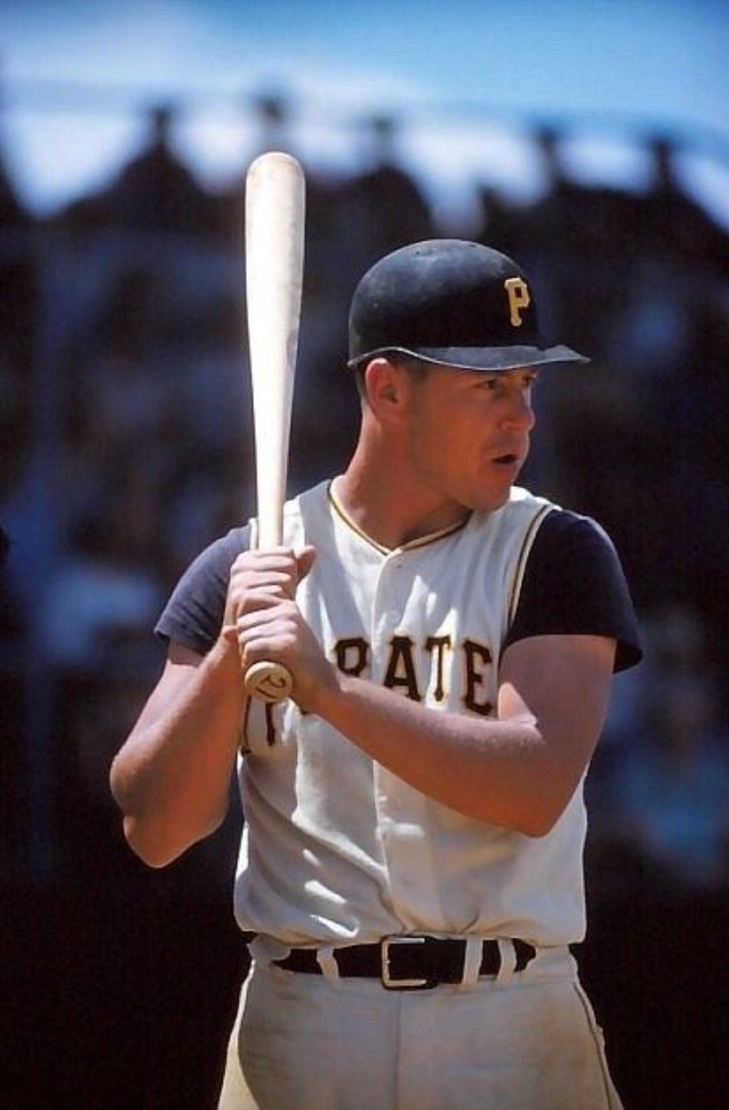
Mention Bill Mazeroski to any sports fan, and the reaction is immediate: recalling the iconic moment at Forbes Field when he hit a high-speed drive over the left-field wall, leading to a euphoric dash around the bases while waving his helmet to clinch the 1960 World Series victory. This remains the only Game 7 walk-off home run in baseball history. However, summing up his entire 17-season career in black and gold as just that single lightning-fast swing significantly underestimates his true impact on the game. "Maz" was not only a legendary October hero but also spent nearly twenty years perfecting a masterful middle-infield defense that set the gold standard in his position.
His debut in the 1956 schedule signaled the emergence of a lifelong player who dedicated his entire career to the Pittsburgh dirt. Mazeroski transformed the infield pivot into a true art, moving with a smooth, lightning-fast throw that totally changed the way double plays are executed.
He was a superior defender, earning eight Gold Gloves and regularly leading the National League in assists, putouts, and double plays. Advanced metrics have further highlighted his exceptional skill, establishing him as the franchise’s all-time leader in Total Zone Runs and career double plays. During the 1960s, his defensive bWAR exceeded 1.5 on eight occasions, making second base virtually impenetrable for opposing grounders.
While his glove offered top-tier structural stability, his offensive capabilities were more modest, showing a low-variance baseline. Mazeroski was a reliable contact hitter, amassing 2,016 hits, 294 doubles, and 138 homers over 2,163 games, and earning ten All-Star selections. Nonetheless, his aggressive, free-swinging style resulted in a modest .299 career on-base percentage and a .260 lifetime batting average, limiting his overall ranking when evaluated by modern advanced run-creation metrics.
However, during critical moments, his bat consistently delivered. Aside from his legendary 1960 home run against the formidable New York Yankees, his enduring career enabled him to act as a crucial veteran presence for a new generation. When the aging infielder contributed to winning the 1971 world championship, he and the iconic Roberto Clemente became the only two players to appear on both the 1960 and 1971 championship teams, marking a unique place in club history.
After he took his final walk off the diamond in 1972, modern writers initially had difficulty assessing his worth, which kept him out of Cooperstown for years due to his average batting stats. The definitive recognition of his historic significance came in 2001, when the Veterans Committee decisively voted Mazeroski into the National Baseball Hall of Fame, ending the debate. The Pirates knew he was an iconic figure far earlier, as his number 9 was retired by the team in 1987.