

14. Howard Johnson
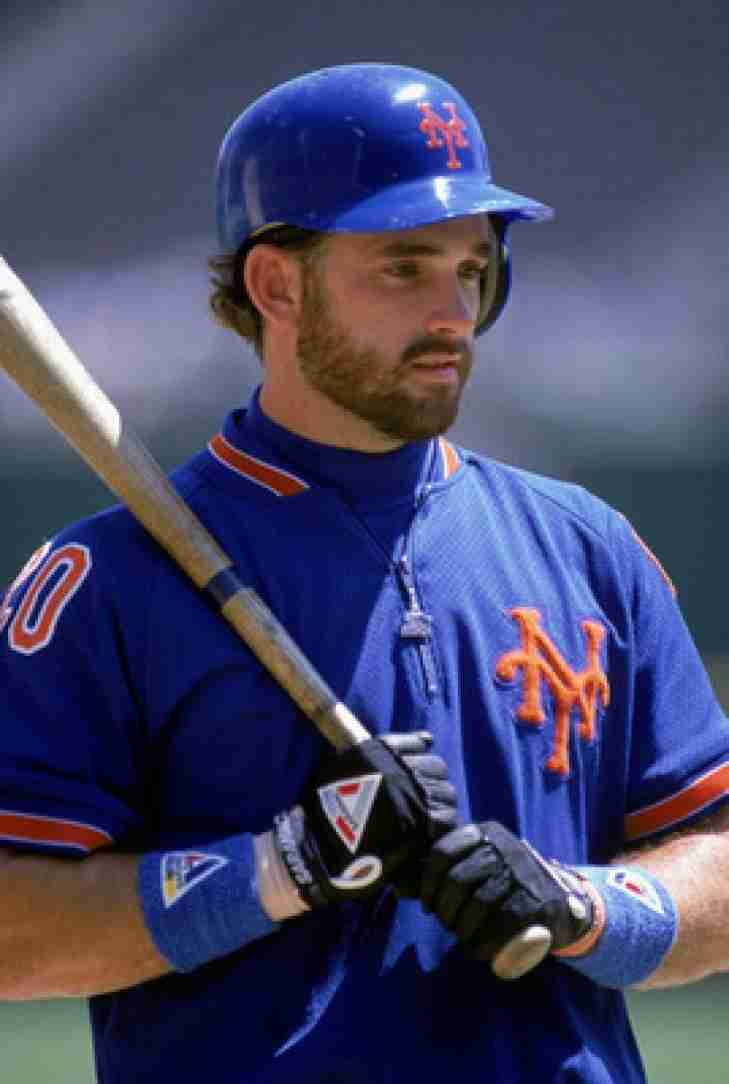
Howard Johnson first arrived in New York ahead of the 1985 campaign, traded from the Detroit Tigers in exchange for pitcher Walt Terrell. Having just earned a World Series ring in Detroit without seeing action in the 1984 postseason, the switch-hitting infielder landed on a rising Mets squad with plenty to prove.
After playing a role in New York’s 1986 World Series championship, Johnson made a breakthrough season in 1987, becoming the first switch-hitter in Major League history to reach the 30-30 club with 36 home runs and 32 stolen bases. This achievement was only the beginning; he would later accomplish the 30-30 feat three more times while with the Mets, setting a franchise record for energetic, high-impact offense.
He received two All-Star selections and two Silver Slugger Awards in 1989 and 1991. During this time, he consistently anchored the Mets' lineup alongside Darryl Strawberry. His peak offensive performance came in 1991, a remarkable season when he won the National League Home Run title with 38 home runs and the RBI crown with 117, while also leading the league in runs scored. His skill in contributing offensively from both sides of the plate earned him two fifth-place finishes in the NL MVP voting, in 1989 and 1991.
Following that torrid 1991 peak, Johnson entered a steep physical decline as injuries disrupted his timing and sapped his signature power during his final two years in New York. Johnson left the team for Colorado for free agency and, as a Met, had totals of 997 hits, 192 home runs, and 202 stolen bases, which warrant this high spot on our all-time New York Mets list. The Mets chose Johnson for their franchise Hall of Fame in 2023.
16. David Cone
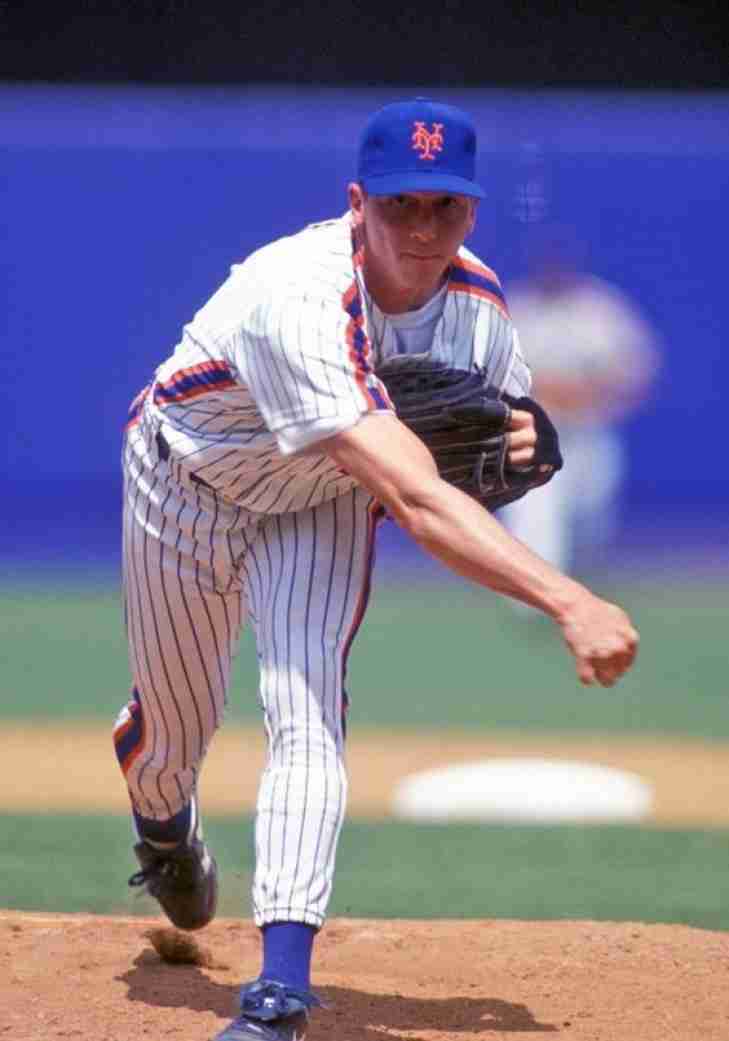
David Cone first arrived in Flushing in March 1987 through a significant trade with the Kansas City Royals, where he joined Chris Jelic in exchange for Ed Hearn, Rick Anderson, and Mauro Gozzo. Equipped with a deceptive multi-angle delivery and a deadly split-finger fastball, Cone rapidly secured a spot in the starting rotation. Alongside Doc Gooden, he helped build a powerful pitching duo that dominated National League hitters for nearly five years.
Cone achieved a historic milestone by winning consecutive National League strikeout titles in 1990 with 233 strikeouts and in 1991 with 241 strikeouts. This period included a legendary, record-tying 19-strikeout game against the Phillies on the last day of the 1991 season. His exceptional, swing-and-miss ability was unmatched, making him a top-tier pitcher for the Mets who regularly surpassed 200 innings with ease.
His 1992 campaign authored a truly bizarre and historic masterpiece of era dominance. Before the cash-strapped Mets moved him, Cone struck out 214 batters in 196.2 frames, leading the league in strikeout rate and tossing five shutouts. Even though he was dealt to the Toronto Blue Jays in late August, his National League body of work was so overwhelming that he still finished second in the NL strikeout race from another country. Combined with his Toronto output, his 261 punchouts paced all of Major League Baseball. Cone continued that excellent year by helping the Jays win their first World Series. Incidentally, he won four more as a New York Yankee.
He would return to New York briefly for one more attempt at baseball in 2003, though that would be only for five contests. Over his two runs with the Mets, he would compile a record of 81-51 with 1,172 strikeouts.
5. Darryl Strawberry
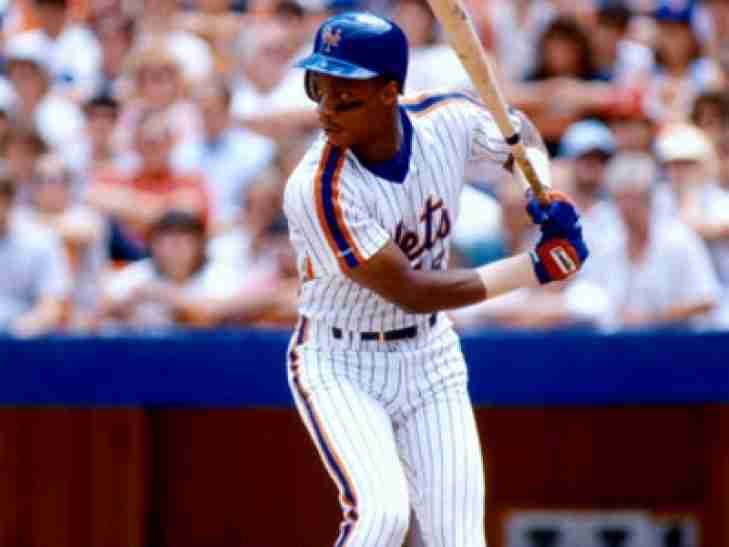
Darryl Strawberry was the first overall pick in 1980, a towering presence with a violent, beautiful left-handed swing that looked designed to launch baseballs over the Shea Stadium scoreboard. From the moment he stepped onto the grass in 1983, he became the face of a new, swaggering era for the Mets.
In 1983, Strawberry met the enormous expectations by hitting 26 home runs and winning the National League Rookie of the Year. From 1984 to 1986, he established himself as a top run producer, making the All-Star team each year and becoming a key middle-of-the-order hitter that helped turn the Mets into champions. During the 1986 World Series, he played a crucial role in the team’s iconic success, providing clutch power that kept opposing pitchers on the defensive.
In 1988, Strawberry delivered an outstanding season that almost earned him MVP honors. He dominated the National League by leading in home runs (39), slugging percentage (.545), and OPS (.924). Along with his power, he contributed 101 RBIs and 29 stolen bases, narrowly finishing second in MVP voting behind Kirk Gibson. At this peak, he was a five-tool player capable of influencing the game with his glove, speed, or a single powerful swing, demonstrating athleticism nearly unmatched.
After the 1990 season, Strawberry departed for the West Coast when the Los Angeles Dodgers substantially outbid the Mets for his services. Strawberry compiled 252 home runs, 733 RBIs, and a .520 slugging percentage, and in 2010, he was enshrined into the Mets Hall of Fame.
13. Keith Hernandez
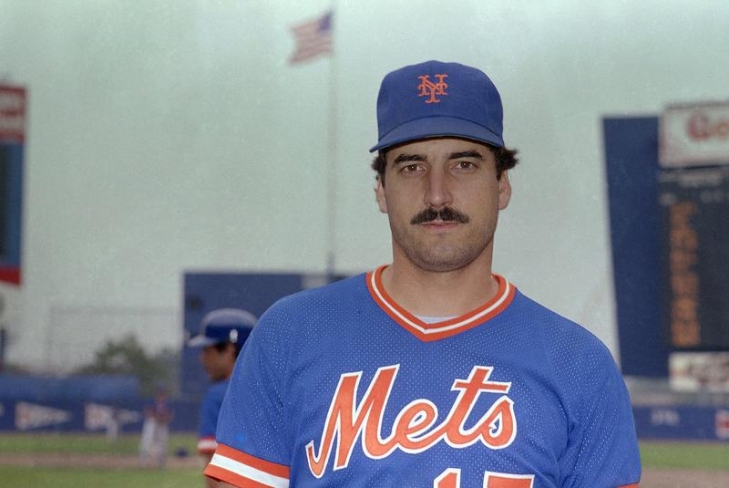
Keith Hernandez joined the Mets in June 1983 through a major trade from St. Louis, a deal that significantly impacted both teams. After Whitey Herzog, Cardinals manager, famously called him a clubhouse cancer, Hernandez, the 1979 NL MVP and 1982 World Series winner, found himself relegated to a struggling New York team. This was a pivotal moment for both the player and the franchise, yet Hernandez still had plenty of energy and skill left.
Hernandez discarded the negative labels, took on the role of clubhouse leader, and became the first official team captain in Mets history. He served as the strategic mind and emotional core of the legendary 1986 championship team, demonstrating exceptional situational hitting and leadership that helped the team achieve 108 regular-season wins and win the Fall Classic. Although he didn't win a second MVP award in New York, his influence was widely acknowledged by his peers; he was the MVP runner-up in 1984 and achieved two more top-ten finishes while playing in Queens.
At the plate, Hernandez was an extremely skilled pure hitter, combining a disciplined approach with an elite ability to hit to all fields. He demonstrated remarkable consistency by batting over .300 four times for the Mets and achieved an impressive on-base percentage above .400 in three different seasons. Defensively, he reached a level of excellence that still sets the standard for the position. He played first base with a fierce, high-energy style, aggressively charging bunts and diving to cut off throws like an extra infielder, earning him six consecutive Gold Glove Awards as a Met.
After the 1989 season, Hernandez left via free agency to play one final season in Cleveland. Oh, and he was in a Seinfeld episode. Basically, we are saying this is a New York City icon.
As a Met, he had 939 hits, 80 homers, and batted .297. The team selected Hernandez for its Hall of Fame in 1997
2. Dwight Gooden
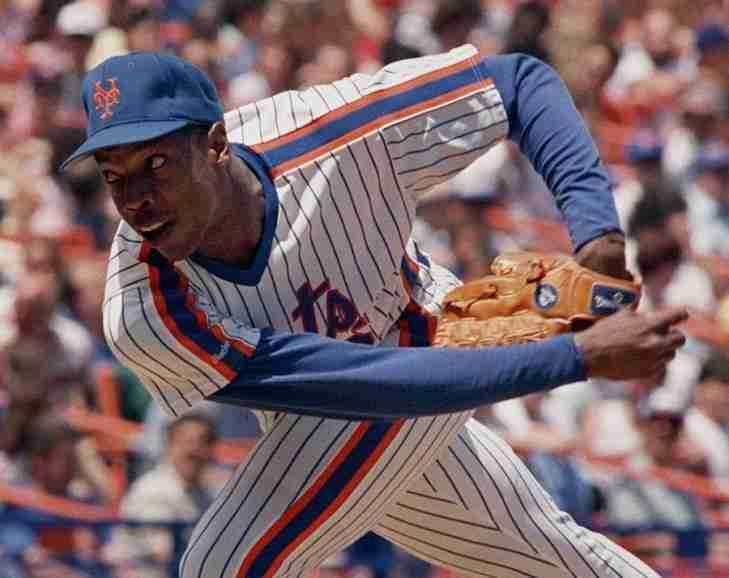
In 1984, Dwight Gooden came to Flushing as a nineteen-year-old phenom with a high-octane fastball and a curveball so sharp it was nicknamed "Lord Charles." While many fans look back at his career through the lens of a "what if" story, his initial seasons provided a brand of dominance that effectively paralyzed the National League.
In his debut season, Gooden exhibited a remarkable capacity to overpower hitters, earning the National League Rookie of the Year Award while leading the league in strikeouts (276), FIP, and WHIP. He immediately demonstrated to the organization that he was an elite talent by finishing second in the Cy Young Award voting at only 19 years of age. This exceptional breakout performance established a high-caliber baseline, rendering him the most formidable young pitcher in baseball and laying a solid foundation for a Mets rotation designed to dominate over the coming decade.
In his sophomore campaign, Gooden put forth what many consider the greatest single season by a pitcher in the modern era. That summer, he showcased a total mastery of the strike zone to capture the National League Cy Young Award, winning the Triple Crown of pitching by leading the league in wins (24), strikeouts (268), and a staggering 1.53 ERA. His 12.2 bWAR that season remains a historic outlier, reflecting a level of efficiency that saw him shave a full run off his previous year’s ERA. He was a high-caliber engine of dominance, single-handedly turning Shea Stadium into a "K-Corner" carnival every five days.
His 1985 campaign was his peak at age 20, but he was a mainstay in the late 1980s. He contributed to the 1986 World Series win, with 17 wins and veteran presence to anchor the clubhouse. Despite personal struggles affecting consistency, he achieved three more top-ten Cy Young finishes as a Met, demonstrating overlooked durability.
His tenure reached a crossroads as he shifted from a teenage superstar to a craftier right-hander. Between 1987 and 1991, Gooden was a high-volume winner, with 18 wins in 1988 and 19 in 1990. Although his raw velocity declined, his tactical value remained elite, consistently eating innings and keeping the Mets in the NL East race. He left Queens with 157 wins and 1,875 strikeouts, reflecting a career many players only dream of.
Gooden’s service ended with a bittersweet departure after the 1994 season, but his bond with Queens fans remained strong. Known as "Dr. K," he defined New York sports in the 80s. He was inducted into the Mets Hall of Fame in 2010, and his number 16 was retired in 2024, cementing his legacy. With the Mets (1984–1994), Gooden's record was 157-85, with 1,875 strikeouts and a 3.10 ERA.
1. Tom Seaver
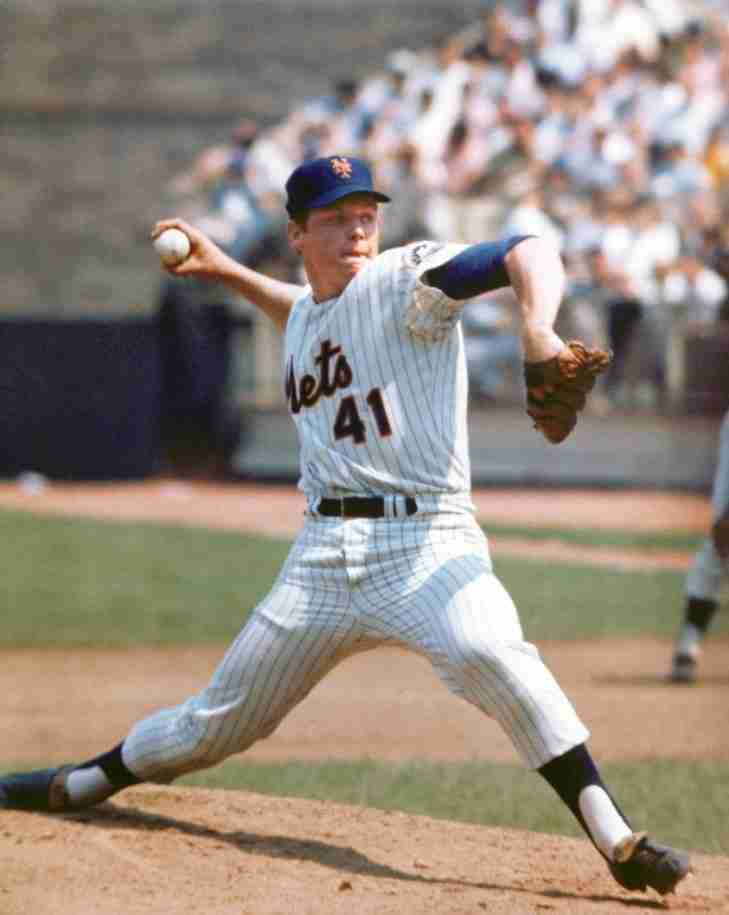
It was like a bolt of lightning when Tom Seaver arrived in Queens in 1967. He was the man who would save a franchise that had spent its first five years of existence setting records for creative ways to lose. While the Mets were still very much the "Lovable Losers" when he debuted, he immediately provided a brand of professional, high-velocity pitching that demanded a change in the clubhouse culture. For twelve total seasons in a Mets uniform, he operated as the undisputed "Franchise," standing as the foundational pillar who proved that greatness was actually possible in Flushing.
Seaver exploded on the scene as the National League Rookie of the Year for a team that still finished in the cellar. Seaver consistently dominated without run support, earning All-Star nods in his first two seasons. He proved he was not just a talented pitcher but a strategic tactician, viewing each start as a battle of wits. This established a strong foundation for a rotation that was becoming league envy.
In 1969, Seaver was the master architect of what was the greatest turnaround in baseball history. That summer, he demonstrated mastery on the mound, winning 25 games and his first NL Cy Young, leading a young team to a surprising World Series victory. He propelled the Mets from 100-loss inadequacies to champions in two years, giving the city its first baseball glory since the Dodgers and Giants left. Seriously, that year will never be forgotten.
The early 1970s saw Seaver enter a run of dominance that felt almost unfair to the rest of the league. On April 22, 1970, he performed a total demolition of the San Diego Padres, striking out 19 batters, including a record-setting ten in a row to end the game. He followed that in 1971 with what many statisticians consider his technical masterpiece: a league-leading 1.76 ERA and 289 strikeouts. Despite his 10.2 bWAR that year, the voters somehow gave the Cy Young to Fergie Jenkins, an injustice that didn’t stop Seaver from being the most feared man on any mound in New York.
His time in Queens reached another peak in 1973, a year when he carried the "Ya Gotta Believe" Mets on his back during a frantic September push. He captured his second Cy Young Award while leading the National League in ERA (2.08) and strikeouts (251), proving himself a high-stakes performer as he led the Mets through a grueling postseason all the way to Game 7 of the World Series. He demonstrated the organization his tireless durability by tossing 290 innings, serving as a human firewall against the rest of the National League's offenses.
By 1975, Seaver was firmly established as a premier superstar, capturing his third Cy Young Award with a league-best 22 wins and 243 strikeouts. Even as the team around him began to fluctuate, he remained a professional mainstay, providing a high-quality foundation by frequently driving in his own runs or pitching deep enough to save a taxed bullpen
In 1977, Seaver WAS the Mets, so what transpired during the season had a title all its own: “The Midnight Massacre”.Following a public and bitter contract dispute with Mets Chairman M. Donald Grant, who apparently treated the team’s payroll like he was personally paying in nickels, traded Seaver to the Cincinnati Reds. The trade was so unpopular that it basically caused a widespread slump in morale at Shea Stadium, as fans were forced to watch "The Franchise" pitch in a different uniform while the Mets spiraled back into the basement.
Late in his career, Seaver had a brief homecoming in 1983, showing he still had high-quality craft at age 38. He posted a 3.55 ERA over 231 innings, but the Mets' mistake in leaving him unprotected in a free agent draft led to the White Sox taking him. This forced their icon to win his 300th game in a Sox uniform, not at Shea.
In 1988, when the Mets retired his number 41, it was the final punctuation on a journey that culminated in his 1992 induction into the Baseball Hall of Fame. At the time, he entered Cooperstown with a staggering 98.8% of the vote, the highest percentage in history for over two decades. Seaver compiled 198 wins, 2,541 strikeouts, and three Cy Young Awards, and a World Series.
6. Jerry Koosman
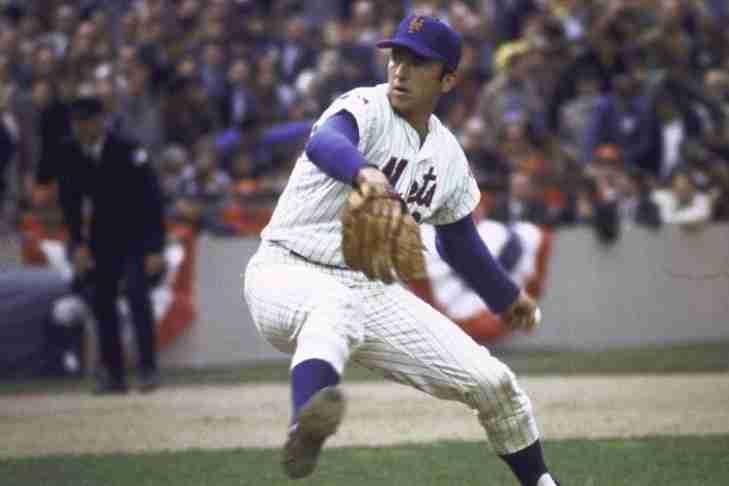
Jerry Koosman came to New York in 1967 as a Minnesota farm boy, scouted while pitching for the Army. As a left-hander, his calm exterior concealed a strong competitive drive. Although he spent much of his time in Flushing behind Tom Seaver, Koosman was a vital second pitcher, forming part of the most formidable one-two combination in the National League.
In 1968, during his first full season, Koosman delivered an outstanding performance, winning 19 games with a 2.08 ERA and narrowly losing Rookie of the Year. He reached a historic peak in the 1969 "Miracle Mets" season, with 17 wins and his second straight All-Star selection. Although Seaver was the star of the rotation, Koosman became the hero of the Fall Classic; he went 2-0 with a 1.35 ERA in the 1969 World Series and famously pitched a complete-game victory in Game 5 to clinch the franchise's first championship.
During the early 1970s, Koosman demonstrated resilience by overcoming arm fatigue to stay a key player in the rotation. In late 1973, he set a franchise record with 31 2/3 consecutive scoreless innings, fueling the "Ya Gotta Believe" drive toward the NL pennant. This era proved he was a high-leverage starter capable of dominating top hitters, even when his team’s offense struggled.
In 1976, Koosman put together what many consider his finest individual season. He led the rotation with a career-high 21 wins and reached the 200-strikeout mark for the only time in his career. His efficiency that year earned him a second-place finish in the Cy Young voting.
The Mets traded “Kooz” to Minnesota after the 1978 Season. With the Mets, he owned a 140-137 record, a 3.09 ERA, and 1,799 strikeouts. Koosman was inducted into the Mets Hall of Fame in 1989. His journey reached its final punctuation in 2021 when the organization retired his No. 36.
4. David Wright
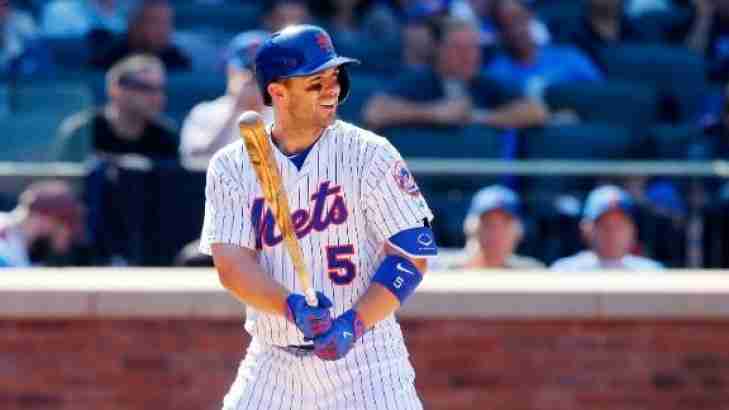
David Wright arrived in Queens in 2004 as the homegrown answer to star-studded rotations, a Virginia kid who took over the hot corner with a mix of high-frequency production and a clean-cut, charismatic style. Although some critics hesitated to rank him among the NL's top players, he proved them wrong over fourteen seasons by dismantling Mets' all-time offensive records. He was the franchise’s heart through 2006 highs and 2015 grit, earning the nickname "Captain America.”
Wright, debuting at 21, showcased a high-frequency ability to drive the ball all fields, with a .306 average and 102 RBIs in 2005. He proved a versatile threat, notably making a legendary barehanded catch in San Diego. This established him as a star capable of leading the Mets’ middle order for a decade.
During 2007-2008, he had two of the greatest seasons by a third baseman in New York history. In 2007, he joined the 30/30 club (30 home runs and 34 stolen bases), batting .325, and winning a Gold Glove and Silver Slugger. In 2008, he hit 33 homers with 124 RBIs, solidifying his role as a key offensive contributor. He was also a top MVP candidate, helping a team transitioning into Citi Field.
Between 2005 and 2012, he was a high-volume contributor who surpassed the 100-RBI mark five times and earned seven All-Star selections. While he was a technical master at the plate, he also showed the organization specialized leadership, being named the fourth captain in franchise history in 2013.
His career was tragically cut short by spinal stenosis, turning every game into a battle against his body. After leading the 2015 World Series with a key home run, his physical toll grew, causing him to miss nearly all of 2017 and 2018 seasons. Many wondered if "The Captain" would ever return to Citi Field, a harsh turn for a player known for his reliability.
The end came in September 2018. In a farewell that felt like an honoring for Mets fans, Wright returned for two final games to say goodbye to the only fanbase he ever knew. While he only recorded one plate appearance in his final start, the standing ovation lasted long enough to remind everyone that his legacy wasn't about the box score; it was about the dignity he brought to the uniform. He retired with a career .296 average and 242 home runs,
In 2023, when Wright was inducted into the Mets Hall of Fame, followed by the official retirement of his number 5 in 2025.
The New York Mets Will Retire Mike Piazza's Number.

Piazza joined the New York Mets following a trade from the Florida Marlins in 1998 and over a nearly 1,000 Game Career with the Mets, Piazza earned six All Star nods and three Silver Slugger Awards. He would accumulate 1,028 Hits, 220 Home Runs, with a Slash Line of .296/.373/.542 Slash Line with a bWAR of 30.5.
The retirement of Mike Piazza’s number #31 will be the fourth Met to have his number retired. This follows Tom Seaver, Gil Hodges and Casey Stengel to have this accolade.
The ceremony will take place prior to a game against the Colorado Rockies on July 30th.
We would like to congratulate Mike Piazza for achieving this latest accolade.
17. Keith Hernandez
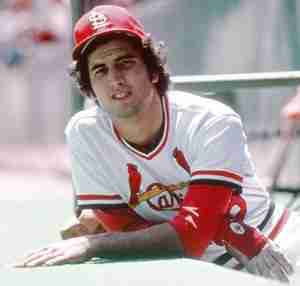
Just what would Keith Hernandez be most famous for? Could it be for his eleven consecutive Gold Gloves? How about his 1979 MVP? The two World Series rings, perhaps? Maybe his tenacious play as a Met? It could also be for his association with cocaine. Likely, many think of Keith Hernandez and remember that Seinfeld episode instead. Just as long as it isn’t for those terrible Just for Men commercials.
Although Keith Hernandez had a longer tenure with the Cardinals and won a World Series and MVP there, it can be easily argued that his best days were as a New York Met. He embodied the party hard, play harder attitude, and quickly became the leader of his second franchise. Hernandez did not just win Gold Gloves; he reinvented the position. It was virtually impossible to bunt on him, and his judgments on the field were rarely wrong. Hernandez was not a power hitter, but a very good contact hitter, and showed a high On Base Percentage when it wasn’t the vogue statistic to have.
What has hampered Hernandez’s Hall of Fame case was the allegations in St. Louis that he was not a hustler (mostly made by his manager, Whitey Herzog) and was a drug abuser. The latter proved to be true, though the former was accurate as well; it can only be imagined what numbers he would have put up. Keith Hernandez likely left the ballot after nine years because of those issues, but with the recent surge of sabermetrics, a look at Keith Hernandez should make him an interesting case for future consideration.
Should Keith Hernandez be in the Hall of Fame?
51. Rusty Staub
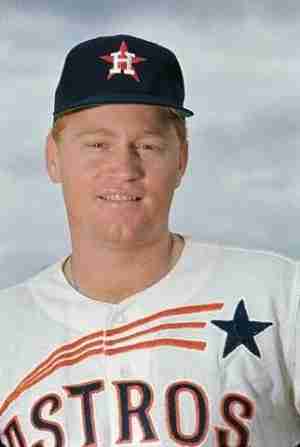
If the main criteria for the Hall are perseverance and effort, then Rusty Staub should have been a first-ballot Hall of Famer. His hard work resulted in over 2,700 hits in a Major League career that many people who saw him early on would never have pegged him for.
Nobody could ever accuse Staub of not giving everything he had, regardless of the endeavor. Those efforts included cooking, history, and, of course, baseball. They called him eccentric for these things, but his meticulous nature turned him into a pure hitter and gained him respect throughout the league. He made six All-Star Games but did so without showing much power (though he hit 25 homers twice) and without any real speed. What he did do was hit for average consistently and walk frequently, which enabled him, even late in his career, to be a solid pinch-hitter.
Staub may have been freakishly consistent, but he was never dominant and was never a serious contender for any postseason award. Six All-Star appearances were impressive, but rarely has the Baseball Hall of Fame rewarded longevity without at least a flash of immortality. If they did, Staub would be a good place to start.
Should Rusty Staub be in the Hall of Fame?
33. David Cone
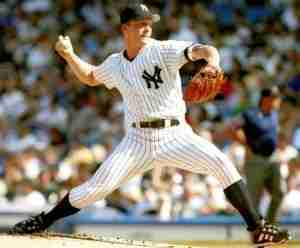
David Cone may not be best remembered for winning a Cy Young Award. He may be best known as a true hired gun that baseball teams coveted in their stretch drives.
Cone had the coveted label as a big game pitcher. Cone was at his best during high-pressure situations and showcased his abilities as a member of five World Series-winning teams. He was a very smart pitcher who used a variety of skills to defeat opposing batters. Cone was the subject of various sex scandals, yet was able to shut out those distractions and often had his best outings while the target of public ridicule. As such, he shook off those labels and kept only one: winner.
What prevented David Cone from making a serious run at the Hall of Fame was a few bad seasons that really brought down his overall career numbers. He failed to make the 200-win milestone, though had he had more offensive run support, he could have made it. His “hired gun” status also gave him a label that was unsatisfactory to some, though he was one of many to receive it. Flat out, David Cone was one of the top pitchers of the ’90s, and that should not be denied.
Should David Cone be in the Hall of Fame?
82. Carlos Delgado
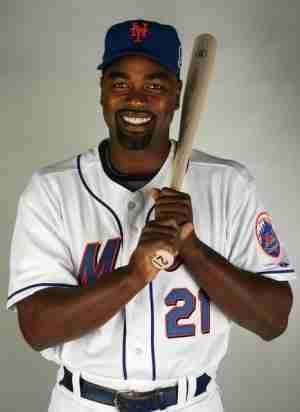
One of the more consistent hitters in his era, Carlos Delgado was only named to two All-Star teams due to the glut of top-tier first basemen in his time. He had great power numbers (473 Home Runs and 1,512 Runs Batted In) and a very good career OPS of .929, which sounds like Hall of Fame numbers, but his career WAR of 44.3, although good, is not on par with many of the current players they are looking at.
Should Carlos Delgado be in the Hall of Fame?
76. Jerry Koosman
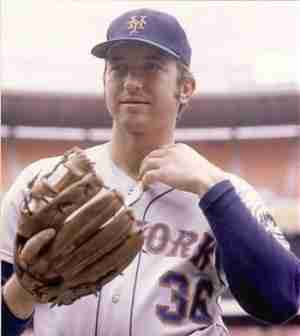
You would think it would be hard to rank a Pitcher who once lost 20 games in a season on a list for Hall of Fame consideration. Actually, it wasn’t that hard at all.
In the year that Jerry Koosman lost twenty games, his stat lines were actually decent. In fact, he led the National League in Strikeouts per Nine Innings that season; however, the run support that he received from his woeful Mets was virtually non-existent. It wasn’t always that way, as he was the lefty half of a powerful combination (with Tom Seaver) that propelled the “Miracle Mets” to the 1969 World Series. Considered to be the best lefty that the Mets ever had, Koosman won 140 games for them, which was impressive considering that New York was not particularly good for half of that tenure. With what was perceived as an up-and-down season, Koosman was resurrected in Minnesota and won 20 games, making a solid charge for the Cy Young, but again, he was saddled with a mediocre team, this time one out of the National spotlight.
Jerry Koosman was a very good pitcher who always seemed to be in the shadow of (Seaver) or in a small market. Sabremetrically, his career has enjoyed a better look (Career WAR of 58.8), but it probably won’t be enough to get him a serious look on a Veteran’s Committee Ballot. At least Mets fans knew how good Koosman really was.