

31. Jesse Orosco
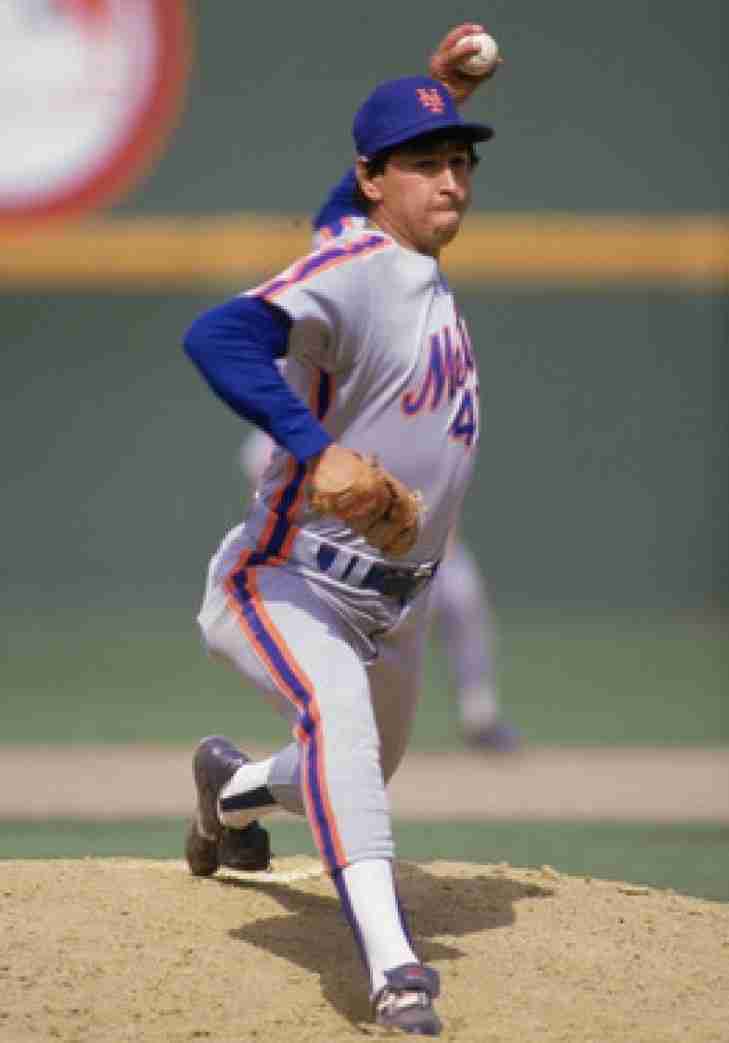
Jesse Orosco joined the Mets as a prospect in February 1979 via a trade with the Minnesota Twins, primarily to acquire veteran starter Jerry Koosman. Initially seen as a minor part of the deal, the young left-handed reliever made it onto the major league roster by April. Over his seven full seasons with the Mets, he became the quintessential example of a modern high-leverage bullpen pitcher.
By 1982, Orosco had secured a permanent place on the main roster, but his standout season came the following year. In 1983, he pitched 110 innings over 62 games, posting an impressive 13-7 record with 17 saves. His exceptional 1.47 ERA set a standard for Mets relievers, earning him his first All-Star appearance and finishing third in NL Cy Young Award voting. He maintained this high level of performance, earning a second All-Star selection in 1984 by saving a career-best 31 games and solidifying his reputation as the top left-handed closer.
Orosco achieved enduring baseball fame through his extraordinary workload during the 1986 postseason. In the NLCS against Houston, he made history as the only relief pitcher with three wins in a single playoff series. He continued his impressive run in the World Series against Boston, pitching 5.2 scoreless relief innings and providing the Mets with critical late-inning defense. Orosco is legendary in the city’s history as the pitcher who threw the final, decisive pitches in both the NLCS and the World Series. The memorable image of him striking out Marty Barrett to end Game 7, tossing his glove into the sky, and collapsing onto his knees as Gary Carter sprinted into a joyous hug is the symbol of the 1986 championship era.
The Mets traded Orosco to the Los Angeles Dodgers after the 1987 season, and the southpaw went on to pitch until 2003, but his run in New York will always define him. Orosco compiled a 47-47 record, 107 saves, and a stellar 2.73 ERA as a Met.
32. Tug McGraw
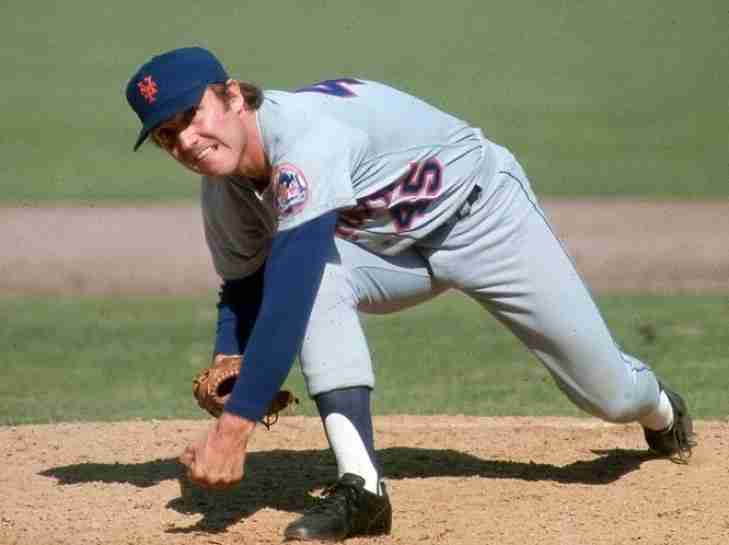
Tug McGraw debuted for the New York Mets in 1965, but it was not until 1969 that he put himself on the baseball map. Of course, many of the Mets in 1969 did the same thing!
During the 1969 season, McGraw delivered a remarkable performance, finishing with a 9-3 record, 12 saves, and a 2.24 ERA. He was exceptional in the final stretch, allowing only two earned runs in his last 34 innings to help the New York Mets catch the Chicago Cubs. While pitchers like Tom Seaver and Jerry Koosman took the spotlight in October, McGraw’s dependable left arm provided the Mets with a vital safety net from the bullpen throughout the postseason. This steadiness contributed to their surprising five-game victory over the heavily favored Baltimore Orioles, clinching the 1969 World Series title.
After winning the initial world title, McGraw established himself as one of the top late-inning pitchers in the National League. His peak years were 1971 and 1972, during which he pitched 111 innings with a remarkable 1.70 ERA in 1971. In 1972, he earned his first All-Star spot, posting a stellar 1.69 ERA and leading his team with 27 saves.
Beyond his impressive statistics, McGraw secured his place as a legendary figure by taking on the emotional leadership role in the clubhouse. During the historic late-season push in 1973, he climbed onto a locker room chair and passionately shouted the phrase that would become a lasting franchise motto: "Ya Gotta Believe!" This rallying cry was supported by his relentless work ethic and durability, as he saved 25 games to help the underdog Mets reach another World Series. His outstanding performances in 1972 and 1973 earned him widespread respect among peers, earning him votes for the National League MVP in both years.
The Mets traded McGraw to the Philadelphia Phillies in 1974, where he would play a huge part in their first World Series win in 1980. With the Mets, McGraw had a 47-55 record with 94 saves. He would later enter the Mets Hall of Fame in 1993.
36. Bret Saberhagen
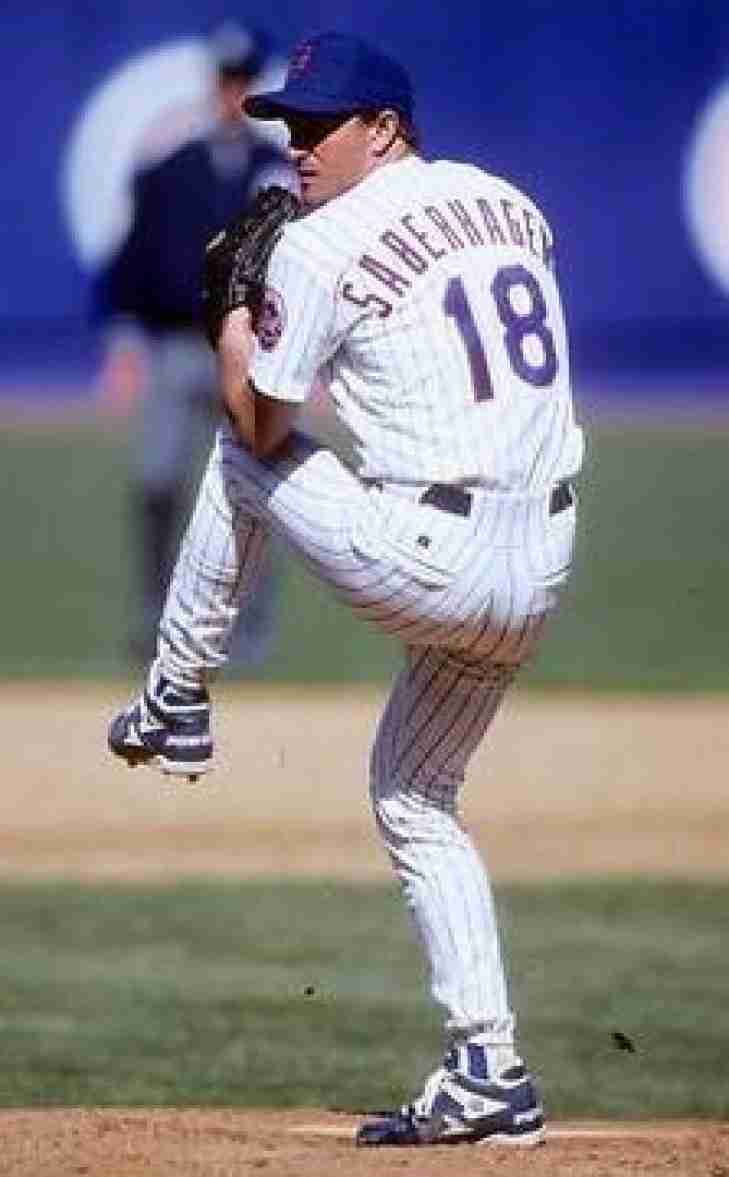
Bret Saberhagen joined the Mets in December 1991 through a blockbuster trade with the Kansas City Royals, trading Bill Pecota for Kevin McReynolds, Gregg Jefferies, and Keith Miller. With two American League Cy Young awards and a World Series MVP, he was brought in to be a co-ace with Dwight Gooden.
During the shortened 1994 strike season, Saberhagen delivered a remarkable display of pitching efficiency. Despite a hitter-friendly environment, he posted an impressive 14-4 record with a stellar 2.74 ERA. His control was nearly unmatched; he led the National League by walking only 1.04 batters per nine innings and established a major league record with an 11.00 strikeout-to-walk ratio, striking out 143 batters while issuing just 13 walks. This performance far surpassed the control metrics of his Cy Young-winning seasons in Kansas City, earning him an All-Star spot and finishing third in the NL Cy Young voting.
In July 1995, as the Mets were out of playoff contention and aimed to reduce payroll to focus on developing youth, the front office traded the veteran pitcher to the Colorado Rockies for two prospects.
As a Met, Saberhagen posted a record of 29-21 with a 3.16 ERA.
22. Bud Harrelson
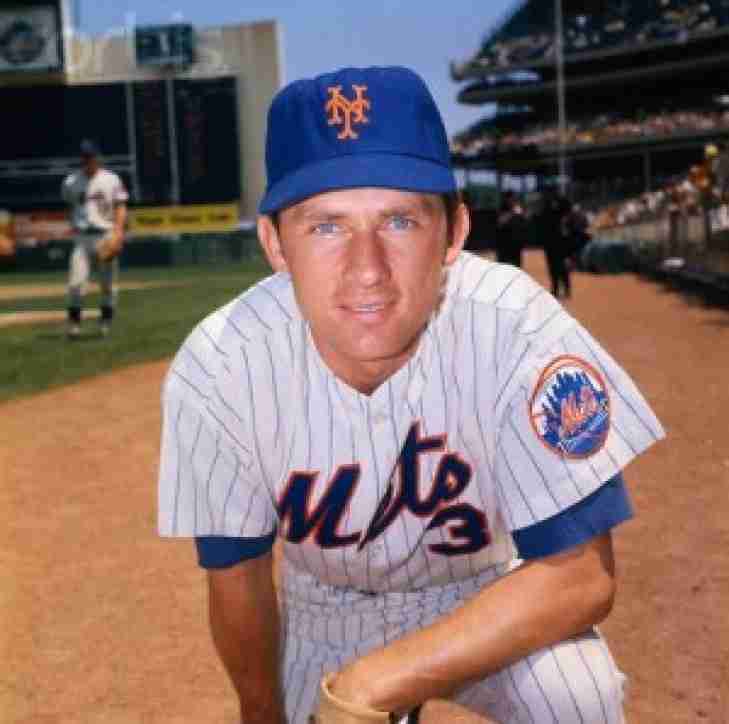
Bud Harrelson made his debut with the New York major league team in 1965. He was a small, wiry shortstop who became the key defensive player for over a decade. Though he often joked about his limited hitting ability, Harrelson was a hardworking and reliable presence for the franchise during its most celebrated victories.
Harrelson had his peak seasons in 1970 and 1971, earning consecutive All-Star titles primarily for his exceptional defense. In 1971, he demonstrated remarkable efficiency, leading Major League fielders in Defensive bWAR and winning the National League Gold Glove Award. As a consistent professional, he often made challenging plays look effortless, notably setting a franchise record by playing 54 straight error-free games at shortstop.
Harrelson, with a .234 batting average as a Met, was a high-energy spark plug at the bottom of the order. He was vital to the 1969 "Miracle Mets," helping ignite their summer run and anchoring the infield during their World Series victory over Baltimore. He demonstrated grit again in the 1973 pennant race, famously engaging in a bench-clearing NLCS brawl with Pete Rose for refusing to back down. His presence drove wins; in 1973, the Mets went 59-43 with him on the field, showing his high-leverage impact.
His run with the Mets closed just before the 1978 season when he was traded to the Philadelphia Phillies. In New York, Harrelson had 1,029 hits and was inducted into the Mets Hall of Fame in 1986. Notably, he was New York’s third-base coach that year, when they won their third World Series Championship.
24. John Stearns
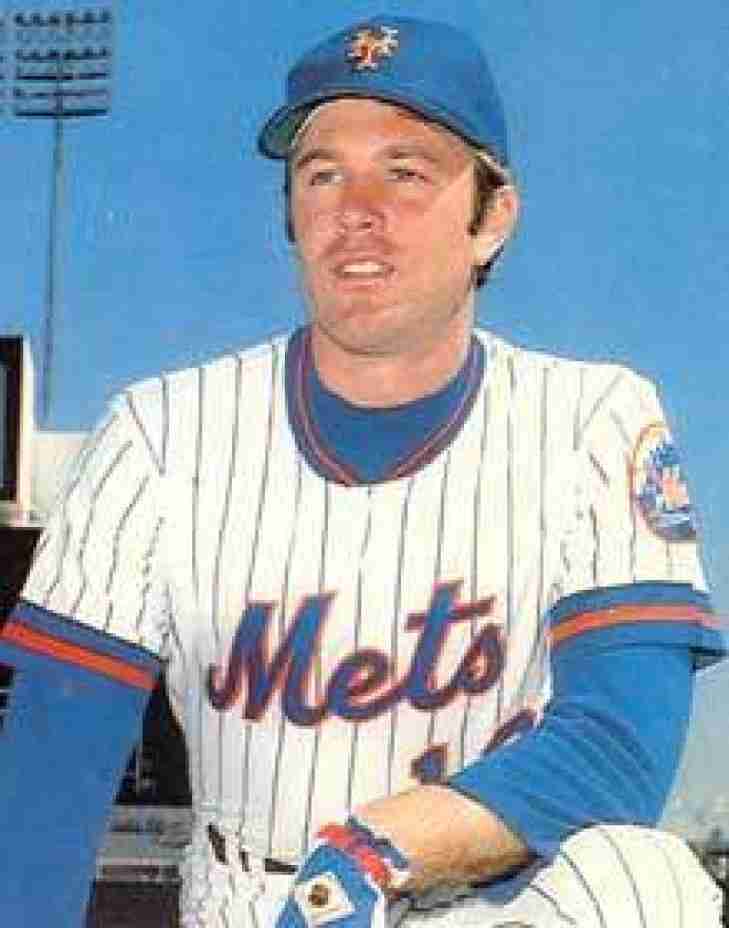
John Stearns joined the organization in December 1974 via a massive six-player blockbuster trade that sent beloved relief ace Tug McGraw to the Philadelphia Phillies. Stearns, a former standout gridiron defensive back at the University of Colorado who was also drafted into the NFL, brought a raw, contact-sport intensity to the diamond.
Stearns was a remarkable athlete, combining a strong defensive arm with impressive, speedy base-running skills. During the 1978 season, he made history by stealing 25 bases, setting a modern National League single-season record for catchers that lasted for more than twenty years. He complemented his speed with a focused batting style, achieving career highs with 15 home runs and 73 RBIs, proving himself to be a true dual-threat player.
Although the Mets faced several tough, ninety-loss seasons in the late 1970s, Stearns remained a consistent professional whose individual talent stood out among his peers. He received four notable National League All-Star selections (1977, 1979, 1980, and 1982), often being the sole representative of the team. His aggressive playing style peaked in 1982, when he achieved a career-high batting average of .293 and hit 25 doubles in only 98 games.
Elbow and shoulder ailments severely limited his playing time after 1982. He made his final big-league appearance in September 1984, marking the definitive end of a career in which he played in all but one of his 810 major-league games for the Mets. He departed Queens with 695 hits and a highly respectable .341 on-base percentage.
21. Cleon Jones
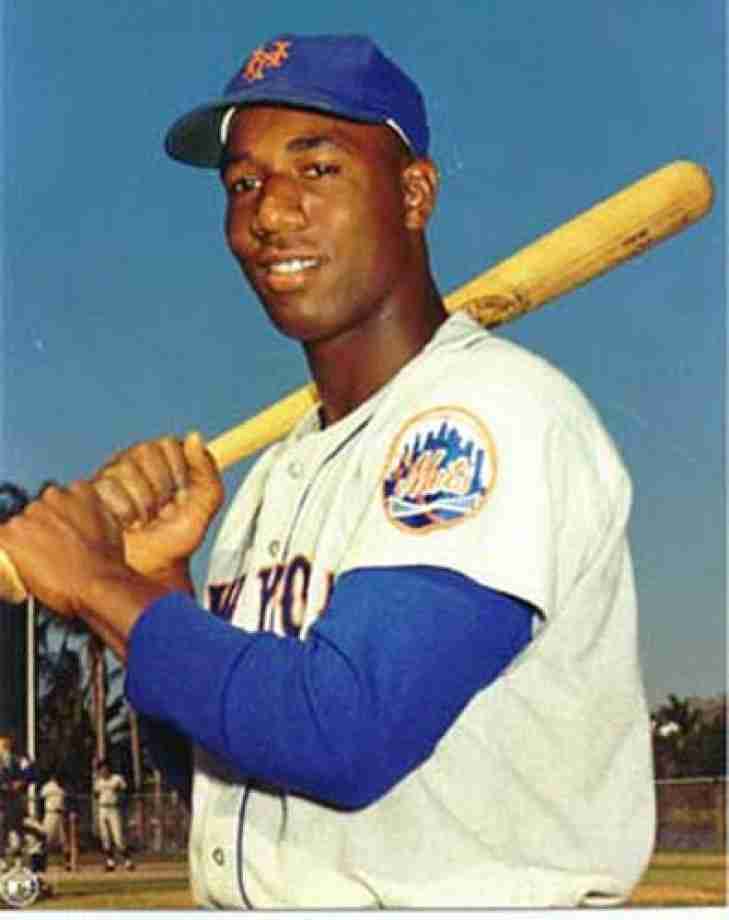
Cleon Jones entered Shea Stadium's grass in 1963 as a talented, multi-sport athlete from Alabama, who would become the key offensive force during the franchise’s initial golden era. Although history often remembers his famous kneeling catch on the outfield dirt, Jones was the driving competitive spirit of the team well before their success was celebrated.
Jones’ New York highlight peaked in 1969 when he made contact hitting, earning his first All-Star and battling for the National League batting crown. He hit .340 with a .422 on-base percentage, setting a franchise record for nearly 30 years. He was a key player with 164 hits and 75 RBI, propelling the team to 100 wins. Jones cemented his status as a New York icon through October highlights beyond his regular-season brilliance. He hit .429 in the NLCS against Atlanta and created a famous World Series moment in Game 5 when manager Gil Hodges proved Jones was hit in the foot by showing shoe polish on the baseball. Moments later, Jones scored the tying run and later made the final out in left field, sliding to his knees in ecstasy as Shea Stadium erupted.
Jones was a steady contributor who maintained high production into the next decade, batting .319 in 1971 and helping guide the Mets to the 1973 Fall Classic during the "Ya Gotta Believe" pennant run. His career in Flushing ended in July 1975 after an injury-plagued stretch and a dispute with management. Time healed wounds, and in 1991, the Mets inducted him into their Hall of Fame.
Overall, Jones compiled 1,188 hits, 93 home runs, and a .281 batting average.
37. John Olerud
27. Ron Darling
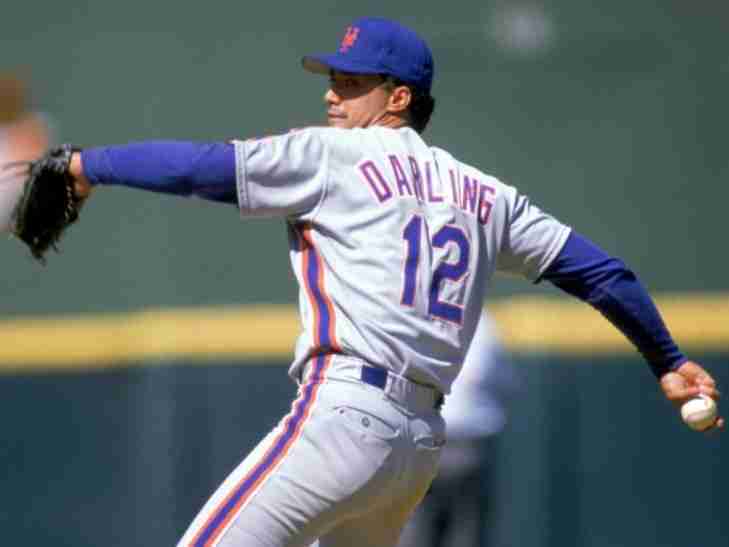
In April 1982, Ron Darling joined the majors as a minor league prospect through a valuable trade with the Texas Rangers, where he was exchanged along with pitcher Walt Terrell for infielder Lee Mazzilli. An Ivy League graduate from Yale with an outstanding athletic background, the right-hander rapidly established himself as a key member of the starting rotation. Although Dwight Gooden dominated the national headlines with his spectacular performances, Darling proved to be a reliable and steady frontline pitcher for the team.
Darling consistently delivered at least 12 wins over six consecutive seasons, leveraging a wide array of pitches and an outstanding pickoff move to weaken opposing offenses. His first major personal achievement came in 1985, when he won 16 games with a remarkable 2.90 ERA, earning his only All-Star nod and cementing his status as a leading pitcher.
He followed that surge with a masterful 1986 season, reaching a 15-6 record and lowering his ERA to 2.81, third best in the league. His performance earned him fifth place in NL Cy Young voting and helped his team win 108 games. In the Fall Classic, he pitched 17.2 innings with just three earned runs, and won Game 4 at Fenway, tying the series.
Darling still contributed significantly to the franchise's identity; he amassed a large number of wins, finishing with a career-high 17 in 1988, and earned a Gold Glove Award in 1989, recognizing him as one of the best fielding pitchers of his era. The story in New York ended when he was traded to the Montreal Expos during the 1991 season.
Darling compiled a 99-70 record, a 3.50 ERA, and 1,148 strikeouts as a Met, and in 2020, he was selected for the franchise’s Hall of Fame.
33. Johan Santana
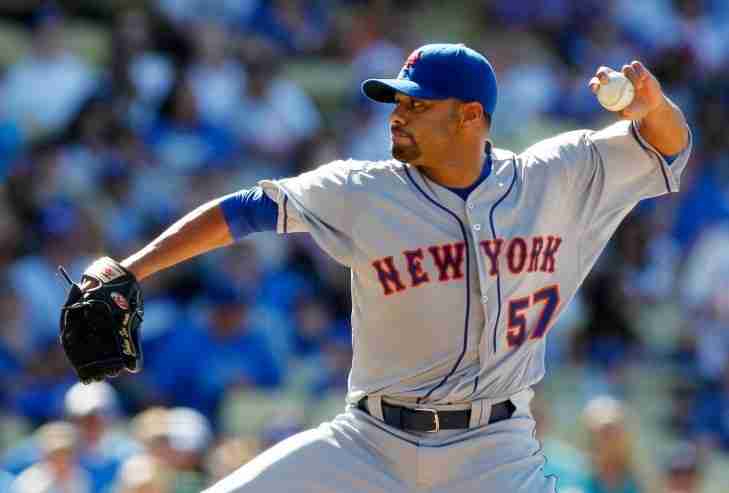
In February 2008, the Mets made a historic, franchise-changing trade with the Minnesota Twins, who sent their star left-hander Johan Santana east in exchange for Carlos Gómez, Philip Humber, Deolis Guerra, and Kevin Mulvey. The Mets quickly signed Santana to a groundbreaking six-year, $137.5 million deal, making him the highest-paid pitcher in baseball at that time. Although many historians associate his peak dominance mainly with his years in Minnesota, it's a significant oversight to ignore the incredible, impactful performances he delivered for New York before his arm injuries.
Santana delivered an outstanding debut in 2008, pitching on short rest at the end of the season and totaling a career-high 234.1 innings. That summer, he reached a peak performance by going 16-7, winning the Major League ERA title with a remarkable 2.53, and setting a franchise record for strikeouts by a left-hander with 206. He finished third in the NL Cy Young voting. Interestingly, his overall 3.18 ERA during his time with the Mets is slightly lower than his legendary years with the Twins, indicating his elite ability to prevent runs.
Severe shoulder injuries and surgeries severely impacted Santana's athletic performance, causing him to miss the entire 2011 and 2013 seasons. Despite these setbacks, he achieved legendary status in franchise history through a remarkable, high-stakes game. On June 1, 2012, after a tough comeback, he took the mound at Citi Field against the St. Louis Cardinals. Ignoring pitch count limits, he dedicated himself completely, throwing 134 intense pitches to secure the first official no-hitter in New York Mets history.
That would be his last great moment in baseball, as the injuries became too much and he retired in 2014 after missing the 2013 campaign. With the Mets, Santana had a 46-34 record.
30. Rick Reed
Rick Reed became a Met before the 1996 season on a minor league deal. At 31, he was a journeyman whose career seemed stalled. His journey to New York was mired in controversy; during the 1994–95 MLB strike, Reed crossed the picket line to play as a replacement for the Cincinnati Reds. This decision made him a pariah in his own clubhouse when the regular players returned. Signed by the Mets as a backup, the control-focused right-hander proved the critics wrong with one of the most surprising and outstanding career comebacks of his time.
Reed's 1997 debut was solid, with a 13-9 record, 2.89 ERA, and a top-five 1.04 WHIP, showcasing his speed and corner pitching. In 1998, he achieved a career-high 16 wins, made his first All-Star team, and became a key figure in the league.
Reed was a key pitcher for the Mets, consistently giving team a strong chance to win with four seasons of at least 11 victories (1997–2000). His precise pitching was an era-defining outlier, often ranking high in strikeout-to-walk ratio, walking fewer than 35 batters and pitching over 180 innings. His reliability peaked during 2000, with 11 wins and a pivotal Game 3 in the NLCS, helping New York reach the 'Subway Series’ against the Yankees.
Just months after signing a lucrative three-year contract extension to stay in New York and earning his second National League All-Star nod, the front office traded the veteran right-hander to the Minnesota Twins at the 2001 July deadline in a straight-up deal for outfielder Matt Lawton.
With the Mets, Reed compiled a 59-36 record and a 3.64 ERA.
8. Carlos Beltran
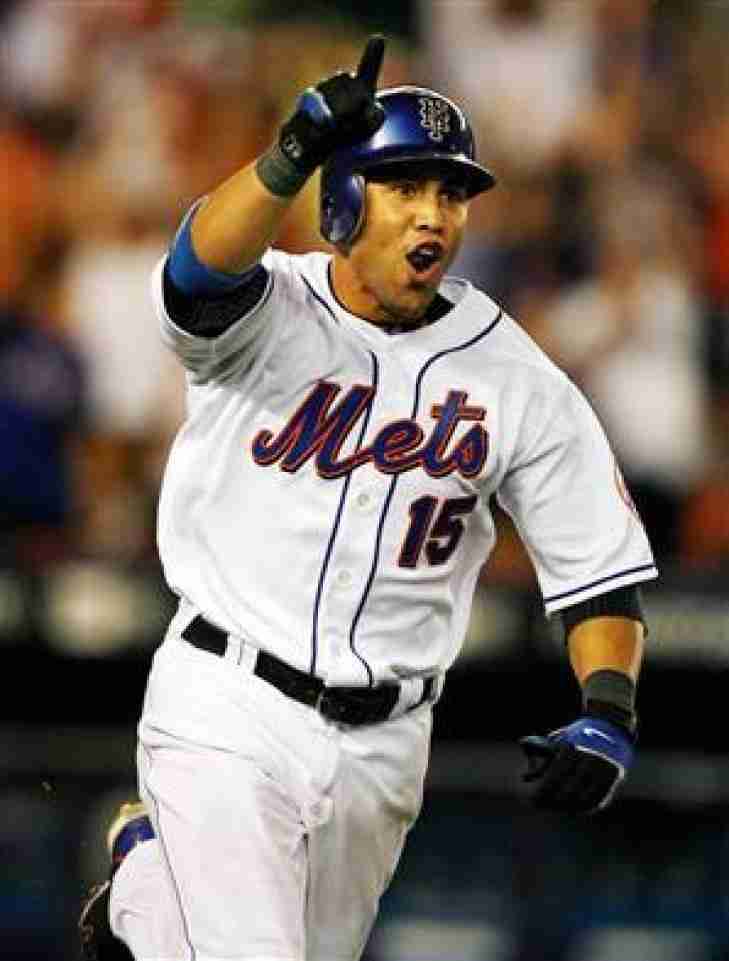
Carlos Beltrán was the crown jewel of the 2005 free agent market, and the switch-hitting center fielder with a rare combination of power, speed, and defensive grace chose the Mets as his landing spot. After a historic postseason run with the Astros, he brought his elite skill set to New York, where he evolved from a high-priced acquisition into one of the most statistically dominant players in the history of the franchise.
Although 2005 was a period of adjustment, Beltrán achieved a significant milestone in 2006, recording a season that continues to serve as a benchmark for Mets hitters. He tied a franchise record with 41 home runs, scored 127 runs, and drove in 116, thereby leading the club to the best record in the National League. His exceptional performance that year earned him a Silver Slugger Award and marked the beginning of three consecutive Gold Gloves in centerfield.
Beltrán achieved a period of consistent excellence from 2007 to 2009, with three consecutive seasons yielding 100 or more RBIs. He demonstrated reliable power to hit the ball into Shea Stadium and Citi Field's gaps, surpassing a .500 slugging average four times and earning five All-Star selections as a Met. Despite facing knee injuries that affected his speed, he continued to be a strategic threat on the bases, successfully stealing 100 bases during his time with the team.
With Beltrán’s contract set to expire after the 2011 season, he was traded before the deadline to the San Francisco Giants. Beltrán had 878 hits, 149 home runs, and 559 RBIs for New York, and in 2026, he received the triple honor of entering the Baseball Hall of Fame, the Mets Hall of Fame, and seeing his number 15 retired by the club.
11. Sid Fernandez
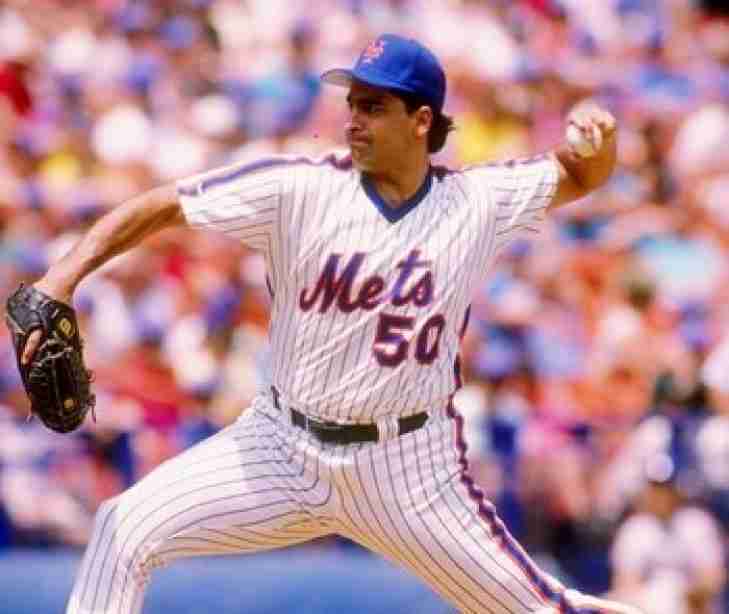
A native of Honolulu who wore #50 in honor of his home state, Sid Fernandez operated with a deceptive, slingshot delivery and a rising fastball that made him one of the most difficult pitchers to hit in the history of the National League.
Debuting in 1984, Fernandez's second season truly marked a peak in his ability to be tough to hit, as he led the Major Leagues with only 5.71 hits allowed per nine innings. He showed excellent control of his rising fastball, striking out 180 batters in 170 innings, and served as a perfect left-handed complement to Dwight Gooden. In 1986, he reached a historic milestone by becoming the first Hawaiian-born player to be selected for the All-Star game. That summer, he achieved a career-high 16-6 record, finished seventh in the Cy Young Award voting, and played a key role in a strong rotation that led the senior circuit.
Fernandez truly shined during the 1986 World Series, reaching his peak with some incredible plays. Though he was mainly a starter during the regular season, he was called upon as a reliever for the Fall Classic. His unforgettable moment in Mets history came in Game 7: after the Red Sox took an early 3-0 lead, Fernandez stepped in during the fourth inning and pitched brilliantly, retiring seven batters in a row, including four strikeouts. It was a remarkable display of specialized relief that quieted the Boston bats and helped ignite the Mets’ exciting comeback to win the championship.
Over a decade at Shea Stadium, Fernandez achieved a new level of franchise prominence, leading the league in H/9 on three separate occasions and surpassing 175 strikeouts in a season five times. Although he concluded his tenure with the Mets just two wins short of the century mark, his statistical contributions remain outstanding: he departed as the franchise leader in H/9 and continues to rank among the top five for career strikeouts. In December 1993, he reached a pivotal moment and signed with the Baltimore Orioles as a free agent, effectively concluding a highly underrated chapter in New York baseball history.
With the Mets, Fernandez compiled a 98-78 record, a 3.14 ERA, and 1,449 strikeouts.
7. Mike Piazza
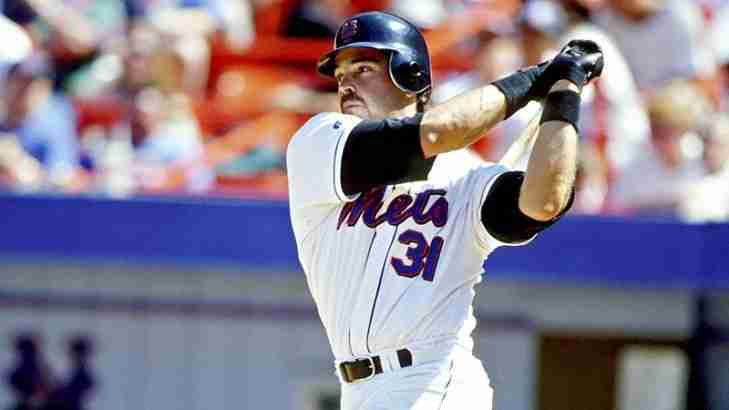
Mike Piazza arrived in Queens in 1998 following a whirlwind week that saw him traded twice in eight days, first from the Dodgers to the Marlins, and then finally to the Mets. While he had already established himself as a superstar in Los Angeles, his arrival in New York fundamentally shifted the trajectory of the franchise, giving them a Hall of Fame centerpiece and a powerhouse offensive engine they hadn't seen since the 1980s
In 1999, during his first full season with the club, Piazza delivered an incredible performance, smashing 40 home runs and driving in 124 runs while maintaining a .303 batting average. His stellar play helped lead the Mets to their first postseason appearance in eleven years, providing clutch moments that allowed the "Amazin's" to secure the National League Wild Card. This season truly showed that he was a top-tier run producer capable of carrying an entire lineup on his back, demonstrating that he could excel even under the intense pressure of the New York media spotlight.
His next season (2000) was even better. He finished the year with a 1.012 OPS, 38 home runs, and 113 RBIs, finishing third in the National League MVP voting. He spearheaded the Mets' charge to the National League Pennant, famously helping the team navigate the "Subway Series" against the Yankees. During this peak, he was a giant at the plate whose presence alone forced opposing managers to alter their entire pitching strategy, eventually leading to his third Silver Slugger Award in a Mets uniform.
Beyond the box score, his residency reached a historic emotional plateau on September 21, 2001. In the first sporting event held in New York City after the 9/11 attacks, Piazza hit a go-ahead, two-run home run in the eighth inning that lifted the spirits of an entire city and country.
After eight years as the face of the franchise, his tenure ended at the end of the 2005 season, when his seven-year contract expired, and the organization opted to move in a younger direction under new leadership. His final game at Shea Stadium was an emotional farewell, capped by an eight-minute standing ovation from the Flushing faithful. Piazza departed with 1,028 hits, 220 home runs, and a .542 slugging percentage for the Mets.
After his playing career ended, he proved his heart belonged in Flushing by entering the National Baseball Hall of Fame in 2016 as a Met rather than as a Dodger. The organization retired his No. 31 that same year.
9. Jon Matlack
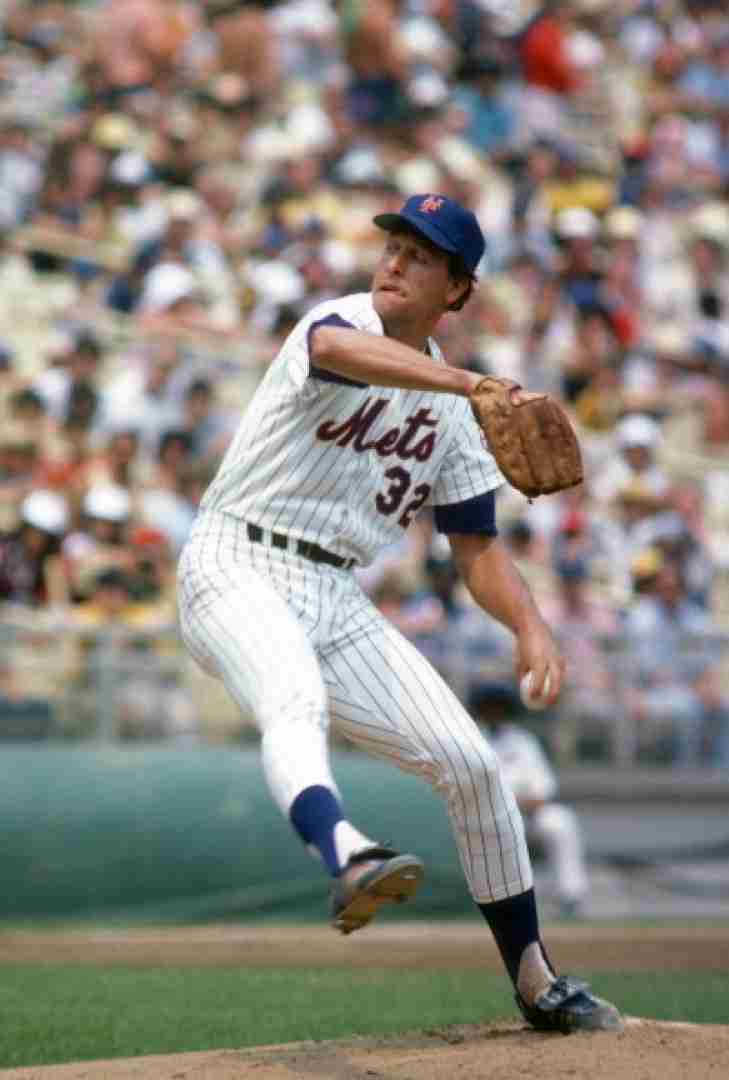
A first-round draft pick in 1967, Jon Matlack was a left-hander whose arrival signaled the birth of the "Big Three" alongside Tom Seaver and Jerry Koosman. While he wasn't on the active roster for the 1969 miracle, he served as the crucial final piece of the rotation that would define the franchise's excellence over the next decade.
Matlack appeared in 1971 for a few games, but in 1972, Matlack delivered a brilliant debut campaign, winning 15 games with a 2.32 ERA to secure the National League Rookie of the Year award. He reached a historic summit during the 1973 "Ya Gotta Believe" season, authoring a legendary postseason performance. After helping the club capture the NL East, he dominated the Reds in the NLCS and famously outpitched the Oakland A’s in the World Series, throwing a complete-game three-hitter in Game 4. The Mets lost the Fall Classic, but Matlack had arrived.
Between 1974 and 1976, Matlack was statistically one of the top pitchers despite receiving little run support. In 1974, he demonstrated a relentless ability to shut down opponents, leading the National League with seven shutouts and posting a 2.36 FIP. He continued this trend by leading the league in shutouts again in 1975 and earning three straight All-Star selections. His dominance was particularly evident in the 1975 All-Star Game, where he shared MVP honors after striking out the side in his appearance.
His run in Queens ended in the winter of 1977 following a difficult season for a struggling Mets squad. In a complex, four-team blockbuster trade, the organization sent him to the Texas Rangers. Matlack overall went 82- 81 with a 3.03 ERA with the Mets. The team inducted Matlack into their Hall of Fame in 2021.
23. Mookie Wilson
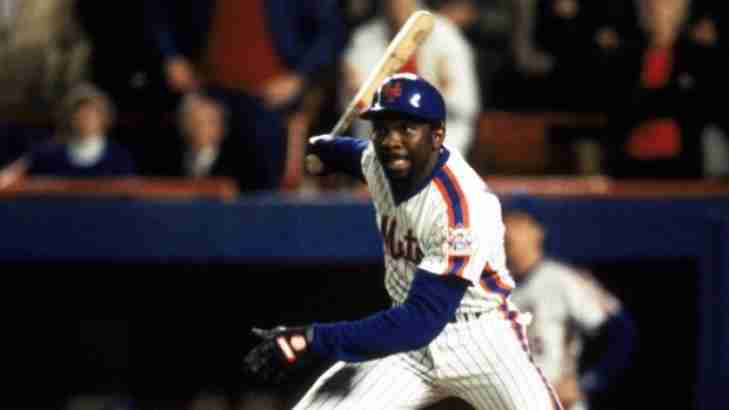
How can you not love a guy named Mookie?
You have to love him, and even if Mookie Wilson was actually named “Sour Bastard”, you would still love the guy because he had one of the most positive and infectious attitudes in Baseball and is easily one of the most popular players in Mets history.
Debuting in 1980, Wilson established himself as a key player by consistently leading the team with his speed, recording at least 20 stolen bases for seven straight seasons. His most exceptional period was between 1982 and 1984, when he became one of the top baserunners, surpassing 45 stolen bases each year and setting a franchise record with 58 in 1982. Known for his speed, he often turned singles into doubles and challenged outfielders' arms, ultimately retiring as the franchise's all-time leader in stolen bases (281) and triples (62).
While Wilson’s speed was his defining trait, he was also a highly effective hitter, with 1,112 hits and 592 runs scored for the Mets. His most significant contribution came on October 25, 1986, in the bottom of the 10th inning of Game 6 of the World Series. After a tough, ten-pitch duel with Bob Stanley, Wilson demonstrated remarkable composure by fouling off difficult pitches and working the count. Moments later, he made the famous, slow ground ball that slipped through the legs of Boston first baseman Bill Buckner—an unforgettable play that completed a dramatic three-run rally and sparked one of the most memorable moments in New York sports history.
In August 1989, the Mets shifted their outfield configuration after acquiring Juan Samuel, and the front office traded the veteran icon to the Toronto Blue Jays in exchange for pitcher Jeff Musselman. Wilson was added to the Mets Hall of Fame in 1996.
15. Edgardo Alfonzo
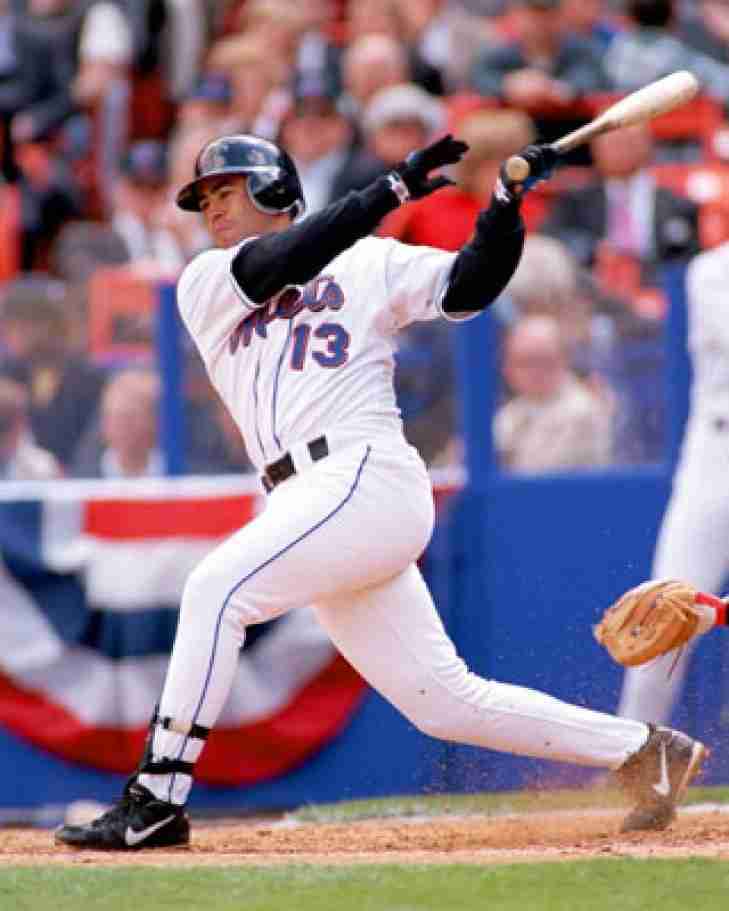
Edgardo Alfonzo made his debut on Shea Stadium's turf in 1995 as a notably poised young infielder from Venezuela. Over time, he subtly developed into one of the most versatile and clutch players in franchise history. Although he did not have the flashy public profile of some peers, he served as the vital backbone of the Mets' infield, moving effortlessly between third and second base.
Anchoring the iconic late-1990s infield, Alfonzo achieved a historic milestone by accumulating over 150 hits in five different seasons with the Mets. He combined this volume with a keen eye at the plate, hitting over .300 in four of those years. His peak offensive performance came in 1999, when he hit 27 home runs and drove in 108 RBIs, earning the National League Silver Slugger Award at second base. He continued his strong play with an All-Star selection in 2000, batting .324 with 109 runs scored, helping the Mets secure their fourth National League Pennant.
Beyond the numbers, Alfonzo achieved peer recognition, finishing in the top 15 of NL MVP twice (8th in 1999, 15th in 2000) and receiving votes in three years. He combined offensive efficiency with stellar defense, providing Gold Glove-caliber glove work wherever manager Bobby Valentine put him. In Flushing, he proved to be a postseason weapon, launching a two-run homer in the 1999 Wild Card game and a historic grand slam in the NLDS against Arizona.
Alfonso departed the Mets for San Francisco as a Free Agent in 2002. As a Met, he collected 1,136 hits, 120 home runs, and a stellar .374 on-base percentage. In 2020, he was selected for the Mets Hall of Fame.
29. R. A. Dickey
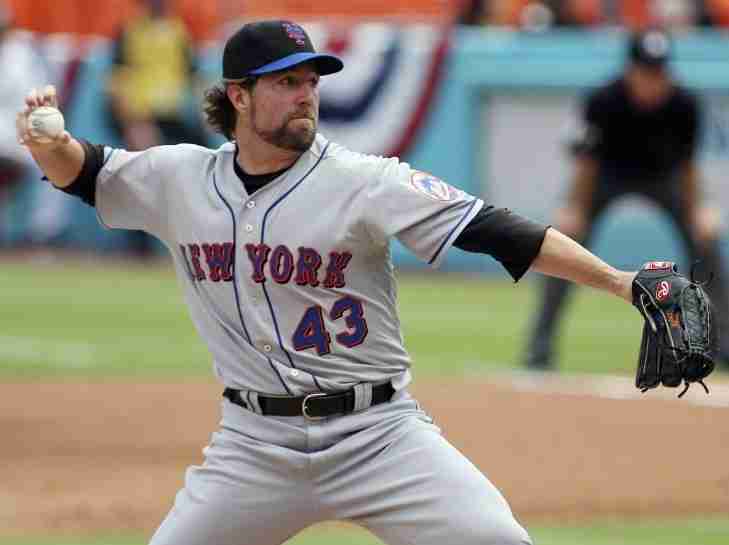
In December 2009, R.A. Dickey joined Flushing on a modest minor league deal, as a 35-year-old journeyman fighting to stay in baseball. For years, he had been a fringe major leaguer struggling to master his pitching, especially after learning he entirely lacked an ulnar collateral ligament in his throwing elbow.
Dickey was highly effective right from the start, posting a remarkable 2.84 ERA in 2010 and pitching over 200 innings in 2011. He utilized what analysts described as a "hard knuckleball," delivering the pitch at an unprecedented 78-to-80 mph with sharp, late movement.
That solid foundation led to an extraordinary standout during the legendary 2012 season. That summer, Dickey hit a career peak, delivering a remarkable campaign that is arguably the best individual season by a knuckleballer in Major League history. He impressed the city by going 20-6 and leading the National League in strikeouts (230), innings pitched (233.2), complete games (5), and shutouts (3). His efficiency peaked in June when he threw consecutive one-hitters with double-digit strikeouts, setting a franchise record with 32.2 straight scoreless innings and earning an All-Star nod. His historic dominance was confirmed when he was named the clear winner of the National League Cy Young Award, marking the first time a knuckleball pitcher won this honor.
In December 2012, at the peak of his trade worth, the rebuilding Mets sent the reigning Cy Young winner to the Toronto Blue Jays in a major seven-player trade that brought back numerous top prospects, such as future All-Star catcher Travis d'Arnaud and pitcher Noah Syndergaard. He left Queens with an impressive 39-28 record and a remarkable 2.95 ERA over three seasons with the team.
12. Jose Reyes
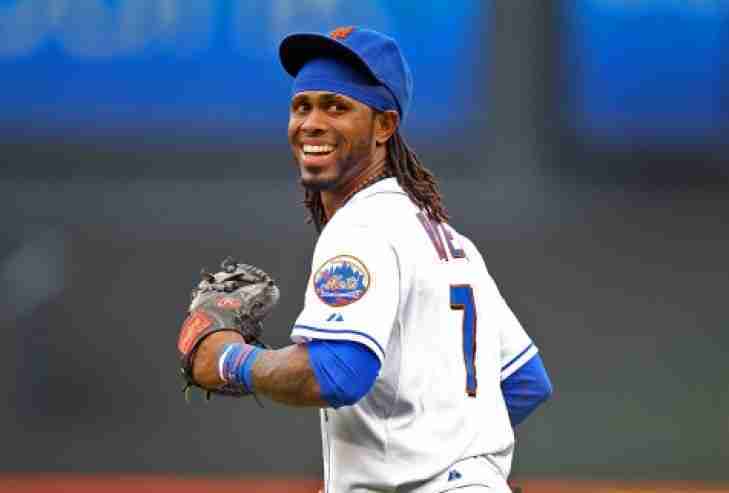
From the Dominican Republic's infield factory, Jose Reyes debuted for the Mets at age 20 in 2003. Two years later, he was cemented as the team's starting Shortstop.
By 2005, Reyes had reached an absolute summit of speed, leading the National League in triples (10) and stolen bases (60). He showcased a comprehensive mastery of the basepaths over the subsequent three seasons, establishing a record of specialized dominance by leading the league in steals for three consecutive years, culminating in a historic 78 stolen bases in 2007. Although he was not a conventional power hitter, he reached a significant milestone in 2006 by hitting 19 home runs and recording 81 RBIs. This performance earned him a Silver Slugger Award and his first of four All-Star selections.
Reyes's peak was 2011 when he won the NL Batting Title with a .337 average, led the league in triples (16), and was an All-Star. After that season, amid a rebuilding phase, he left New York to sign a six-year, $106 million deal with the Miami Marlins in December 2011.
After that year, he was traded to the Miami Marlins. He came back in 2016 for three final seasons as a Met. With the team, he would have 1,534 Hits, batted .282, and had 408 Stolen Bases.
17. Al Leiter
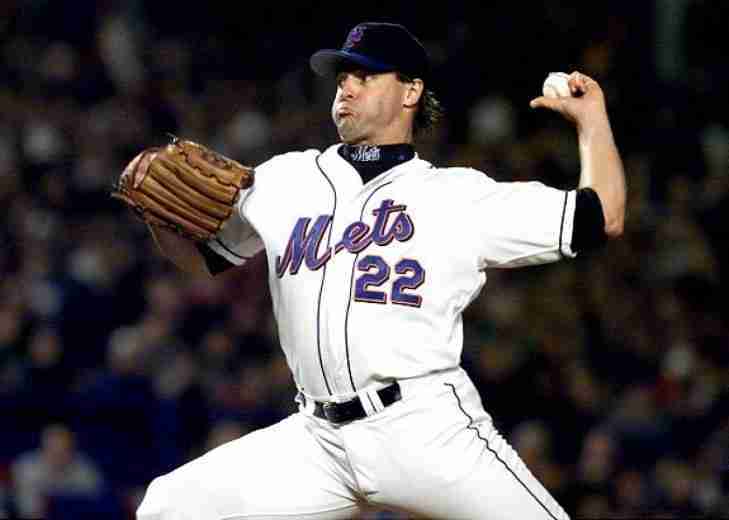
Al Leiter first entered the home clubhouse at Shea Stadium in 1998 as a local from Toms River, New Jersey, who had grown up supporting the Amazins. Coming over in a trade from the Florida Marlins shortly after their 1997 World Series win, the seasoned left-hander took on a leading role at the top of the rotation.
Leiter demonstrated remarkable consistency, winning at least 10 games in each of his seven seasons with the Mets and accumulating 95 wins overall. His strong pitching and resilient mindset drove a successful period, making his staff a formidable challenge for NL East competitors. In the 1999 and 2000 seasons, he established himself as one of the team’s top big-game pitchers. In 1999, Leiter delivered a historic performance by pitching a two-hit complete game shutout against the Reds in the high-pressure one-game Wild Card tiebreaker, securing a spot in October for New York. The following year, he earned an All-Star nod, posting a 16-8 record and maintaining a 2.93 ERA over four postseason starts, helping the Mets reach the Subway Series.
In 2002, he added a unique piece of baseball history to his resume by becoming the first pitcher in the Major Leagues to record a victory against all 30 franchises, but it came to an end in Flushing after the 2004 season, when the Mets declined his option.
With the Mets, Leiter owned a 95-67 record, a 3.42 ERA, and 1,106 strikeouts, and was inducted into the Mets Hall of Fame in 2023.
25. John Franco
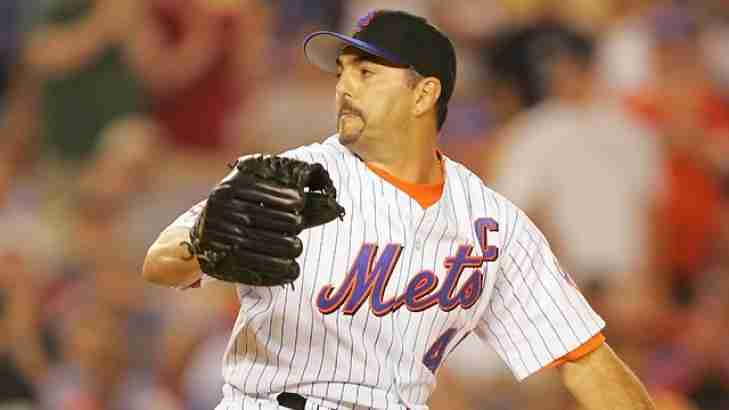
John Franco reached Flushing in December 1989 via a blockbuster trade with the Cincinnati Reds, which exchanged top bullpen pitchers and brought the Brooklyn native back home in exchange for Randy Myers. A proud Brooklynite who excelled at St. John's University in Queens, Franco took on a significant high-pressure role as the team's closer and worked out of the pen for 14 years.
Franco quickly gained the loyalty of local fans by delivering an impressive debut in the 1990 season, during which he led the National League with 33 saves and was awarded the Rolaids Relief Man of the Year. His performance peaked even further during the strike-shortened 1994 season, where he again led the junior circuit with 30 saves and posted a remarkable 2.70 ERA, finishing seventh in the NL Cy Young Award voting. As a consistent professional, he kept fans engaged with his signature circle changeup and strong determination to eliminate scoring threats.
Beyond just the baseline save numbers, Franco achieved a historic leadership milestone within the organization. On May 4, 2001, he received the uncommon honor of becoming the third official team captain in Mets history, highlighting his significant clubhouse presence and deep community ties. He played a key role during the 2000 Subway Series, notably earning the win out of the bullpen in Game 3 to secure the Mets' only victory in that memorable Fall Classic. Although he later stepped down from the primary closer role to Armando Benítez, he seamlessly transitioned into a top-tier high-leverage setup man, finishing his Queens career as the franchise’s all-time leader in both saves (276) and games pitched (695).
After the 2004 season, Franco departed for the Houston Astros as a free agent for one final season.
Franco was inducted into their franchise Hall of Fame in 2012.