

42. Michael Conforto
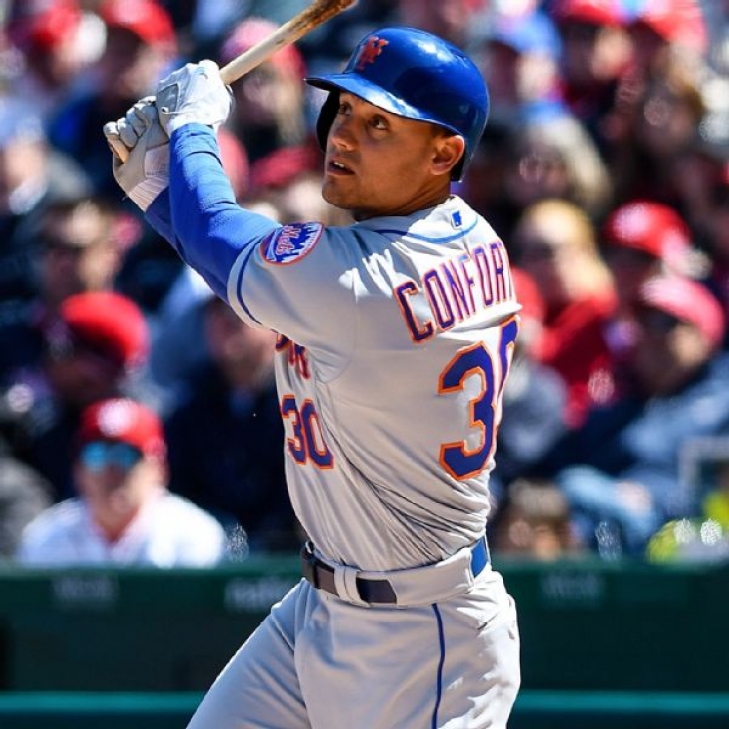
When Michael Conforto debuted in July 2015, just thirteen months after the Mets drafted him tenth overall from Oregon State, he instantly ignited a youthful spark in a rising team. The 22-year-old outfielder skipped Triple-A, bringing a polished left-handed swing as the team aimed for a division title. He finished his quick rise by hitting two home runs in Game 4 of the World Series, becoming only the third rookie in history to do so on baseball's biggest stage.
By 2017, his journey evolved from a talented rookie to a vital member of the team. Taking on a full-time starting spot in the outfield, Conforto experienced a breakout summer that led to his first All-Star appearance. He finished the season with a .279 batting average, hit 27 home runs, and demonstrated a disciplined approach at the plate along with the ability to hit to all fields. Although a serious shoulder injury cut his season short in late August, he recovered quickly and stayed the centerpiece of the Mets' offensive lineup.
Over the next two campaigns, he became the lineup's middle-of-the-order power source. He showed durability, hitting 28 home runs and driving in 82 RBIs in 2018, then improving in 2019. That summer, Conforto reached peak production in Queens, with career highs of 33 home runs and 92 RBIs while anchoring a shifting outfield.
The peak of his efficiency was during the shortened 2020 campaign, where Conforto hit .322 with a .412 OBP, ranking in the top ten in NL MVP voting and making the All-MLB Second Team. His 2021 season saw a slight decline, but he stayed a steady contributor during a transitional front-office era.
His tenure in Queens ended after the 2021 season. A severe shoulder injury in the off-season derailed his free agency, forcing surgery and causing him to miss the 2022 season. He signed with the San Francisco Giants in 2023, ending a seven-year chapter in New York with 132 home runs and 650 hits.
The New York Mets announce they will retire the number 36 of Jerry Koosman
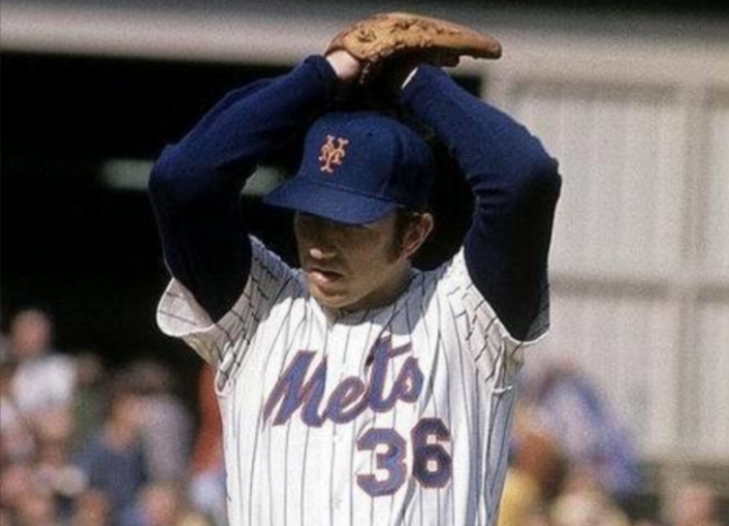
Regular visitors of Notinhalloffame.com know that we are slowly working on the top 50 of every major team in the NHL, NBA, NFL and MLB. Once that is done, we intend to look at how each team honor their past players, coaches and executives. As such, it is news to us that the New York Mets will be retiring the #36 of Jerry Koosman this season.
Koosman made his major league debut with the Mets in 1967, and in the following season, he was an All-Star with a 19-12 record and a 2.08 ERA. He followed that with a 17-9 campaign with a 2.28 ERA, and a second straight trip to the All-Star Game, but this was 1969, and a very special season. This year, along with fellow Pitchers, Tom Seaver and Nolan Ryan, would take the “Miracle Mets” to a shocking World Series Championship. The Mets, who began their existence in 1962, had never had a winning season until ’69, and despite their Pennant win, they were expected to falter against the favored Baltimore Orioles. The Mets would win in five with Koosman winning two Games, including the clinching Game 5.
Koosman played with the Mets until he was traded in 1978 to the Minnesota Twins. His best regular season with New York was in 1976, where he had a career-best 21 Wins with a 2.69 ERA and 1.096 WHIIP. He was the runner-up for the Cy Young Award that year. Overall, as a New York Met, Koosman would have a record of 140-137 and 1,799 Strikeouts.
The retirement ceremony will take place on June 13, during the Mets’ home game against the Washington Nationals.
The other retired numbers by the Mets are Gil Hodges (#14), Mike Piazza (#31), Casey Stengel (#37), Tom Seaver (#41), and the league-mandated #42 of Jackie Robinson.
We here at Notinhalloffame.com would like to congratulate Jerry Koosman for earning this honor.
The New York Mets announce four new names for their franchise HOF

Regular visitors of Notinhalloffame.com know that we are slowly working on the top 50 of every major team in the NHL, NBA, NFL and MLB. Once that is done, we intend to look at how each team honor their past players, coaches and executives. As such, it is news to us that the New York Mets will be inducting will be inducting Jon Matlack, Ron Darling, Edgardo Alfonzo and Al Jackson into their franchise Hall of Fame.
Appearing for a handful of games in 1971, Matlack was named the 1972 Rookie of the Year and he would go to three consecutive All-Star Games (1974 to 1976). With the Mets, he appeared in 203 Games with a record of 82-81 with 1,023 Strikeouts.
From Hawaii, Darling was an All-Star in 1985, and was a member of the Mets 1986 World Series Championship Team. He would have six straight 12 Win seasons, all of which would not see him lose in double digit figures. Darling would have a 99-70 record with 1,148 Strikeouts for the Mets.
Alfonso played for New York from 1995 to 2002, and he was an All-Star in 2000. The Infielder would have 1,136 Hits for the team with 120 Home Runs.
Jackson was an original Met who would have a 43-80 record as a Pitcher. He enters as a contributor who served the club for decades as a coach, minor league coach, minor league pitching coordinator and front office advisor.
This quartet brings the Mets Hall of Fame membership to 30.
We here at Notinhalloffame.com would like to congratulate the soon to be new members of the Mets Hall of Fame for earning this honor.
Our Top 50 All-Time New York Mets are now up
It has been awhile since we uploaded our last Top 50 players of a major franchise, but we are ready to do so again with a look at the greatest players in New York Mets history.
For one of the most popular franchises of Major League Baseball, the actual success of the organization is not that strong with only two World Series wins to their credit.
The entire list of our Top 50 New York Mets can be found here, but in the meantime (as we always do) the top five are listed below.
Please note that this list is based on accomplishments up to the end of the 2016 Season.
Up next will be a very young franchise from the NBA, the Toronto Raptors.
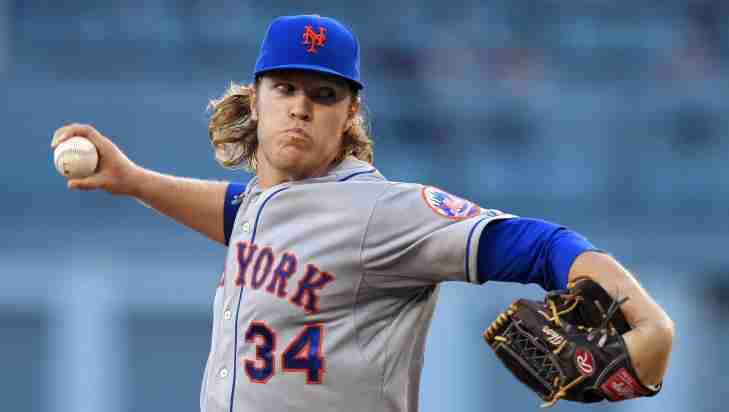
38. Noah Syndergaard
50. Jeurys Familia
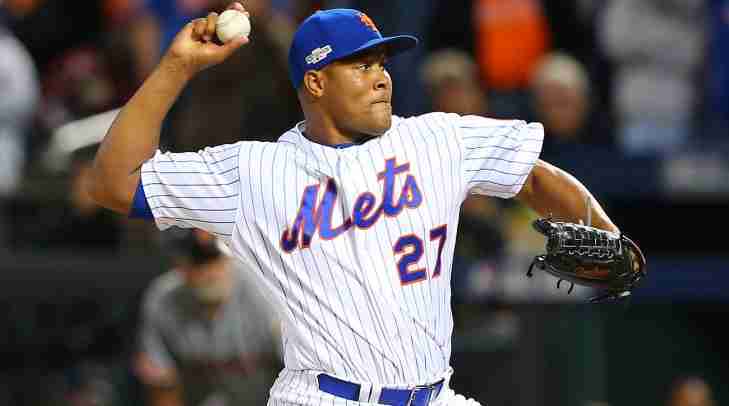
When Jeurys Familia was first handed the closer's role in 2015, he stepped into a high-pressure situation. Filled in for injured Jenrry Mejia, the Dominican right-hander used a powerful sinker touching 98 mph, transforming the New York bullpen's backend. He efficiently handled the pressure, with 43 saves and a 1.85 ERA, leading the relief corps and helping the Mets win an unexpected National League pennant.
That dominant introduction set the stage for a record-breaking 2016 campaign. Familia became the leading late-inning reliever in the senior circuit, recording a franchise-record 51 saves to lead the major leagues. He was nearly unhittable during summer, earning an All-Star nod and finishing in the top twenty in National League MVP voting. When his sinker dived beneath bats, he provided Queens with total late-game security, becoming a marquee closer.
Familia’s career abruptly ended in 2017 after a 15-game suspension for domestic violence, damaging fan support. Upon returning, blood-clot surgery reduced his velocity, resulting in inconsistent performances. During the Mets’ 2018 rebuild, they traded him to Oakland, leveraging his remaining value.
Familia's return to Citi Field in 2019 on a $30 million, three-year deal was short-lived. His second stint didn't match his peak, as command issues, walks, and high-stress innings, especially in the ninth, made his role challenging for Mets fans.
He eventually left New York after the 2021 campaign, leaving a complex legacy in franchise history. Despite volatility and struggles off-field, his volume during the pennant window is statistically undeniable. Familia finished his Mets career with 124 saves, ranking third all-time behind John Franco and Armando Benítez, and pitched 233 games for the team.
48. Wayne Garrett
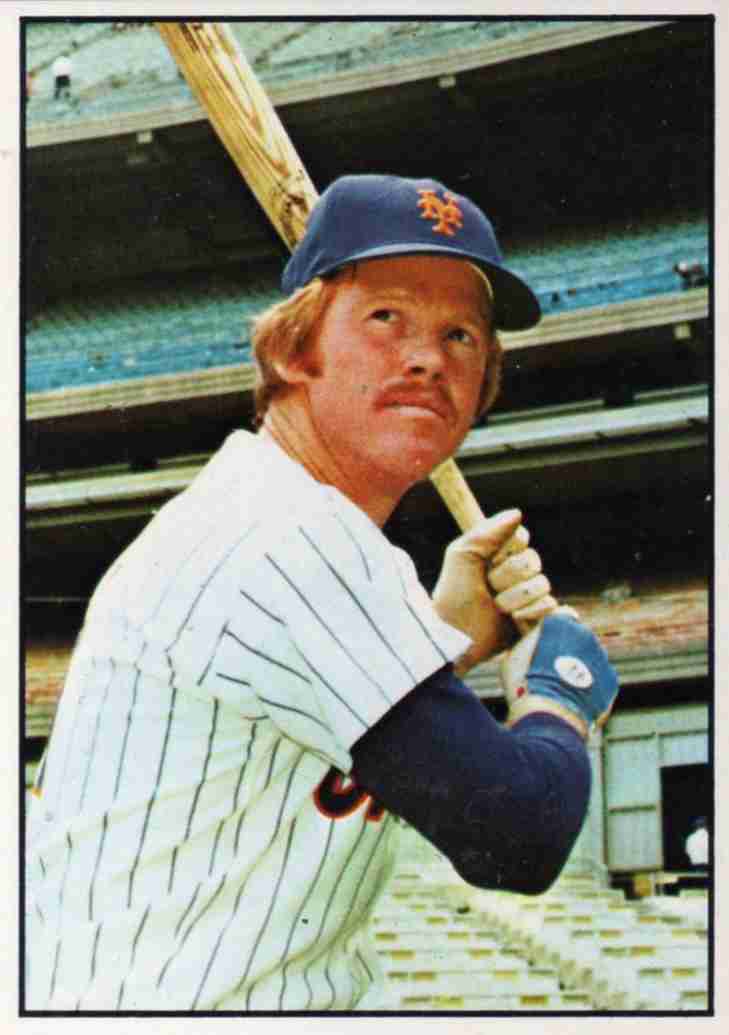
When Wayne Garrett joined the roster as a 21-year-old rookie in 1969, he entered a competitive infield on a team ready to make history. Picked by the Mets from the Braves organization during the 1968 Rule 5 draft, this left-handed infielder quickly became a key part of the legendary "Miracle Mets." Sharing third base with Ed Charles, Garrett offered dependable defense and a disciplined batting approach, walking 53 times in limited appearances, crucial in guiding the young team to its first National League pennant and ultimately winning the World Series.
Over several seasons, Garrett established himself as the dependable presence in the Mets' infield. Though lacking the flashy skills of some peers, his adaptability and keen batting eye ensured his regular spot in the lineup. He moved between second and third base, persistently confronting challenging at-bats and often leading the team in walks. Regardless of new competitors for playing time, Garrett’s professional attitude consistently earned him a place on the field.
His patience and dedication reached their highest during the memorable 1973 "Ya Gotta Believe" campaign. As the everyday third baseman, Garrett delivered the best regular-season performance of his career. He amassed 129 hits, drew 92 walks to achieve a remarkable .363 on-base percentage, and set career highs with 16 home runs and 58 RBIs. He led the top of the lineup for a resilient team that ignited in September to win the National League East title.
Garrett carried his momentum into October, saving some of his best moments for the postseason. After hitting a key home run against Cincinnati in the NLCS, he made the World Series against the strong Oakland Athletics his personal showcase. Leading off for the Mets, he hit two memorable home runs in the seven-game series, showing a tough, big-game spirit that won the hearts of Shea Stadium fans forever.
Garrett stayed a key presence in Flushing for two more full seasons, reliably playing third base. His extended time in New York ended in July 1976, when the front office traded him to the Montreal Expos in exchange for Pepe Mangual. He left Queens after serving the organization for seven and a half years, leaving behind 586 hits, 52 home runs, and a respected legacy as a core player in the Mets' first two pennant-winning teams.
43. Armando Benitez

Armando Benítez's arrival in Flushing before the 1999 season introduced a fearsome mix of high-velocity pitches and unpredictable volatility to the Mets' bullpen. Traded from Baltimore in a three-team deal, the tall right-hander was initially assigned to a setup role behind John Franco. Nevertheless, Benítez's dominant arsenal, centered on a blazing fastball and a deadly split-finger, rapidly led to a change in leadership, making him the go-to closer for the final three outs.
His first full season as the closer in 2000 marked a career-high moment that contributed to the Mets reaching the Subway Series. Benítez recorded 41 saves with an excellent 2.61 ERA and struck out 106 batters in 76 innings. However, this season also highlighted the conflicting aspects of his reputation in Queens; although his regular-season stats were outstanding, his notable errors in October, including a blown save in Game 1 of the World Series versus the Yankees, significantly damaged his relationship with fans, making every ninth-inning appearance feel like walking a tightrope.
Despite increasing postseason pressure, his regular-season performance peaked in 2001. Benítez utilized his power skills to achieve 43 saves, with a remarkable 1.85 ERA, and held opposing batters to just a .162 average. His impressive summer performance earned him the National League Rolaids Relief Man Award, confirming his status as one of the top closers in the sport, despite local critics still focusing on his rare, intense meltdowns.
The heavy usage persisted through the 2002 campaign, with him surpassing 30 saves for the third year in a row. By 2003, the team's competitive window had closed, and the roster was in transition. Benítez earned his first All-Star selection that July by recording 21 saves, but as his contract was nearing its end and the team was out of contention, the front office acted quickly.
Just days after the midsummer classic, management traded him to the crosstown Yankees, ending a tumultuous five-year tenure in Queens. He left the Mets with 160 saves, placing him near the franchise's all-time leaders. His legacy is mixed: marked by moments of historical, game-changing prowess, yet also defined by a few costly, high-pressure failures that remain etched in memory.
39. Daniel Murphy
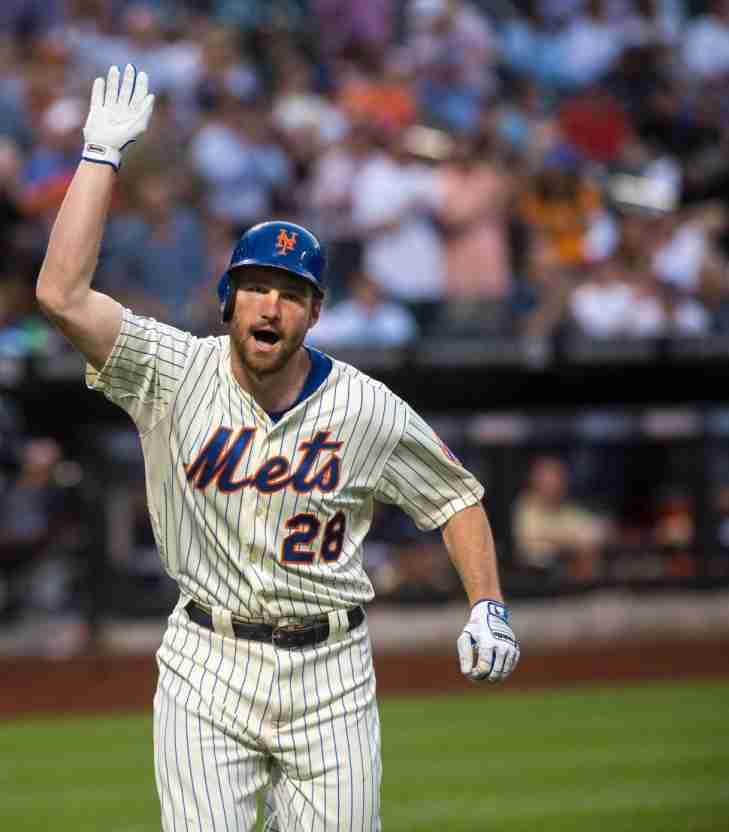
Daniel Murphy first broke into the Major Leagues with the New York Mets in August 2008 as a focused contact hitter drafted from Jacksonville University. Initially, without a fixed defensive position, he moved between first base, third base, and outfield corners before settling at second base. Though his defense often drew media criticism, Murphy was a relentless line-drive hitter in the middle of the order.
Murphy was a mainstay for the Mets, hitting .286 in 2012 and a career-high 181 hits in 2013, leading with 38 doubles. In 2014, he hit .289 with 37 doubles, earning his first NL All-Star. He was efficient, striking out only 38 times in almost 500 at-bats in 2015.
Over seven summers in Queens, Murphy compiled a superb .288 career average and 967 hits. He secured permanent, golden immortality in franchise folklore with an absolute masterpiece of an outlier during the 2015 postseason. Carrying the team on his back, he delivered a high-voltage display of sudden power that shocked the baseball world. He launched home runs off premier aces Clayton Kershaw, Zack Greinke, and Jon Lester, setting an all-time Major League record by homering in six consecutive postseason games. In the National League Championship Series, where he batted a mind-boggling .529 with four home runs to easily claim the 2015 NLCS MVP Award and propel the Mets to their first World Series appearance in fifteen years.
Right after that remarkable October run, the front office thought his power spike was a temporary anomaly and chose not to extend a lucrative long-term contract. As a result, he became a free agent and signed with the division-rival Washington Nationals in December 2015. This decision quickly backfired for New York, as Murphy reached new heights of performance in the nation's capital, winning the NL slugging and OPS titles and finishing as the close runner-up for MVP in 2016.
46. Dave Magadan
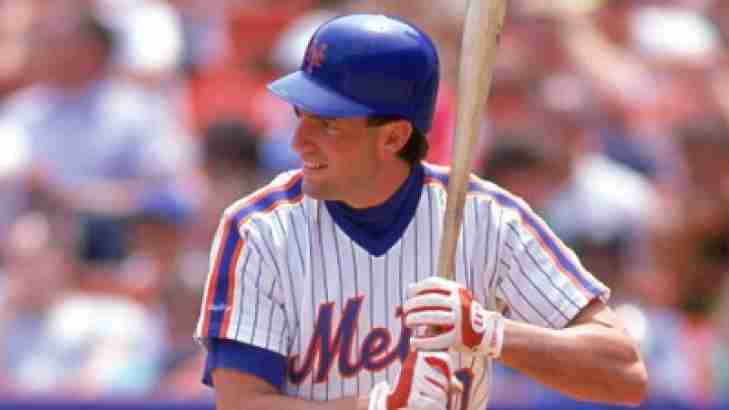
When Dave Magadan first made the major league roster in September 1986, he entered a clubhouse full of star players. Drafted by the Mets in 1983 after winning the Golden Spikes Award at Alabama, he was a disciplined left-handed hitter. Although he earned a championship ring as a reserve in 1986, his early days with the team were an ongoing struggle to get regular playing time.
In the following seasons, Magadan fought for every plate appearance. Despite a strong 1987 season batting .343 in limited play, the front office continually sought high-profile options at the corners. Magadan quietly accepted his role as a disciplined hitter, often filling in for Keith Hernandez or Howard Johnson, building a reputation for elite strike zone discipline and avoiding bad pitches.
His persistence finally earned him a starting opportunity in 1990, leading to a career-defining offensive season. As the everyday first baseman, Magadan dominated National League pitching all summer, batting .328 to finish third in the batting race behind Willie McGee and Eddie Murray. He also posted a .417 on-base percentage, drawing 74 walks and striking out 52 to anchor the Mets’ lineup.
Magadan remained a fixture in the New York infield for two more summers, showcasing his on-base skills. He hit .288 in 1991 and played a career-high 144 games in 1992, mainly at third base. Though lacking traditional power, his ability to grind out at-bats made him a tough out in the NL East.
His seven-year chapter in New York drew to a close following the 1992 season when he departed in free agency to sign with the Florida Marlins. Magadan left Queens with 610 hits, a stellar .391 on-base percentage, and a robust .292 batting average.
44. Bob Ojeda
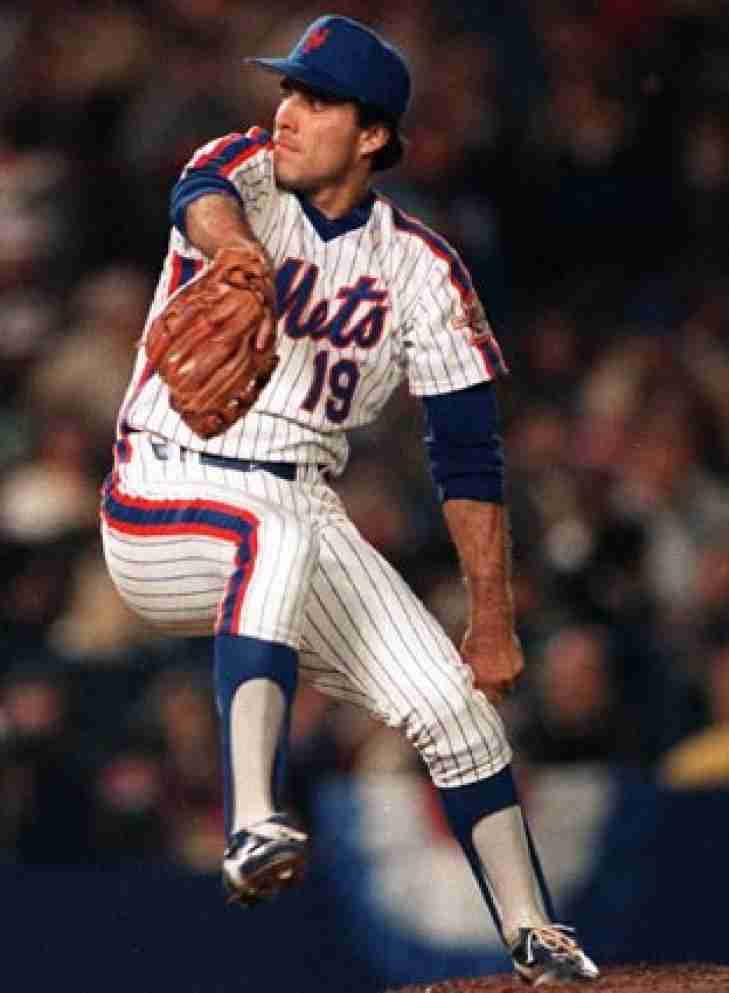
Bob Ojeda's arrival in Flushing before the 1986 season completed the roster that was on the verge of winning a championship. Traded from the Boston Red Sox in a major eight-player deal the previous December, the experienced left-hander joined a star-studded rotation that included Dwight Gooden, Ron Darling, and Sid Fernandez. Although those pitchers had higher velocity, Ojeda contributed a smart, competitive approach and a lethal changeup, providing the perfect complement to the staff.
His first summer in New York became a defining moment in his career. As the 1986 Mets dominated the National League, Ojeda stood out as the most dependable and consistent pitcher on the team, leading the league with an impressive 18-5 record. He also achieved a career-best 2.57 ERA, confounding opposing lineups over 217.1 innings and finishing fourth in the National League Cy Young Award voting.
When October arrived, destiny brought an exciting showdown against his former club in the World Series. Ojeda was a key player during that unforgettable postseason; he kept Houston quiet in the NLCS, then stepped up to start Game 3 at Fenway Park with the Mets behind two games to zero. Under huge pressure, he delivered a brilliant, one-run performance over seven innings, swinging the series in favor of the Queens team and ultimately helping them secure their second world championship.
In subsequent seasons, however, his resilience was tested by unusual and tragic events. In September 1988, while trimming hedges at his home, Ojeda endured a severe accident that cut off the top of his left middle finger. Medical professionals managed to reattach the finger, and through strong determination, he returned to the mound by mid-1989. Although he lost some sensation in his breaking pitches, he adjusted his style and achieved a steady 10-11 record with a 3.47 ERA over 31 starts in 1990.
His five-year stay in New York drew to a close after that 1990 campaign, when the front office traded him to the Los Angeles Dodgers. He departed Shea Stadium with a 51-40 record and a 3.12 ERA as a Met.
47. Tommie Agee
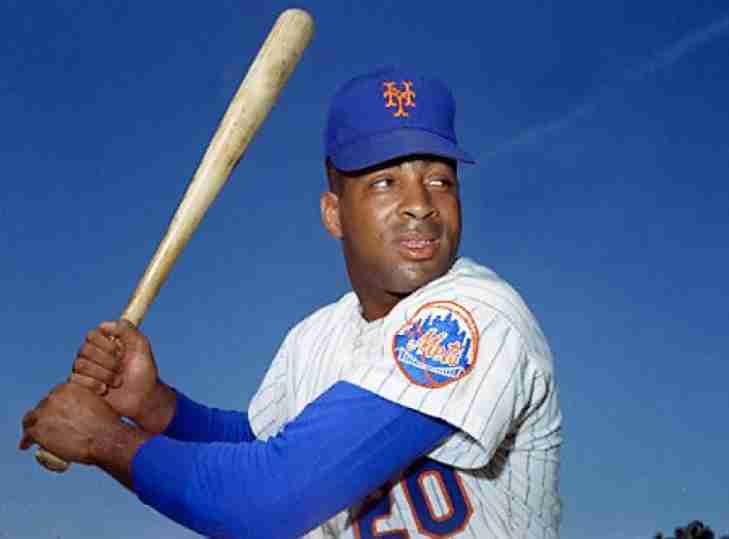
Tommie Agee arrived in New York before the 1968 season through a high-profile trade with the White Sox, bringing high expectations as a former American League Rookie of the Year. His first summer in Queens, however, was disastrous; he struggled with a severe hitting slump and was hit by a terrifying beanball from Bob Gibson, finishing with a poor .217 batting average. Despite this tough beginning, that difficult first year laid the groundwork for one of the most remarkable turnarounds in franchise history, reflecting the team's own dramatic evolution.
The 1969 season made Agee a legendary figure in Mets history. Once fully acclimated to the National League, the lively center fielder became the driving force behind the "Miracle Mets." On April 10, he hit a historic, long-distance home run off Montreal's Larry Jaster into the upper deck of left-field at Shea Stadium, a shot so iconic that the organization marked the spot with a white line on the seat to honor where it landed. Agee led the team with 26 home runs, 97 runs scored, and 76 RBIs, helping the Mets climb out of last place and finishing sixth in the National League MVP voting.
That regular-season surge was just a warm-up for his legendary showing in the 1969 World Series against the heavily favored Baltimore Orioles. In Game 3, Agee delivered what is arguably the greatest single-game performance in Fall Classic history. He started by hitting a solo home run in the first inning to set the tone, then made two incredible diving catches in center field, first robbing Elrod Hendricks in the snow-coned webbing of his glove, and later sliding across the warning track to prevent Baltimore from scoring with the bases loaded.
He maintained a high level of production into 1970, delivering a strong season with a .271 batting average, 24 home runs, 31 stolen bases, and earning a Gold Glove for his defense. Although ongoing knee injuries gradually reduced his speed and power during his last two seasons in New York, limiting his total with the franchise to 632 hits and a .329 on-base percentage, his most significant contributions were integral to the team's first championship identity.
After the 1972 season, the Mets traded him to the Houston Astros, ending his energetic five-year tenure in New York. While advanced metrics may see his career stats as humble, the franchise understood that his impact went beyond traditional box scores. Almost thirty years after his remarkable defensive plays helped win a title, the organization honored his legacy by inducting Agee into the New York Mets Hall of Fame in 2002.
3. Jacob deGrom
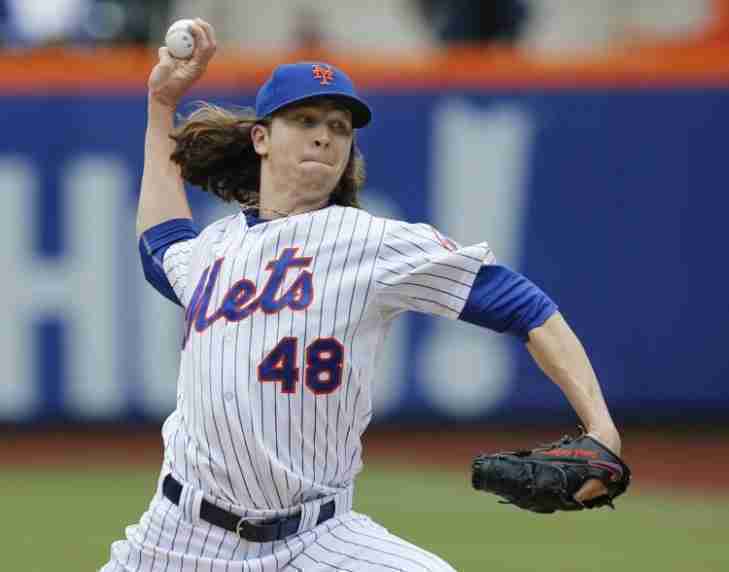
Jacob deGrom was a late-blooming converted shortstop with flowing hair and a "simple" 94 mph fastball. While he wasn't the most hyped prospect in a rotation that featured Matt Harvey and Noah Syndergaard, he immediately provided a brand of surgical precision that made the rest of the league look like they were swinging underwater.
Debuting in 2014, deGrom's first MLB season was an "out of nowhere" ascent that culminated in the 2014 National League Rookie of the Year Award. He famously tied a major-league record by striking out the first eight batters he faced in a September start. In 2015, he earned his first All-Star nod and finished seventh in the Cy Young voting, posting 14 wins and a 0.98 WHIP that left opposing hitters wondering if he was throwing a wiffle ball. He showcased a high-caliber cool in the postseason, winning two games in the NLDS against the Dodgers and proving he could handle the bright lights of October. While a nerve issue in his elbow hampered his 2016 campaign, he showed the organization a specialized resilience by returning in 2017 to toss over 200 innings and record 15 wins, signaling that he was ready for a historic leap.
deGrom was already a known commodity going into the 2018 season, but arguably, he was about to have a monster season, and do so while changing what the “win” meant for pitchers. He captured his first National League Cy Young Award, leading the league with a sparkling 1.70 ERA while earning only 10 wins. Despite the Mets' offense providing him with about as much support as a screen door on a submarine, his efficiency was undeniable; he set a record by allowing three runs or fewer in 29 consecutive starts.
2019 was pure absurdity, where he became one of the few pitchers in history to go back-to-back, capturing his second consecutive Cy Young Award. He showcased a high-caliber durability that year, leading the National League with 255 strikeouts and proving that his previous season wasn't a fluke. During this stretch, he became a perennial superstar, finishing in the top ten of MVP voting in both seasons… and again, he did so with a low number of wins (11).
The 2021 season provided what might be the most "Jacob deGrom" statistical anomaly in the history of the sport. Before injuries shortened his campaign to just 15 starts, he was pitching to a 1.08 ERA with 146 strikeouts in just 92 innings. At one point, he actually had more RBIs as a hitter than earned runs allowed as a pitcher, a feat of high-quality versatility that made him the most "must-watch" player in New York. While he constantly battled physical setbacks, he remained a professional mainstay when healthy, providing a foundation that made every deGrom start feel like a holiday in Queens.
After the 2022 season, deGrom shocked the Big Apple by opting out and signing a massive deal with the Texas Rangers. With New York, he had an 82-57 record with a 2.52 ERA and 0.998 WHIP.
35. Lenny Dykstra
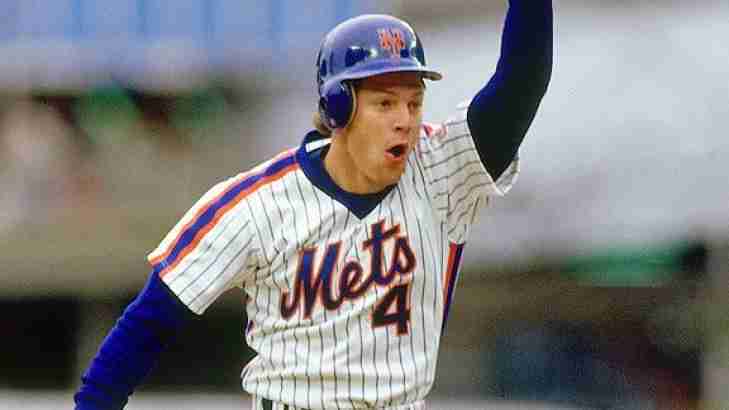
Lenny Dykstra made his Major League debut with the New York team in May 1985. He's a tough, gritty center fielder from Southern California, known for playing recklessly and putting his body on the line. His nickname reflects his iron-willed toughness, and he brought a driven, energetic presence to the top of the batting order.
Known as “Nails,” Dykstra was a fearless, dirt-stained player who set the tone for the legendary 1986 championship season. He earned a significant role in the outfield, becoming the team’s undisputed "spark plug" and leadoff hitter for a squad that finished with 108 regular-season wins. That summer, he had an outstanding campaign, batting .295 with a team-high 31 stolen bases and 77 runs scored. He combined that volume of action with a keen eye at the plate, striking out only 55 times and giving the Mets a fierce, gritty identity right at the top of the order.
Although Dykstra’s regular-season contributions were excellent, he became a legendary figure in New York through his clutch performances in October. In the 1986 NLCS Game 3 against Houston, facing a potential series loss, he hit a memorable walk-off two-run homer, one of the franchise’s most iconic moments. He built on that momentum during the World Series against Boston, starting Game 3 with a historic home run at Fenway Park that fueled a big win and helped lead the Mets to their 1986 championship.
Dykstra was a postseason warrior, batting .429 in the 1988 NLCS against the Dodgers. His time in Flushing ended on June 18, 1989, when he, McDowell, and Edens were traded to the Phillies for Juan Samuel. In Pennsylvania, he reached his peak, earning three All-Star selections and finishing as NL MVP runner-up in 1993.
Dykstra compiled 469 hits and 116 stolen bases as a Met.
41. Kevin McReynolds
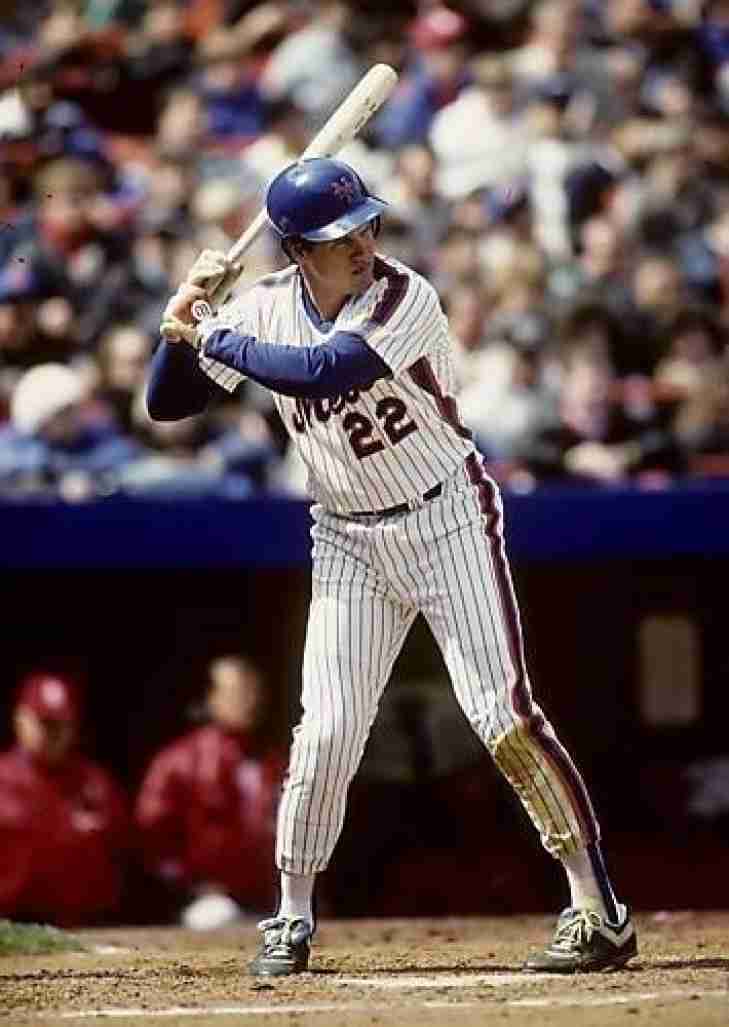
Kevin McReynolds joined the Mets in Flushing before the 1987 season, offering a calm, understated contrast to their often loud clubhouse. Traded from San Diego in a major eight-player deal that sent Kevin Mitchell to the Padres, the quiet outfielder was signed by manager Davey Johnson to support Darryl Strawberry and the defending World Series Champions in the lineup. Unlike many teammates who attracted tabloid attention, McReynolds was a steady presence in left field, providing the Mets with a reliable power threat.
His initial campaign in pinstriped blue and orange validated the trade. McReynolds adapted quickly to Shea Stadium pressure, hitting 29 home runs, driving in 95 runs, and anchoring the middle of the order. He gained a reputation for deceptive athleticism, with a sturdy frame, elite range in the outfield corners, an accurate arm that nailed runners at the plate, and a highly analytical approach to running bases.
During the 1988 season, McReynolds's precise baserunning helped the Mets win the NL East. He stole 21 bases flawlessly, setting a major league record for most successful stolen bases in a season. He also hit .288 with 27 home runs and 99 RBIs, finishing third in NL MVP voting behind Kirk Gibson and Strawberry.
The high level of production stayed consistent over the following two summers. He surpassed 20 home runs for four straight years in New York, hitting 22 in 1989, a season in which he also hit for the cycle against St. Louis, and then adding 24 more in 1990. During this time, he was one of the National League's most underrated defensive players, frequently leading all left fielders in outfield assists and total chances.
As the team's championship window closed, his initial five-year tenure ended after the 1991 season, when the front office traded him to Kansas City in the deal that brought Bret Saberhagen to Queens. However, his relationship with the franchise came full circle in 1994, when the Royals traded him back to New York for a final, brief stint before he retired. He finished his time as a Met with 791 hits and 108 home runs.
45. Frank Viola
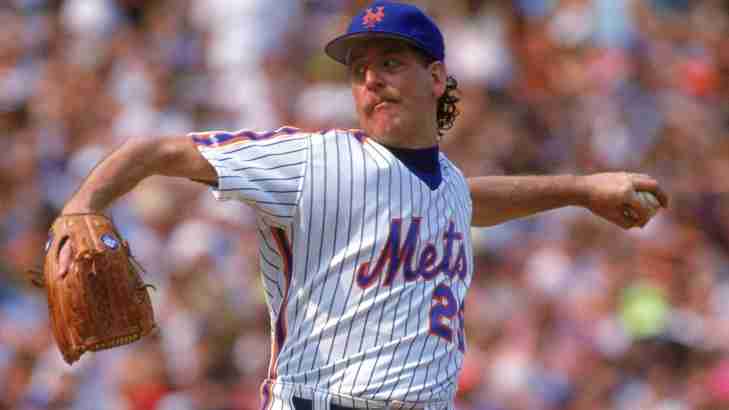
New York’s trade for Frank Viola in Queens in late July 1989 was a clear signal that the front office was pushing all its chips into the center of the table. Fresh off an AL Cy Young campaign in Minnesota, the left-handed ace landed with the Mets in a blockbuster trade that sent five players to the Twins. Viola joined a rotation already featuring Dwight Gooden and Ron Darling, instantly giving New York one of the most formidable pitching staffs in the National League.
His first complete season in Flushing in 1990 served as a distinguished exhibition of his signature changeup. Viola emerged as the primary pitcher of the staff, accumulating a substantial 249.2 innings over 35 starts. He led the National League with 20 victories, received his inaugural National League All-Star selection, and placed a close third in the Cy Young Award voting. His remarkable durability and command resulted in an impressive 2.67 ERA, ranking him second among pitchers in the senior circuit in overall value.
The momentum persisted into the 1991 campaign, during which Viola continued to serve as the focal point of the rotation amid a period of organizational transition. He achieved a second consecutive All-Star selection in July, demonstrating veteran poise at Shea Stadium and stabilizing a fluctuating pitching staff under increasing pressure. Although the team's offense underperformed around him, impeding the prospect of replicating his high win totals from the previous summer, he nonetheless contributed 13 victories and maintained a commendable 3.17 ERA over 232.2 innings.
His tenure in New York concluded promptly after the 1991 season when he transferred through free agency to join the Boston Red Sox. Although his residence in Queens lasted merely two and a half summers, Viola departed with 38 wins, a 3.31 ERA, and an enduring reputation as an elite postseason starter who provided the high-caliber performance for which the Mets had traded.
40. Craig Swan
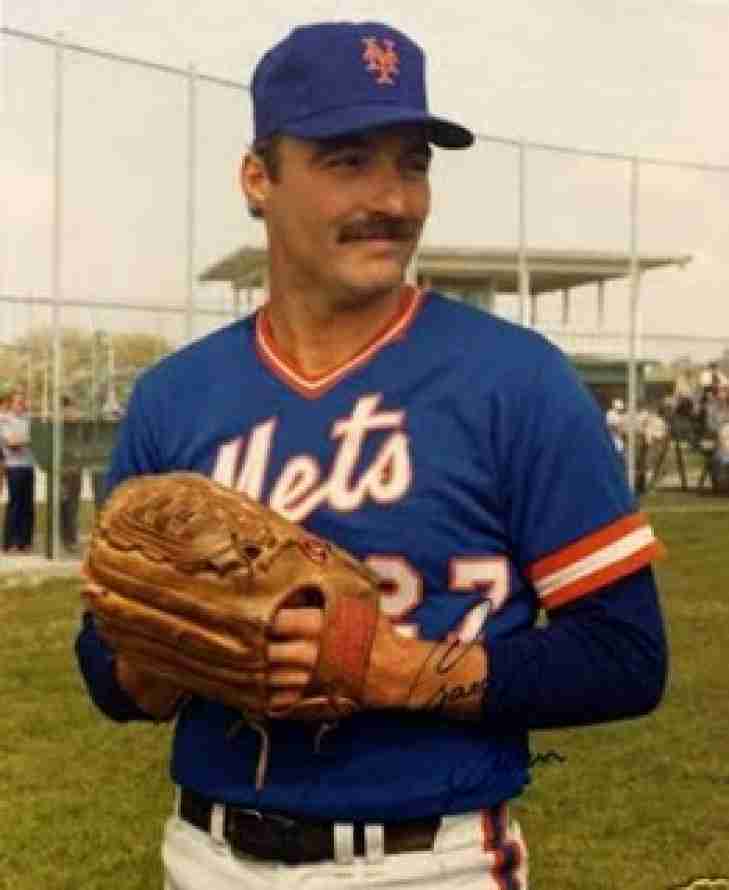
Craig Swan first broke into the major leagues with New York in September 1973, a third-round draft pick out of Arizona State University who possessed a heavy, low-90s fastball and a sharp slider. Arriving just as the "Ya Gotta Believe" pennant race reached its boiling point, the young right-hander was largely a spectator during the team's World Series run, spending the next two seasons waiting for a permanent opening while refining his craft in Triple-A.
Swan secured a permanent spot in the starting rotation during the 1976 season, delivering a strong debut as a regular starter with a 6-9 record and a solid 3.54 ERA, including a remarkable five-hit, 11-strikeout shutout against Atlanta. He remained a reliable, volume-focused starter throughout the difficult 1977 season. After the surprising mid-summer trading of Tom Seaver, Swan was placed in a higher-pressure role, leading a weakened pitching staff with 9 wins and 146.2 innings pitched, even as the team fell to the bottom of the National League East.
In 1978, Swan was the unheralded anchor of a 96-loss team. He completely shocked the baseball world by capturing the National League ERA Title with a spectacular 2.43 mark. He pairs that baseline achievement with an era-defining 143 ERA+ to lead the senior circuit, while finishing second in the league in both WHIP (1.07) and hits allowed per nine innings. He was entirely unhittable at Shea Stadium, where he spun a microscopic 1.68 ERA, but the punchless Mets lineup routinely wasted his efforts, leaving him with a deceptive, hard-luck 9-6 record that masked a brilliant 5.6 bWAR campaign.
He demonstrated that his remarkable peak was no accident by increasing his workload during the 1979 season, achieving his best statistical season with traditional volume. As the team's Opening Day starter, Swan bore a heavy load for a team that lost 99 games, pitching a career-high 251.1 innings over 35 starts and completing 10 games. He recorded a personal best of 14 wins, more than his two rotation teammates combined, along with 145 strikeouts and a solid 3.29 ERA. His outstanding two-year performance earned him the largest pitching contract in franchise history at that time when the front office signed him that winter.
His career took a frustrating turn after that financial peak as physical roadblocks derailed his efficiency. Swan started strongly in 1980 with a 2.21 ERA into June, but a torn rotator cuff ended his summer and wiped out most of his 1981 schedule. He made a strong late-career comeback in 1982, going 11-7 with a 3.35 ERA over 166.1 innings, narrowly missing the NL Comeback Player of the Year. Sadly, his arm shattered again early in 1983, and he spent the rest of his career trying to pitch through severe joint damage.
Swan was released in May of 1984, finishing up with a 59-72 record and a 3.74 ERA.
34. Tom Glavine
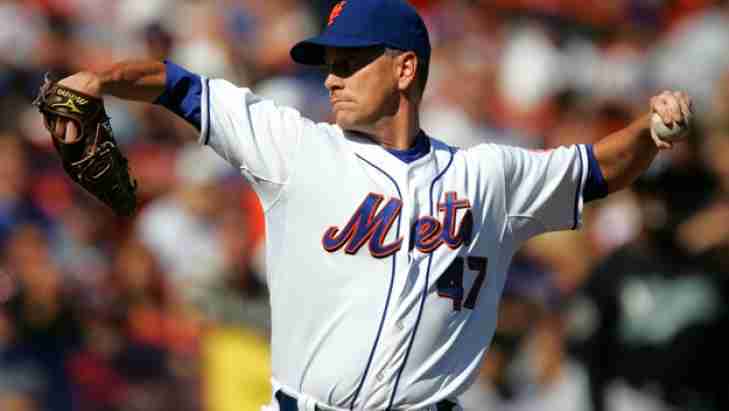
In December 2002, Tom Glavine surprised baseball fans by switching teams, signing a four-year, $42.5 million deal to leave the Atlanta Braves and shake up the National League East. Glavine will always be thought of as a Brave, but his work in the Big Apple is worth celebrating.
Throughout his five seasons in Queens, Glavine consistently started at least 32 games each season. His standout years were 2004 and 2006, when he earned two National League All-Star selections as a Met. In 2006, he delivered a masterful performance, going 15-7 with a 3.82 ERA, serving as a key veteran and frontline pitcher for a strong team that won the NL East and advanced to Game 7 of the NLCS.
Beyond his run prevention, Glavine achieved a historic milestone. On August 5, 2007, at Wrigley Field, he outperformed the Cubs to win his 300th game, becoming the 23rd pitcher in MLB history to reach this milestone. In the final game of the regular season, Glavine had his worst outing as a Met, lasting only one out in a game that eliminated the Mets from playoff contention. Glavine would depart afterward to rejoin the Braves.
With the Mets, Glavine had a 61-56 record, a 3.97 ERA, and entered the Baseball Hall of Fame in 2014.
26. Gary Carter
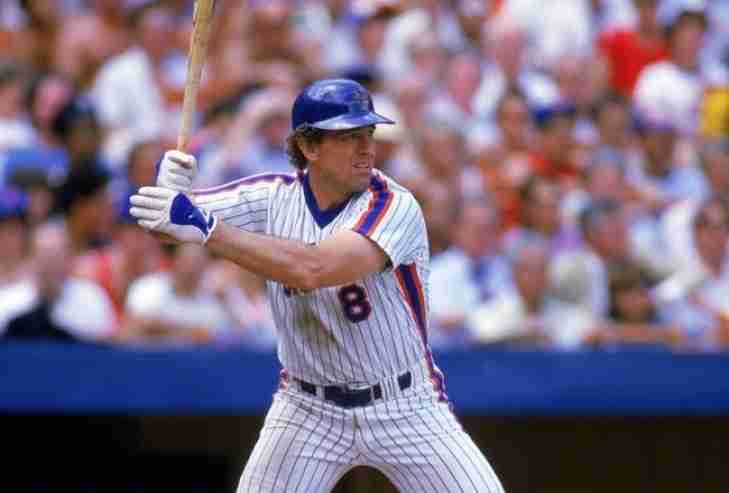
In December 1984, Gary Carter joined the Mets through a major trade with the Montreal Expos, which sent Hubie Brooks, Mike Fitzgerald, Herm Winningham, and Floyd Youmans to Canada. The Mets, an ascending team, lacked an experienced veteran behind the plate, and "The Kid”, considered the best catcher in baseball, came to New York to bring immediate championship experience.
Carter wasted no time, delivering an impressive debut in 1985 by matching his career high with 32 home runs and 100 RBIs, earning a sixth-place spot in the NL MVP voting. He built on this momentum in 1986 with a remarkable season, hitting 24 home runs and accumulating 105 RBIs, while also providing exceptional defensive intelligence that stabilized the pitching staff. His consistent ability to bat in the middle of the order earned him a well-deserved third-place finish in the MVP race, solidifying his status as one of the league's top catchers.
Beyond his basic stats, Carter became a legendary figure in New York through his pivotal moments in the 1986 postseason. He hit a walk-off single in Game 5 of the NLCS against Houston, hit two home runs in Game 4 of the World Series, and famously sparked the crucial two-out rally in the 10th inning of Game 6 with a clutch single to left field. Although he was selected as an All-Star four years in a row from 1985 to 1988 as a Met, his physical performance declined sharply during his last two years, as the demanding nature of catching heavily impacted his knees. He was released after the 1989 season.
While the rank of Carter might seem low, realistically, he was only good for the first half of his half-decade run
The Mets honored Carter with a franchise Hall of Fame induction in 2001, and he was enshrined in the Baseball Hall of Fame in 2003.
28. Jerry Grote
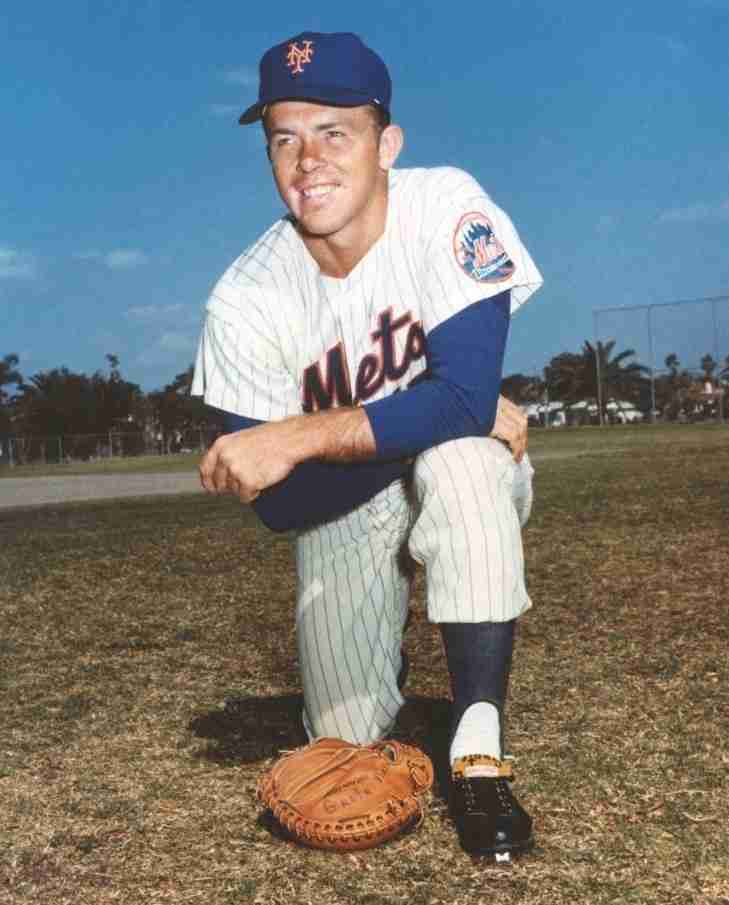
Jerry Grote secured the starting catcher position in Flushing in 1966 after an off-season trade from Houston for pitcher Tom Parsons. A tough, short-tempered Texan, Grote quickly brought a fierce, competitive spirit to an organization used to struggling at the bottom of the National League. Although his batting rarely attracted attention, he was the unchallenged defensive leader during the franchise's initial era of success. With a strong arm and a sharp baseball intellect, he dictated the game’s pace from behind the plate.
In 1969, Grote served as the defensive anchor and pitch caller for the “Miracle Mets”. That summer, he achieved a remarkable .991 fielding percentage and successfully threw out 56.3% of potential base-stealers, showcasing exceptional run prevention that ranked second in the National League. He played every inning of the 1969 postseason, skillfully guiding rising stars like Tom Seaver, Jerry Koosman, and a young Nolan Ryan through the intense pressure of October with veteran composure.
He was named a National League All-Star twice with the New York Mets, notably earning the starting spot in the 1968 midsummer classic after batting over .300 in the first half of the season, and he returned to the team in 1974. A consistent professional, he often delivered in clutch moments, accumulating 994 hits with the Mets and helping lead the team back to the World Series during the 1973 "Ya Gotta Believe" pennant race. His skill was recognized even by the game's top players; Hall of Famer Johnny Bench famously complimented his catching ability, saying that if he and Grote were on the same team, Bench would be forced to play third base.
With John Stearns waiting in the wings, Grote was traded to the Los Angeles Dodgers during the 1977 season.
The Mets inducted Grote into their Hall of Fame in 1992.