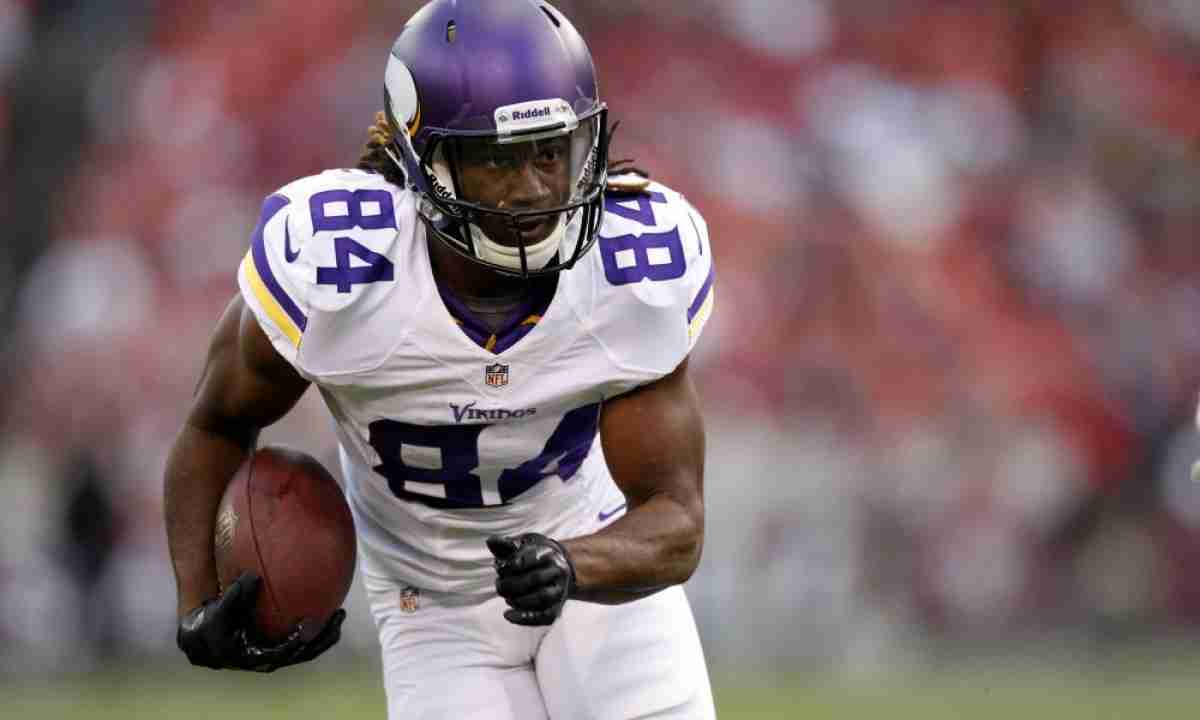
Maybe this rank is too low, as Randy Moss is the man many called the greatest pure athlete of his generation. The wide receiver arrived in Minnesota with a combination of size, speed, and leaping ability that forced defenses to invent new ways to cover him. The “Randy Ratio” became shorthand for the idea that the Vikings needed to get him the ball early and often if they wanted any real chance to win. When he was locked in, few players in the league were more dangerous.
Maybe this rank is too high, because the same talent came with off-field problems and diva-like moments that made him a distraction. He was not always the consummate teammate, and by the end of his first run in Minnesota, the relationship had soured enough for the team to move on. The debate over where he ranks is fair. What is not up for debate is that his years with the Vikings produced some of the most electric football the franchise has ever seen.
The Vikings selected Moss 21st overall in 1998 out of Marshall, and he wasted no time proving the pick correct. In his rookie season, he caught 69 passes for 1,313 yards and a league-leading 17 touchdowns, setting the NFL record for receiving scores by a first-year player. He was named Offensive Rookie of the Year, earned first-team All-Pro honors, and helped the Vikings post a 15-1 record while scoring a then-record 556 points. A Thanksgiving Day performance against Dallas—three catches, 163 yards, three touchdowns—announced him as must-watch television.
He stayed at that level for several more seasons. In 2000, he posted 1,437 yards and 15 touchdowns. In 2003, he set personal bests with 111 receptions for 1,632 yards and another 17 scores. Those years produced more Pro Bowl selections and first-team All-Pro recognition. Moss led the NFL in receiving touchdowns three times during his Vikings tenure and consistently ranked among the league leaders in yards. Opposing coordinators spent entire weeks game-planning specifically for him.
The other side of the story was harder to ignore. Moss collected fines for altercations with officials, left the field early in a loss to Washington, and was involved in off-field incidents, including a traffic stop in Minneapolis. His habit of taking plays off when he was frustrated became a talking point. The relationship with the organization frayed, and after the 2004 season the Vikings traded him to the Oakland Raiders for a first-round pick and a linebacker. The move ended his first and most productive chapter in Minnesota.
He returned briefly in 2010 after a trade from New England, but the second stint lasted only a few games before he was waived. The spark was gone, and the fit with the coaching staff never clicked. The short reunion did little to change the overall picture of his Vikings career.
With Minnesota, he finished with 9,316 receiving yards and 92 touchdowns on 587 receptions across his primary years. He went to five Pro Bowls and earned three first-team All-Pro selections while wearing purple. Those numbers rank among the best in franchise history and form the core of his Hall of Fame case.
The Pro Football Hall of Fame inducted Moss in 2018. The year before, the Vikings placed him in their Ring of Honor. Both honors recognized a player whose greatest feats occurred in Minnesota, even if the full career was more complicated than the highlight reels suggested.
For pure must-watch moments, few players in Vikings history sit higher. The long touchdowns, the contested catches, and the way he changed games in a single play created memories that still define an era. The distractions and the eventual departure keep him from the very top of some rankings, but the production and the spectacle remain impossible to dismiss. Moss was both the reason the Vikings were dangerous and the reason they eventually decided they had seen enough.


Comments powered by CComment