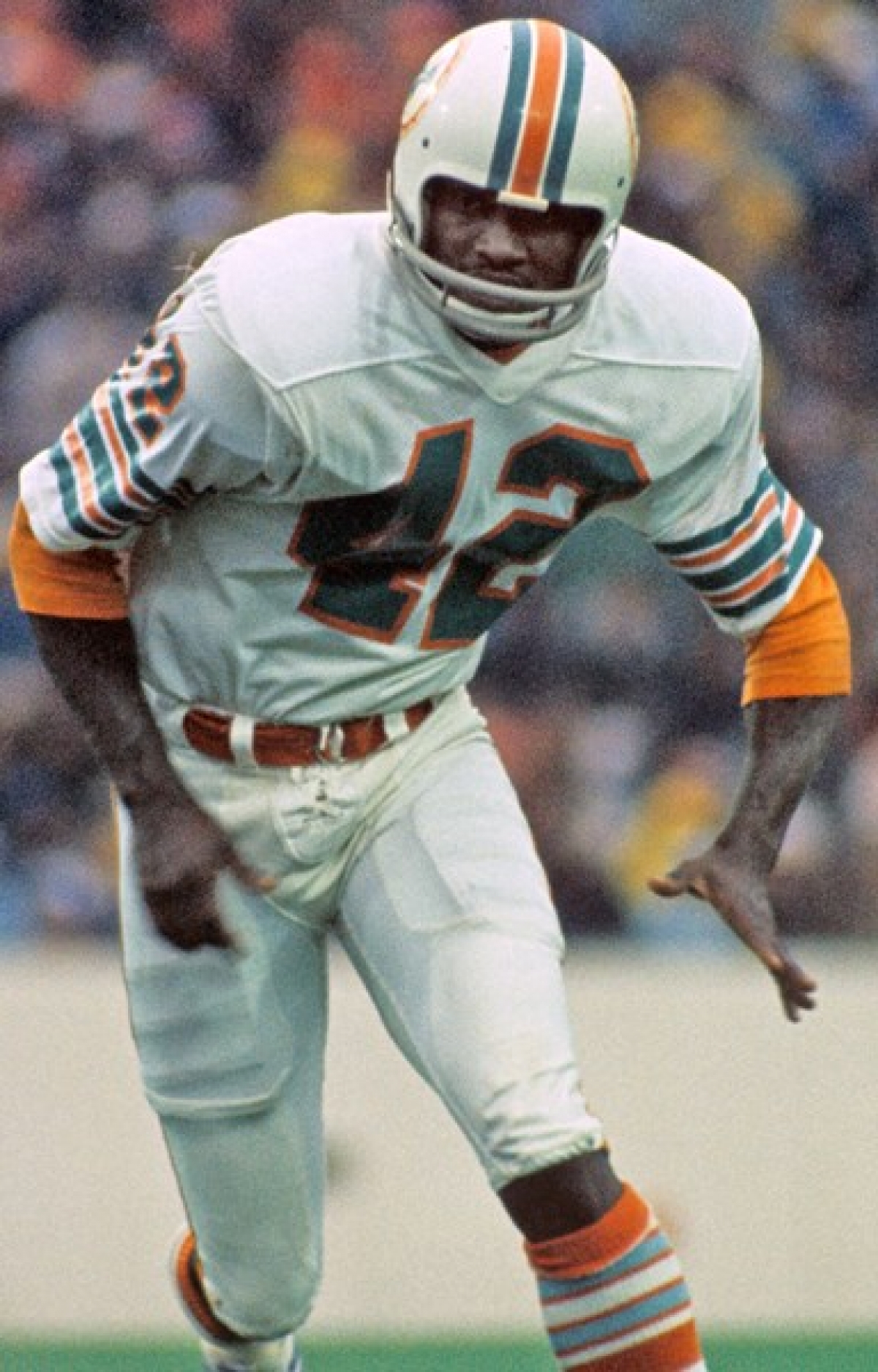
Plenty of people in Cleveland were stunned when the Browns traded Paul Warfield to the Miami Dolphins after the 1969 season. As a rookie in 1964, he had helped Cleveland win the NFL Championship, and he was coming off two straight Pro Bowl seasons. The Browns got the third overall pick in the deal and used it on Purdue quarterback Mike Phipps. Phipps lasted more than a decade in the league, but he never became the franchise quarterback they hoped for. Warfield, meanwhile, was about to have the most productive stretch of his career.
He spent five seasons with the Dolphins and made the Pro Bowl every year. He also earned first-team All-Pro honors twice. Miami was built around its defense and a heavy running game, but Warfield gave Bob Griese the deep threat the offense needed. He led the NFL with 11 touchdown receptions in 1971, averaged better than 20 yards per catch for most of his time in Miami, and helped the team reach three straight Super Bowls. They lost the first one and won the next two. Even in the undefeated 1972 season, when the Dolphins barely threw the ball, Warfield still averaged more than 20 yards per catch and made the Pro Bowl.
What made him special in those years was the combination of speed and route-running precision. Defenses often had to double him, and when they did not, he could take a short throw the distance or win on a deep ball. He was not the volume receiver later Dolphins stars became, but he was the big-play option who kept defenses honest while Larry Csonka, Mercury Morris, and Jim Kiick ran the ball. In the playoffs, he was even more dangerous, finishing with 717 yards in 11 postseason games with Miami.
Warfield left after the 1974 season and joined Larry Csonka with the Memphis Southmen of the World Football League. When that league folded, he returned to Cleveland for two final seasons before retiring. While in Miami, Warfield had 156 receptions, 3,355 receiving yards, and 33 receiving touchdowns.
For his work with both the Browns and the Dolphins, he was inducted into the Pro Football Hall of Fame in 1983. He was also part of the first group inducted into the Dolphins’ Honor Roll.
Warfield was the receiver who gave the early-1970s Dolphins their vertical threat. For five seasons, he was the deep option who made the running game even more effective, and the two rings plus the Hall of Fame still show how high that run went.


Comments powered by CComment