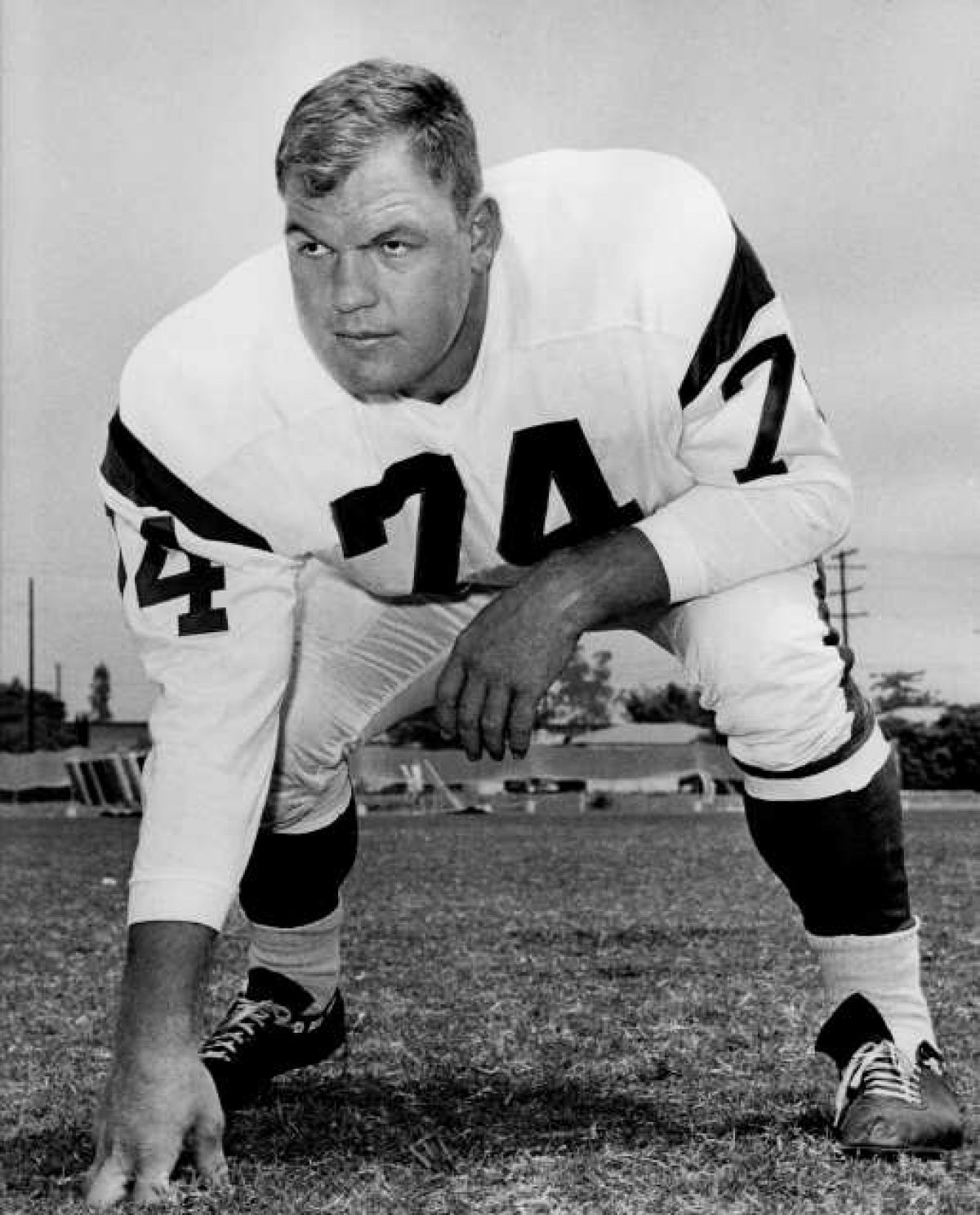
Chosen third overall out of Utah State in the 1962 NFL Draft, Merlin Olsen arrived in Los Angeles with towering expectations after sweeping the Outland Trophy and earning consensus All-American honors in his final college season. Stepping directly onto the professional gridiron, Olsen made an immediate impact as an elite interior disrupter. He earned a spot on the Western Conference Pro Bowl squad as a rookie, launching an incredible 15-year career that defined interior defensive line play for an entire generation.
That rookie selection was merely the beginning of an unprecedented individual run: Olsen was named to 14 consecutive Pro Bowls from 1962 to 1975, setting a league record for consecutive invitations that still stands today. As the left defensive tackle and intellectual anchor of the Rams' legendary "Fearsome Foursome"—alongside Deacon Jones, Rosey Grier, and Lamar Lundy—Olsen provided a rock-solid, disciplined counterweight to Jones' wild pass-rushing speed. Opposing offenses simply could not run the football up the middle against Olsen's supreme leverage and technique.
What elevated Olsen above his peers was a rare combination of physical strength, technical execution, and relentless durability. Standing 6-foot-5 and weighing 270 pounds, he controlled the line of scrimmage with uncanny balance, absorbing double teams while regularly collapsing pockets from the inside. Between 1966 and 1970, Olsen earned First-Team AP All-Pro honors in five consecutive seasons, establishing himself as the undisputed premier defensive tackle of his era alongside Bob Lilly and Alan Page.
In addition to five First-Team All-Pro selections, Olsen earned Second-Team All-Pro four times (1965, 1971–1973), maintaining elite production across three decades of football. His selfless, team-first leadership earned him the Bert Bell Award in 1974 as the NFL's Most Valuable Player, the Maxwell Football Club's recognition of the league's top player—and he became only the second defensive player ever to win the award. In typical humble fashion, Olsen accepted the trophy by deflecting credit and thanking defensive players everywhere for the recognition.
Olsen's remarkable durability saw him play 208 consecutive regular-season games for the Rams, never missing a single contest across his 15 years in Southern California. Whether anchoring the line during the defensive battles of the 1960s or leading Los Angeles to three straight NFC West division titles in the mid-1970s, he remained the franchise’s emotional heartbeat, locker-room standard, and tactical backbone.
After retiring following the 1976 season, Olsen transitioned seamlessly into a high-profile second career in entertainment and broadcasting. He became a household name off the field as an actor—starring in popular television series like Little House on the Prairie and Father Murphy—and served as a color commentator alongside Dick Enberg for NBC's top NFL broadcast crew.
National recognition followed Olsen's brilliant gridiron career at every turn. He was selected to both the NFL 1960s All-Decade Team and the NFL 1970s All-Decade Team, honoring his dominance across two distinct eras. Elected to the Pro Football Hall of Fame in 1982 in his first year of eligibility, his legendary No. 74 was retired by the Rams organization, permanently cementing his place in franchise lore.
Following his passing in 2010 at age 69, Olsen's legacy continued to earn historic recognition. In 2019, he was posthumously selected to the official NFL 100th Anniversary All-Time Team, taking his rightful place on the Mount Rushmore of defensive tackles. Before Aaron Donald's transcendent era, Olsen held the crown as the greatest player in Rams history—a consensus icon whose leadership and character set the gold standard for every player who put on the horns.
Olsen's enduring impact extended far beyond individual awards; he was the ultimate coach's player, leading purely by example. He handled the grueling demands of interior line play with absolute dignity, proving that a defensive tackle could play with brutal physical force without ever losing his sportsmanship or professional composure.
Statistically speaking, over his 208 games, he had 91 (unofficial) sacks.
Comments powered by CComment