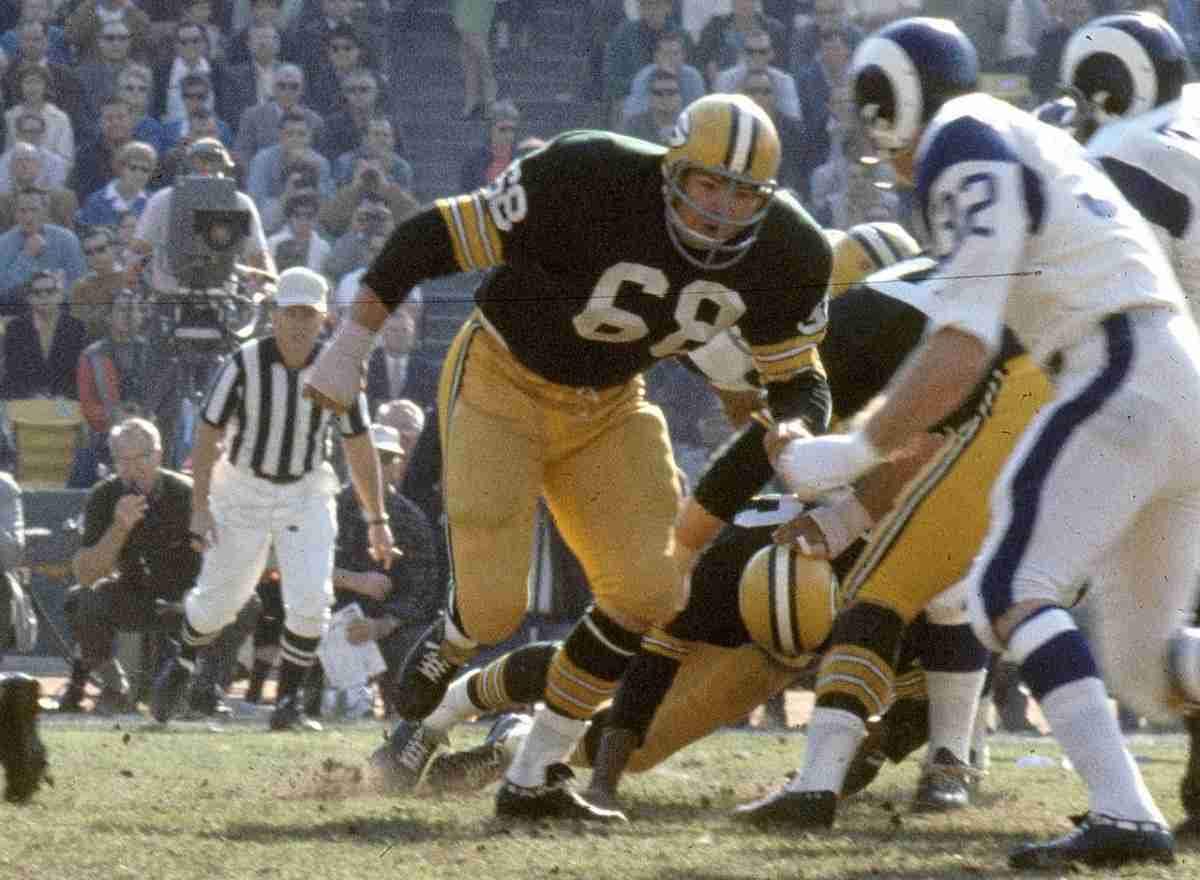
Taken in the first round (24th overall) of the 1966 NFL Draft out of Minnesota, Gale Gillingham arrived in Green Bay just in time to learn from Hall of Fame guard Jerry Kramer and anchor the final leg of Vince Lombardi's dynasty. Stepping into the starting lineup at left guard in 1967 after Fuzzy Thurston's retirement, the physically imposing 255-pound rookie displayed world-class power and explosive pulling speed, helping propel Green Bay to victories in Super Bowls I and II.
While the Packers entered a difficult transitional era in the post-Lombardi late '60s and 1970s, Gillingham's individual performance only surged into elite territory. Widely regarded as one of the most athletic and dominant interior linemen in the NFL, he earned five Pro Bowl selections (1969–1971, 1973, 1974) and First-Team AP All-Pro honors in 1969 and 1970. His rare combination of brute strength and mobility allowed Green Bay's offense to stay competitive even during lean rebuilding years.
Gillingham's selfless versatility was tested in 1972 when head coach Dan Devine asked him to move to defensive tackle—an experiment cut short when he suffered a season-ending knee injury. Returning to his natural right guard spot in 1973, Gillingham picked up where he left off, earning two more Pro Bowl nods and clearing the path for running backs John Brockington and MacArthur Lane as Green Bay won the NFC Central title.
After sitting out the 1975 season, Gillingham returned for one final campaign in 1976 before retiring. His ten seasons in the tundra established him as one of the finest interior blockers ever to wear a Packers uniform. In 1982, the Green Bay Packers formally recognized his sustained brilliance and championship legacy by inducting him into the Green Bay Packers Hall of Fame.


Comments powered by CComment