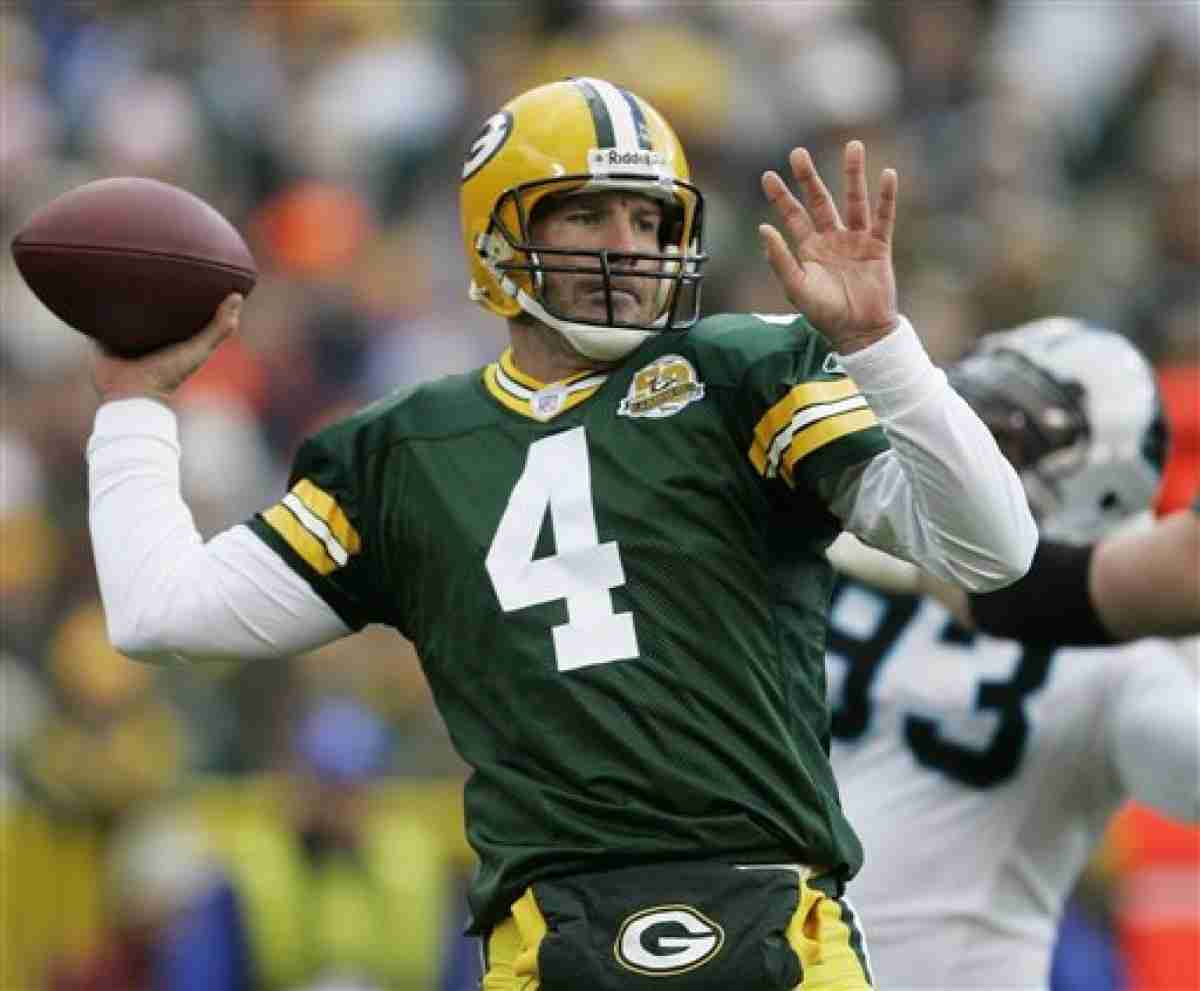
Drafted in the second round of the 1991 NFL Draft by the Atlanta Falcons, Brett Favre spent his rookie season buried on the depth chart—completing zero passes and throwing two interceptions—before Green Bay general manager Ron Wolf surrendered a first-round pick to acquire him in 1992. When Don Majkowski suffered an ankle injury in Week 3 against Cincinnati, Favre stepped off the bench and engineered a dramatic, game-winning drive capped by a touchdown pass to Kitrick Taylor, seizing a starting job he would not relinquish for the next 16 years.
That incredible comeback sparked one of the longest and most resilient careers in professional sports history. Favre emerged as the ultimate ironman, enduring broken bones, sprains, and intense wear-and-tear to start 253 consecutive regular-season games for Green Bay—an extraordinary streak that epitomized his relentless determination. With a cannon arm and a playful approach to the game, he played with pure joy, often throwing sidearm passes, celebrating with offensive linemen, and attempting risky throws into double coverage that only his raw arm talent could pull off.
Favre’s definitive peak was a three-year period from 1995 to 1997, becoming the first—and remains the only—NFL player to win three consecutive AP NFL MVP awards. In 1995, he threw for 4,413 yards and 38 touchdowns, guiding Green Bay to its first NFC Championship Game in over twenty years. He continued to elevate his performance in 1996, throwing 39 touchdown passes to lead the NFL's best offense and helping Green Bay defeat the New England Patriots in Super Bowl XXXI for the franchise's first Lombardi Trophy in 29 years.
His legendary status in Titletown was solidified by his bold approach, risking everything for victory and adopting a gunslinger persona. He led the NFL in touchdown passes for three consecutive seasons (1995–1997) and guided Green Bay back to a second straight Super Bowl XXXII appearance. Although his aggressive playstyle resulted in a high number of turnovers—eventually making him the NFL's all-time leader in career interceptions—his teammates consistently supported his fearless attitude, transforming the Packers into regular contenders during the 1990s and early 2000s.
Yet, for all his on-field heroism, the latter portion of Favre's tenure in Green Bay became increasingly complicated by high-profile off-field personal struggles and offseason drama. Early in his Packers career, he publicly battled a severe addiction to the painkiller Vicodin, entering a rehabilitation facility in 1996 before courageously returning to lead Green Bay to a world championship that very same season. Later in his career, his annual public indecision regarding retirement turned every offseason into a media circus, straining his relationship with head coach Mike McCarthy and general manager Ted Thompson.
The long-simmering friction reached a bitter breaking point in the summer of 2008. After formally announcing his retirement in March, Favre had a change of heart months later and demanded his starting job back over young successor Aaron Rodgers. The front office stood firm, leading to an acrimonious split and a trade to the New York Jets. The feud intensified the following year when Favre signed with Green Bay's bitter division rival, the Minnesota Vikings, leading them to a division sweep over the Packers in 2009 in front of an enraged Lambeau Field crowd.
His post-football legacy took further damage and public scrutiny because of serious civil litigation over his involvement in the Mississippi welfare funds scandal, along with past league investigations into inappropriate workplace conduct during his time in New York. While these off-field issues permanently tarnished his standing with many fans, time eventually softened the competitive wounds between the franchise and its most charismatic quarterback.
The fences were officially mended in July 2015 when Favre returned to a packed Lambeau Field to have his iconic No. 4 jersey retired and his name enshrined on the stadium facade alongside the franchise's greatest legends. With the Packers, Favre appeared in 255 regular-season games, compiling 61,655 passing yards and 442 touchdown passes while winning 160 games as a starter. A three-time NFL MVP, three-time First-Team All-Pro, nine-time Pro Bowler in Green Bay, and member of the NFL 1990s All-Decade Team, Favre was enshrined in the Pro Football Hall of Fame in his first year of eligibility in 2016.
Comments powered by CComment