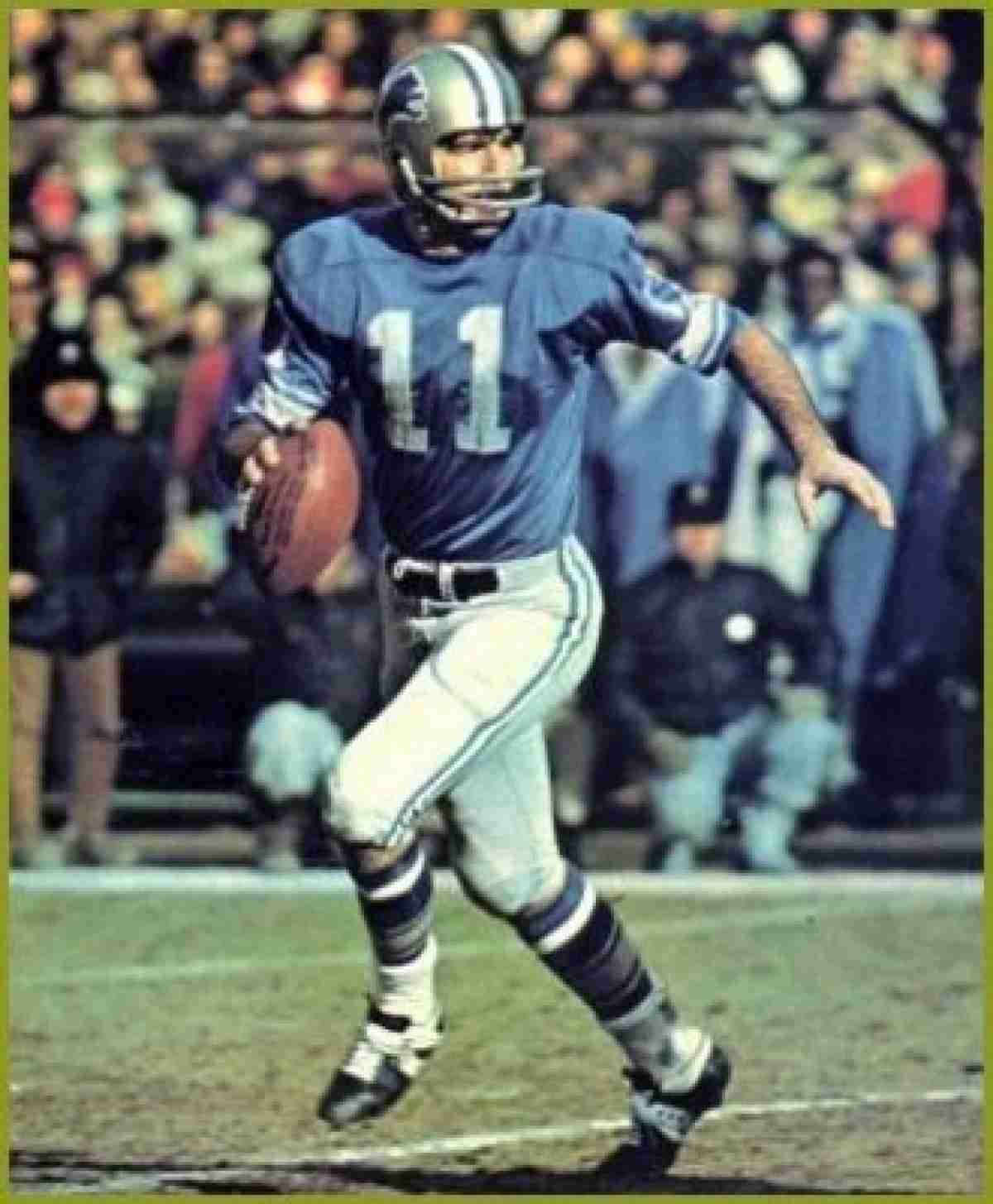
Stepping out of UMass in 1968, Greg Landry provided Motown with a rare structural prototype long before the modern dual-threat quarterback became standard operating procedure. Standing 6-foot-4 and 210 pounds with exceptional open-field athleticism, Landry brought a bruising, power-running dimension to the signal-caller position that fundamentally altered how defenses had to prepare for Detroit.
After earning the starting job full-time in 1971, Landry unleashed a solid season. He threw for 2,237 yards and 16 touchdowns while rushing for 530 yards and three scores, becoming the first quarterback in NFL history to pass for over 2,000 yards and rush for over 500 in the same campaign. His rare athletic skill set earned him a Pro Bowl selection and First-Team AP All-Pro honors as he led Detroit to a 7–6–1 record. He backed it up in 1972 by throwing 18 touchdown passes and rushing for a career-high nine touchdowns on the ground.
Landry's running ability wasn't just a scramble drill when plays broke down; head coach Joe Schmidt routinely called designed option plays and quarterback draws for his imposing field general. Though major knee and shoulder injuries limited his availability in the mid-1970s, Landry staged a triumphant comeback in 1976, passing for 2,191 yards and 17 touchdowns to earn the PFWA Comeback Player of the Year award.
After losing his starting role to Gary Danielson and seeing his playing time dwindle during a frustrating 1978 campaign, Landry's eleven-year tenure in Detroit came to an end in April 1979 when he was traded to the Baltimore Colts in exchange for draft picks. He went on to spend three seasons as a backup and spot starter in Baltimore, brief stints in the USFL, and a final year with Chicago before transitioning into coaching. With Detroit, Landry amassed 12,451 passing yards, 80 passing touchdowns, 81 interceptions, 2,502 rushing yards, and 19 rushing touchdowns.


Comments powered by CComment