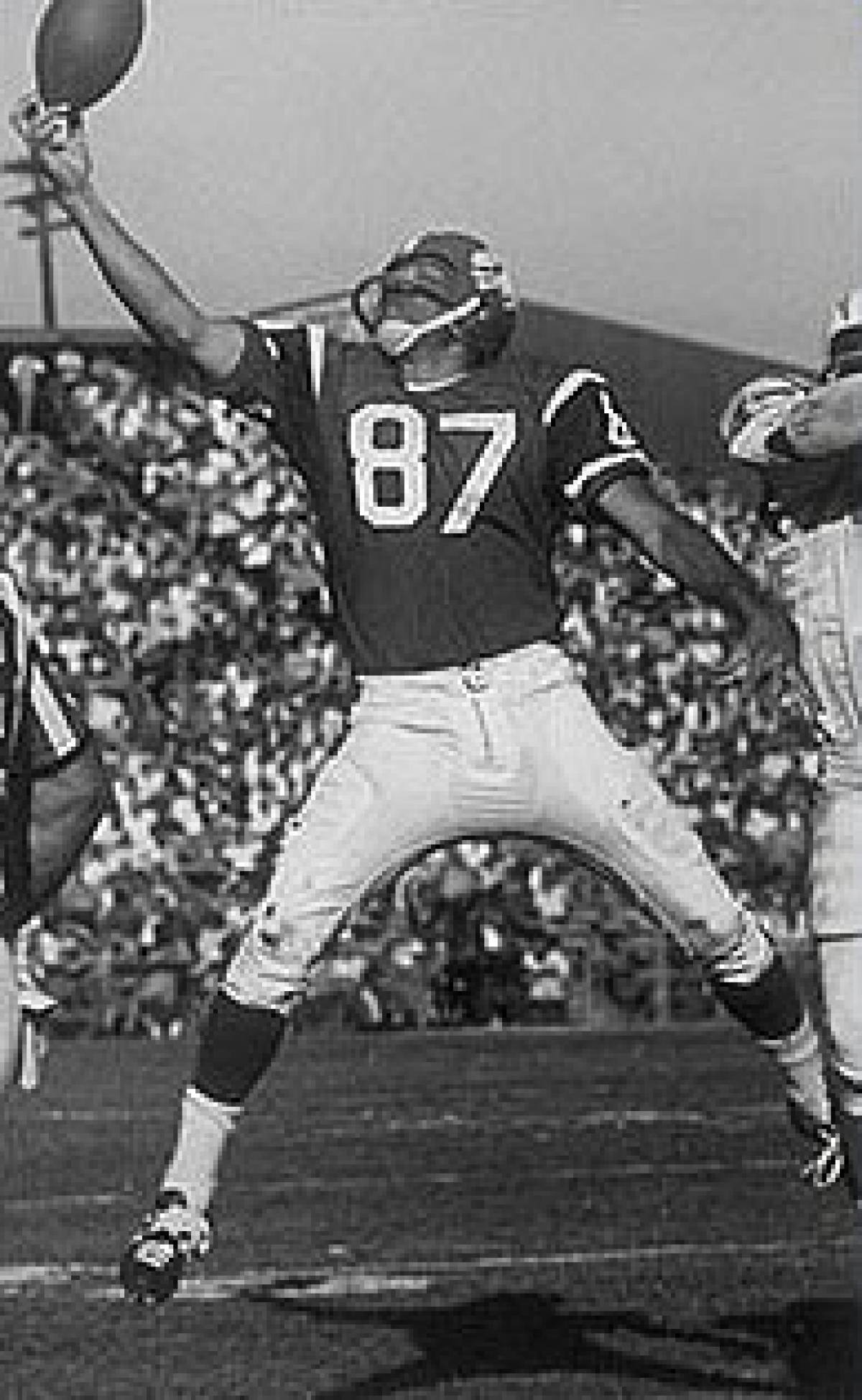
When the American Football League launched in 1960, the Denver Broncos were mostly overlooked, wearing outdated uniforms and rotating through mediocre quarterbacks. Still, during those tumultuous early years, split end Lionel Taylor established a pass-catching mastery that reshaped the structure of professional passing offenses. After a short period as a linebacker with the Chicago Bears, Taylor quickly became the league’s leading high-volume receiver, using his 6-foot-2 stature and "vice-grip" hands to dominate pass coverage in the AFL.
Taylor was almost impossible to contain, achieving an extraordinary streak by leading the AFL in receptions in five of its first six seasons (1960–1963, 1965). His standout year came in 1961, when he caught 100 passes for 1,176 yards in a 14-game season, making him the first player in professional football history to reach 100 receptions in a single season. This franchise record stood in Denver for nearly 40 years until Shannon Sharpe broke it in 2000. Over a six-year peak from 1960 to 1965, Taylor averaged 84.7 catches annually and never caught fewer than 76 passes in a season, a workload unmatched by any pass-catcher in both the AFL and NFL during that period.
Because his stats were accumulated primarily during his time with underdog Denver teams in a less prominent league, Taylor seldom gained the national recognition given to NFL stars of his time. Nevertheless, his impact in Mile High was clear: he won Denver’s Team MVP award three consecutive years (1963–1965) and set long-lasting franchise records for career catches and receiving yards. After his final Denver season in 1966 and two brief years in Houston, Taylor retired as the third all-time leading receiver in pro football history, with 567 career receptions. Later, he earned two Super Bowl rings while serving as the wide receivers coach for Chuck Noll’s iconic 1970s Pittsburgh Steelers.
Taylor played in 96 games, with 543 receptions, 6,872 yards, and 44 touchdowns. A four-time All-AFL, three-time AFL All-Star, and five-time receptions leader, he was one of the four original Denver Broncos Ring of Fame members in 1984.


Comments powered by CComment