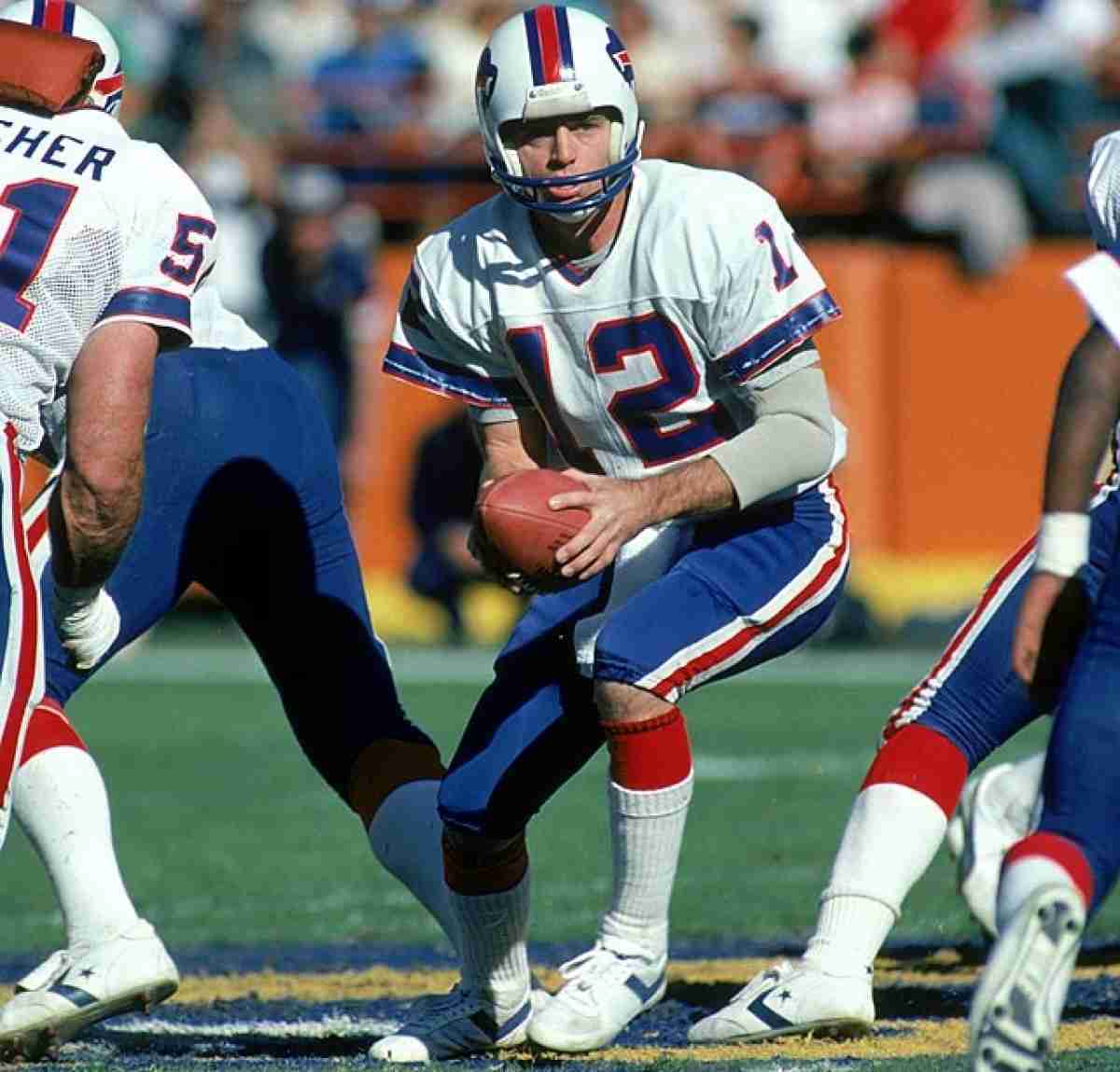
Drafted in the third round (57th overall) of the 1973 NFL Draft out of Arkansas, Joe Ferguson stepped into Western New York as a rookie and immediately took over the starting quarterback role. Over the next 12 seasons, "Fergie" served as the steady, tough-as-nails commander under center, directing the offense through major stylistic shifts—from handoffs to O.J. Simpson to air-it-out aerial assaults.
Ferguson was known for his quick release, deep-ball accuracy, and impressive toughness. Early in his career, he served as a control-oriented game manager, often executing play-action plays based on Simpson’s renowned running ability. When the team shifted into Chuck Knox’s era in the late 1970s, Ferguson demonstrated greater versatility by dropping into frequent passing formations and staying composed in collapsing pockets to throw accurate intermediate passes even under heavy coverage.
Ferguson’s early career was defined by his complementary play during O.J. Simpson's historic 2,000-yard season in 1973. He managed the offense with poise, taking the Bills to the playoffs in 1974.
His statistical peaks came as the offense opened up. In 1975, Ferguson tied Fran Tarkenton for the NFL lead with 25 passing touchdowns, throwing for 2,426 yards while driving the league's highest-scoring offense. Two years later, in 1977, he led the NFL in passing yards with 2,803, proving he could handle heavy volume.
After a 12-year streak of starting every healthy game, an ankle injury and a 1–10 record in 1984 marked the end of his era. In spring 1985, Buffalo traded the veteran quarterback to the Detroit Lions. He then spent six more seasons as a key backup and occasional starter with Detroit, Tampa Bay, and Indianapolis before retiring in 1990.
In Buffalo, Ferguson played in 164 regular-season games, leaving as the franchise’s all-time leader in passing yards (27,590) and passing touchdowns (181). Buffalo inducted Ferguson into their Wall of Fame in 1995.


Comments powered by CComment