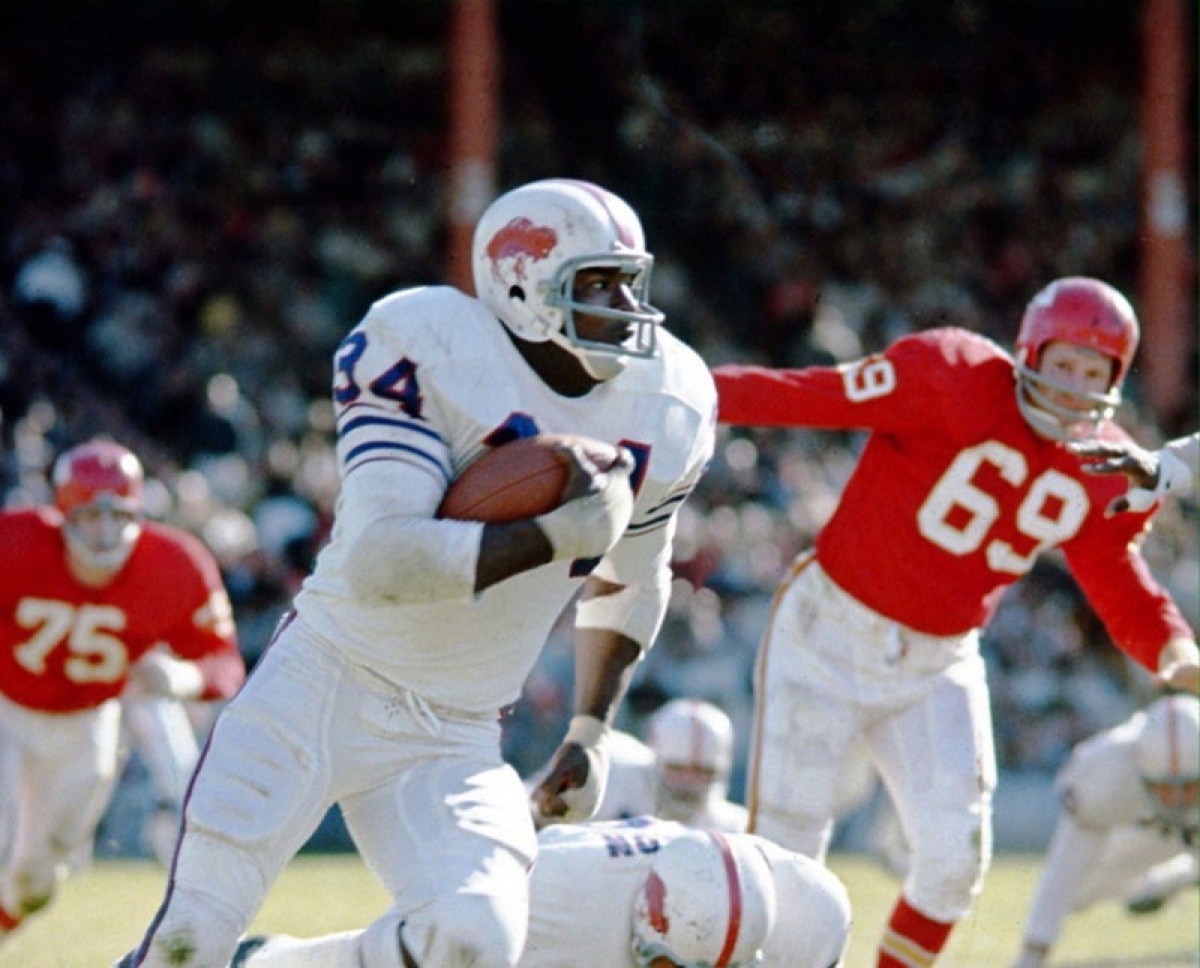
Carlton Chester "Cookie" Gilchrist embarked on one of the most unconventional journeys in football history. After initially signing a contract with the Cleveland Browns straight out of high school, which was then quickly revoked, Gilchrist chose to skip college and instead played in Canadian amateur leagues before entering the CFL. He spent six seasons in Canada, including winning a Grey Cup with the Hamilton Tiger-Cats in 1957, before making his NFL debut with the Buffalo Bills in 1962. Over the next three years, he became known for his fierce, uncompromising interior play.
Gilchrist was an unstoppable freight train, representing an imposing physical force ahead of his era. Combining the strides of a sprinter with formidable power, he did not circumvent defenders but rather ran directly through them. Serving as a robust fullback, he exhibited a rare capacity to efficiently punish tacklers in the gap, break arm tackles at the line of scrimmage, and accelerate away from defensive backs in the secondary. Furthermore, he contributed to the team by handling field goals and kickoff responsibilities during his early tenure in Western New York.
Gilchrist's arrival in 1962 transformed the AFL's offensive landscape. In his first year with the Bills, he became the AFL’s first 1,000-yard rusher, leading the league with 1,096 rushing yards and 13 touchdowns. His immediate dominance earned him the AFL Most Valuable Player honors.
In 1963, he achieved another historic milestone. During a December game against the New York Jets, Gilchrist set a then-record for pro football by rushing 243 yards and scoring five touchdowns in a single game. He concluded the season with 979 yards and once more led the AFL with 12 rushing touchdowns.
In 1964, Gilchrist concluded his short stint with Buffalo by winning his second AFL rushing title with 981 yards. He also led the league in rushing touchdowns (6) for the third year in a row. He performed especially well in the postseason, rushing for 122 yards in the 1964 AFL Championship Game, which helped Buffalo defeat San Diego and secure its first league title.
While Gilchrist's achievements on the gridiron were remarkable, his influence outside the sport was even more profound. An independently minded thinker and a pioneer in civil rights, Gilchrist consistently took a stand against systemic injustice throughout his life. In January 1965, following widespread segregation and discrimination faced by Black players upon their arrival in New Orleans for the AFL All-Star Game, Gilchrist organized and led a successful boycott. The players’ united stance compelled the league to relocate the game to Houston. Many years later, Gilchrist notably declined his induction into the Canadian Football League Hall of Fame, citing issues of racism and the exploitation of players.
Despite his on-field success, friction with head coach Lou Saban over playing time and team management led to his departure shortly after the 1964 title run. Gilchrist was traded to the Denver Broncos, where he logged his fourth career 1,000-yard-caliber season in 1965, before closing out his career with Miami and Denver in 1967. He was named the fullback on the AFL All-Time Team.
In three seasons with the Bills (1962–1964), Gilchrist played in 42 regular-season games, amassing 3,056 rushing yards and 31 rushing touchdowns while adding 502 receiving yards and four receiving scores. The Bills would finally choose Gilchrist for their Wall of Fame in 2017.


Comments powered by CComment