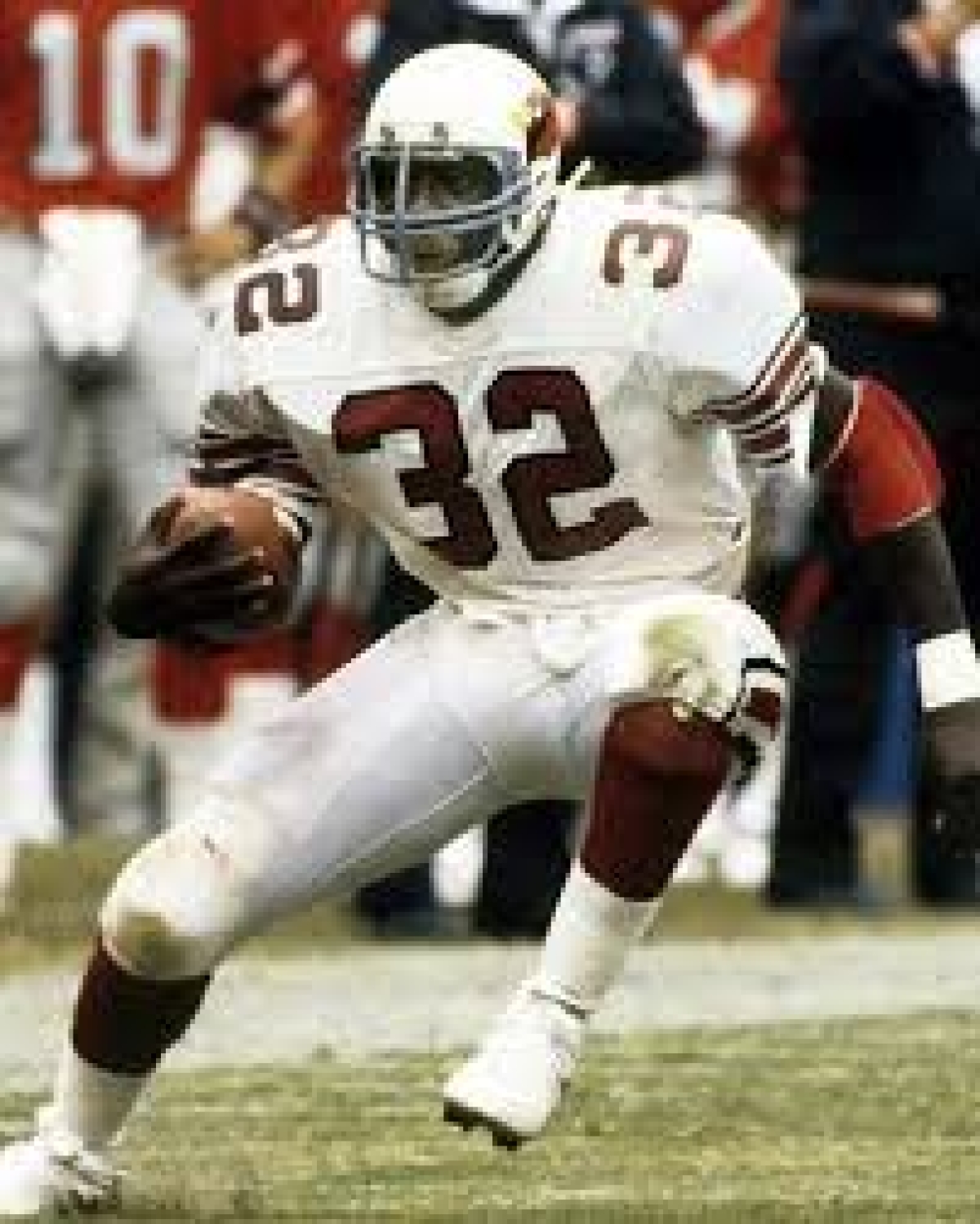
After setting the University of Miami school record as the first player in Hurricanes history to break the 1,000-yard mark, Ottis Anderson entered the professional ranks with immense expectations. Selected eighth overall in the first round of the 1979 NFL Draft by the St. Louis Cardinals, Anderson stepped into the backfield and instantly altered the physical identity of the franchise.
Anderson was the ultimate blend of power-back violence and open-field elusiveness. Running with a high-knee stride, lower-body drive, and sharp vision, he routinely punished defenders at the second level and had enough top-end speed to erase angle pursuits. Beyond his rushing volume, his smooth hands out of the backfield made him a lethal dual-threat weapon on third downs.
His professional debut in 1979 was one of the most remarkable in NFL history. In his very first regular-season game against Dallas, Anderson made an immediate impact with 193 rushing yards. He finished the season with a career-best 1,605 rushing yards and 1,913 total yards from scrimmage, earning AP NFL Offensive Rookie of the Year, a First-Team All-Pro honor, and his first Pro Bowl selection. Additionally, both UPI and The Sporting News named him NFC Player of the Year.
Anderson maintained a demanding workload into his 1980 sophomore season, rushing for 1,352 yards and 9 touchdowns while also catching 36 passes, earning his second Pro Bowl. During his first six seasons with St. Louis (1979–1984), Anderson exceeded 1,000 rushing yards five times, an achievement that would probably have been six straight if the 1982 strike hadn't shortened the season.
This set the stage for four years of consistent, high-volume production from 1981 to 1984. Anderson started the 1981 season by rushing for 1,376 yards and gaining 1,763 yards from scrimmage, becoming the franchise's all-time leading rusher halfway through his third season. In the strike-affected 1982 season, he helped keep the offense active with 587 rushing yards in just eight games, equivalent to a 1,000-yard season—and played a key role in leading the Cardinals to the playoffs. Fully healthy again, he posted consecutive 1,000-yard seasons in 1983 (1,270 yards) and 1984 (1,174 yards), anchoring a potent Big Red offense alongside quarterback Neil Lomax and establishing himself as an essential offensive force.
After injuries slowed his production in mid-1985 and 1986, the Cardinals executed a surprise mid-season trade, sending their legendary back to division rival New York. While his initial stint with the Giants was spent in a situational role, Anderson engineered a famous second act, winning the 1989 NFL Comeback Player of the Year Award and capturing Super Bowl XXV MVP honors in 1991.
He accumulated 7,999 rushing yards, 2,495 receiving yards, 10,494 yards from scrimmage, and 53 total touchdowns across 99 games as a Cardinal.