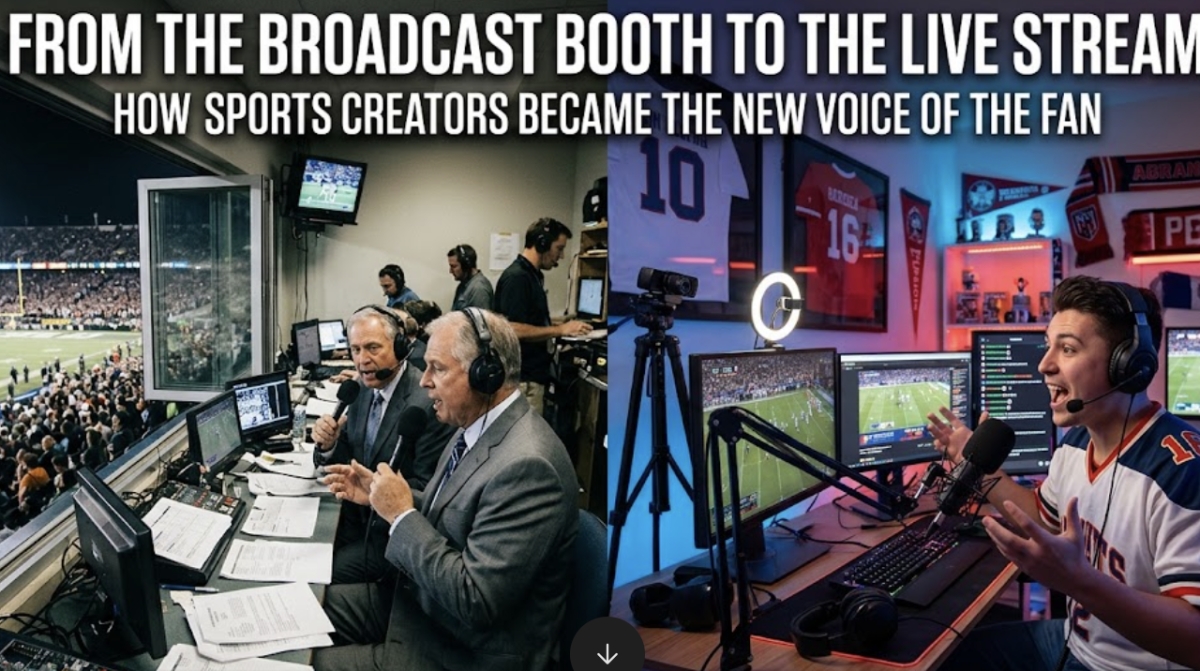
For most of sports history, the voices that shaped how we talked about the game came from a short list of places. The broadcast booth. The newspaper column. The radio call in show. If you wanted to argue about who belonged in the Hall of Fame, you did it at the bar or in the letters page.
That list is a lot longer now. Some of the most influential voices in sports today belong to streamers, YouTubers and podcasters who built their audiences without a network behind them. They react live, argue with chat and turn every big moment into content within minutes. Here is how that shift happened and what it means for fans.
The rise of the sports creator
It started with podcasts and YouTube breakdowns. Fans who knew the game deeply began publishing their own analysis, and audiences found them because they said what traditional media would not.
Live streaming took it further. Platforms like Twitch, Kick and YouTube Live let creators host watch alongs, react to trades and draft picks in real time and debate their chat for hours. For many younger fans, a favourite streamer's reaction to a game winning shot is now part of the experience of the game itself.
Former players have joined in as well. Retired athletes with their own podcasts and channels often reach more people than they did as broadcasters, and they speak with a freedom television rarely allowed.
Why fans trust creators
They are fans first. Viewers can tell when someone genuinely lives and breathes a team or a sport. That passion builds a bond no polished broadcast can match.
They talk with you, not at you. Live chat turns a broadcast into a conversation. Fans ask questions, push back on takes and feel part of the show.
They are always on. Between games, the debate continues. Hall of Fame cases, all time rankings and what if scenarios fill the off season with content.
Prediction markets and the new fan debate
One of the newest parts of this conversation is prediction markets. Instead of arguing over who will win the MVP or which team will make the playoffs, fans can now see what thousands of others collectively expect, expressed as live probabilities.
Creators have embraced this. Many sports streamers and analysts now reference market odds the way they once referenced expert picks, using them as a starting point for debate rather than a final answer. It adds a layer of data to the age old argument about who is overrated, who is underrated and who deserves a place in Canton, Cooperstown or Springfield.
Brands in this space increasingly work with creators to explain how these markets work, and specialist agencies now help platforms find the right analysts and commentators. One example of how this kind of prediction market influencer marketing is structured shows a focus on disclosure, permitted jurisdictions and creators who genuinely understand the sport.
As with anything involving money, the responsible approach matters. Good creators are clear when content is sponsored, remind viewers that forecasts are not guarantees and avoid promoting anything to audiences who are underage or in places where it is not allowed.
Clips keep the debate alive
A three hour stream rarely goes viral. A thirty second clip of a creator losing their mind over a buzzer beater, or delivering a perfect rant about a Hall of Fame snub, absolutely can.
Short video on TikTok, Reels and Shorts is where most new fans discover sports creators today. The best channels clip their own streams every day, keeping their voice in the conversation even when they are offline.
Will creators get their own Hall of Fame moment?
It is a fair question. Broadcasters like Vin Scully and John Madden became as beloved as the players they described. The voices that defined how a generation experienced sports are part of sports history.
Today's streamers and podcasters are building that same kind of legacy, just on different platforms. Twenty years from now, fans may remember a creator's call of a championship moment as clearly as any television broadcast.
The bottom line
The way fans talk about sports has changed for good. The booth and the column still matter, but they now share the stage with creators who built their audiences one stream at a time.
For fans, that means more voices, more debate and more ways to argue about who truly belongs in the Hall of Fame. And that argument is one that will never get old.
Comments powered by CComment