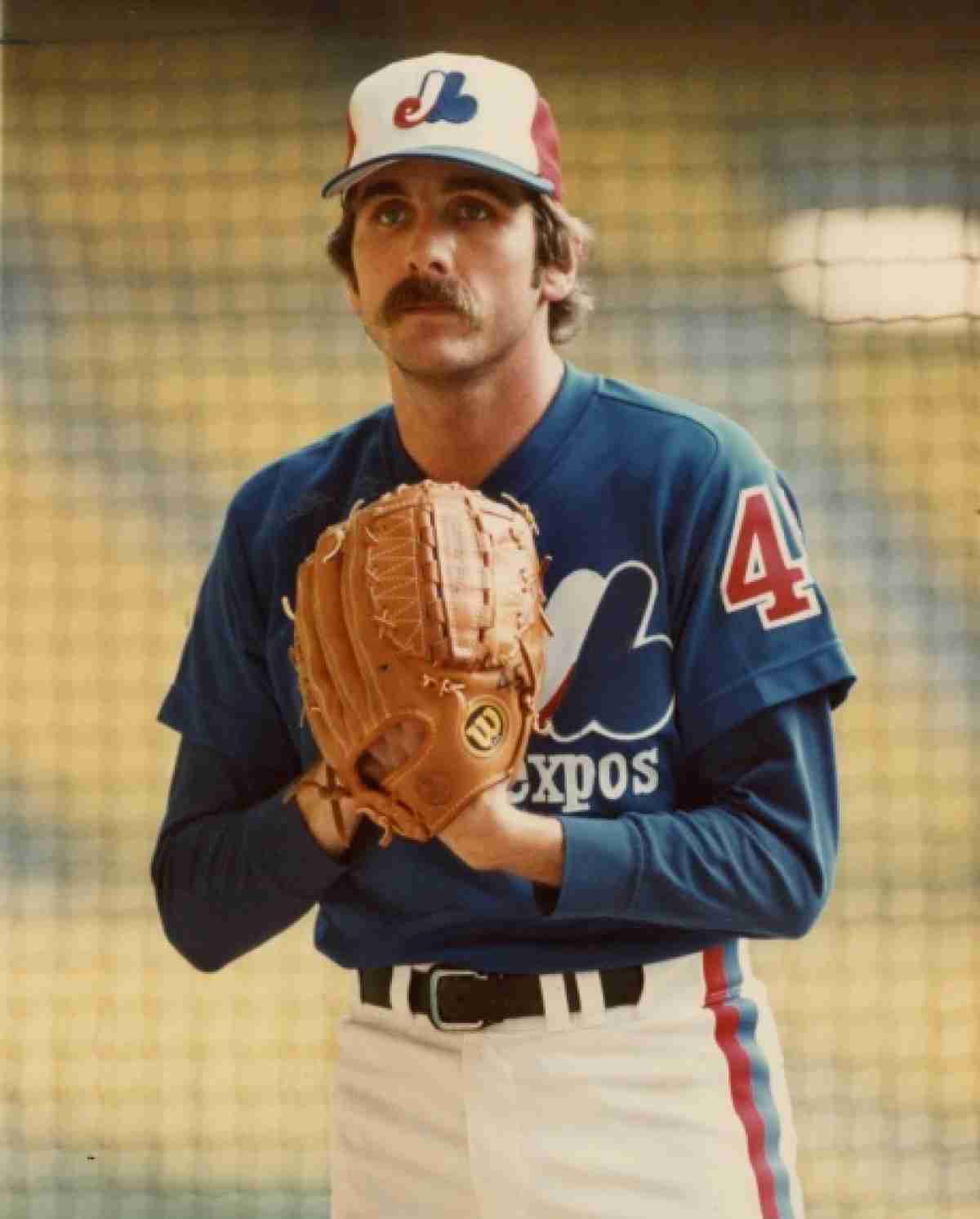
When Steve Rogers debuted in the major leagues in July 1973, he quickly provided the young Montreal Expos with something they had lacked since the team started: a true, homegrown ace. Coming from the University of Tulsa, this right-handed pitcher had an outstanding rookie season, going 10–5 with a mere 1.54 ERA in 17 starts. His immediate dominance over big-league batters pushed the Expos into an exciting late-season pennant race and earned him second place for the National League Rookie of the Year Award, marking the emergence of a remarkable talent.
After his initial surge, Rogers became the Nationals’ most dependable pitcher, renowned for his durability and precise control. Each season, he willingly took the mound, stabilizing a fluctuating Montreal rotation and often surpassing 200 innings. His peak physical endurance came in 1977, when he set franchise records by starting 40 games and pitching 301.1 innings. Rogers excelled at inducing ground balls, reducing setbacks, and consistently resisting opposing hitters.
The late 1970s and early 1980s represented his peak years, during which he consistently earned national recognition as a five-time National League All-Star. Rogers secured top-five finishes in Cy Young Award voting three times, utilizing a refined mix of heavy sinkers and consistent mechanics. In 1980, he led the league with 14 complete games and achieved two shutouts, with five in both 1979 and 1983, cementing his reputation as a pitcher who finishes what he starts.
Nothing captured the emotional peaks and valleys of his Montreal stay quite like the shortened 1981 postseason. Rogers was outstanding in the National League Division Series, posting a 2–0 record with an impressive 0.51 ERA, highlighted by a six-hit shutout against Steve Carlton and the defending World Series champions, the Philadelphia Phillies, in the decisive Game 5. Yet, just days later in the NLCS versus the Los Angeles Dodgers, he was brought in from the bullpen in the ninth inning of a tied Game 5, yielding a heartbreaking, pennant-winning home run to Rick Monday—an moment that tragically overshadowed his otherwise stellar October.
Undeterred by his October heartbreak, Rogers rebounded strongly in the 1982 season with his best campaign. Playing with a fierce determination, he finished with a 19–8 record, set a personal best with a 44.7 bWAR, and won the National League ERA title with a stellar 2.40. That summer, he highlighted his season by starting the 1982 All-Star Game in front of his enthusiastic home crowd at Olympic Stadium, finished second in the Cy Young voting, and became an enduring legend in Canadian baseball history.
Rogers retired in May 1985 due to shoulder injuries, ending his 13-year MLB career entirely with the Montreal Expos. He was the franchise’s career leader in wins (158), starts (393), innings pitched (2,837.2), complete games (129), and shutouts (37)—records still standing today. In the history of the franchise, Rogers symbolizes peak positional longevity and era efficiency, a fact confirmed by his induction into the Canadian Baseball Hall of Fame in 2005.
Comments powered by CComment