
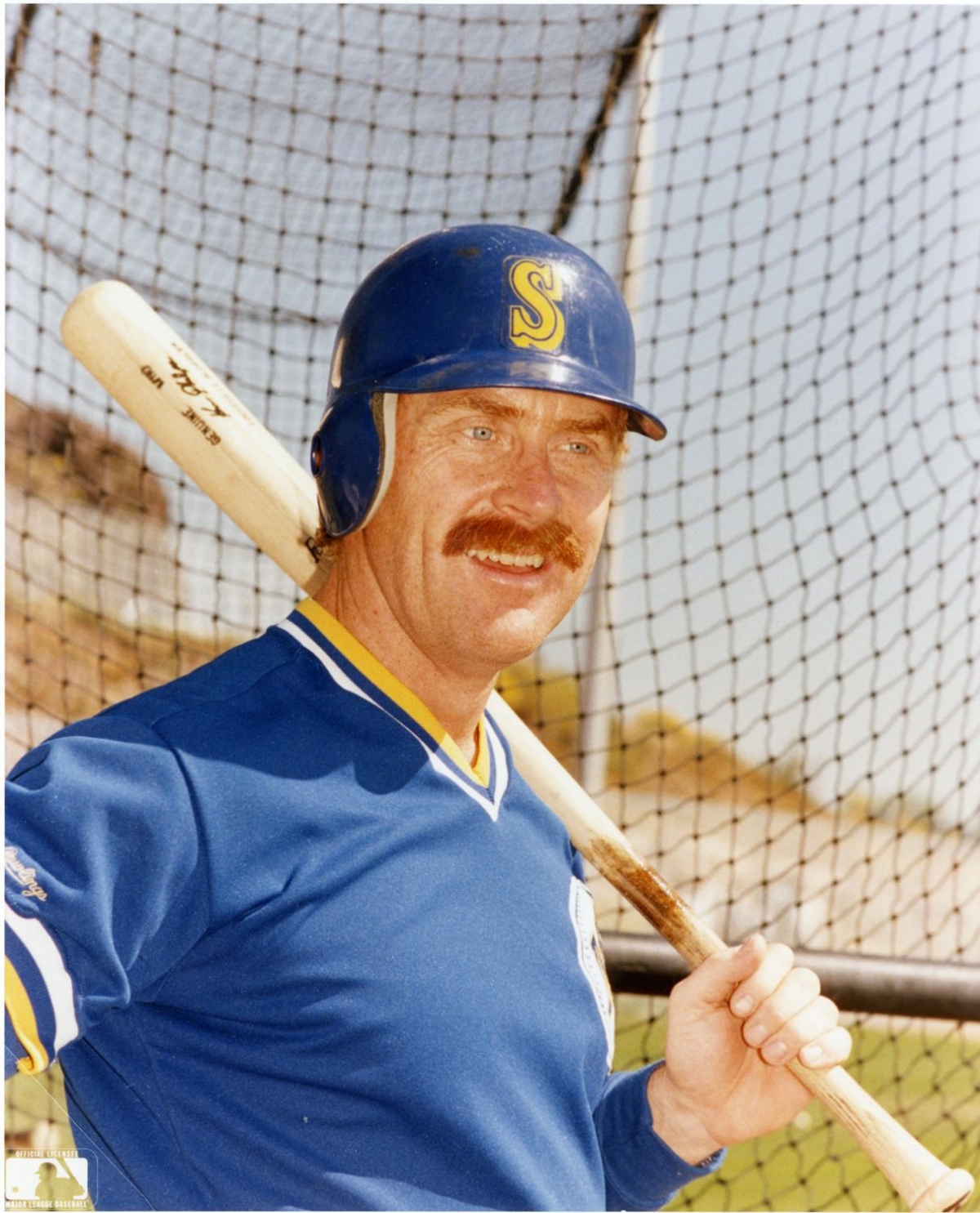
Long before modern analytics transformed front-office decisions, Ken Phelps exemplified what would become known as "Moneyball." During a time when raw batting average and physical build were the main metrics, the mustached, slow-footed slugger was often misunderstood by traditional scouts. They saw a defender who struggled and a player batting around .240 as a platoon candidate. However, those who looked deeper recognized a more dangerous talent: an efficient hitter with an exceptional strike zone sense and a remarkable ability to change the game with one swing.
In March 1983, the Mariners traded for Phelps from the Montreal Expos, giving him a platform to showcase his unique skills. Although he seldom faced left-handed pitchers, he effectively utilized his platoon role against right-handers as a key advantage. While he didn't accumulate many hits, his ability to draw walks was exceptional. Phelps broke the .400 on-base percentage barrier twice during his Seattle tenure, including a remarkable .434 over 72 games in 1988, making him a tough out for pitchers trying to navigate the bottom of the Seattle order.
When he wasn't discarding his bat and heading to first base after a walk, Phelps was busy hitting long shots over the Kingdome walls. He had an impressive three-year run of power from 1984 to 1987. He hit 24 home runs in both 1984 and 1986, with a strong 1985 season where he posted a .521 slugging percentage in limited plate appearances. His best regular season came in 1987, when he hit a career-high 27 home runs, drew 80 walks in just 120 games, and achieved a remarkable .916 OPS.
On July 21, 1988, the Mariners' front office executed a notable mid-season trade, sending 33-year-old Phelps to the New York Yankees in exchange for 23-year-old outfield prospect Jay Buhner. Although Phelps quickly suffered a significant decline after reaching the Bronx, Buhner flourished into a fan-favorite, hitting 40 home runs for Seattle. This trade created a remarkable imbalance, so much so that it was later famously referenced in a memorable episode of Seinfeld.
He finished his six-year Seattle stint with 353 hits, 105 home runs, and 245 RBIs, boasting a .392 on-base percentage and a.507 slugging average over 520 games.

Comments powered by CComment