
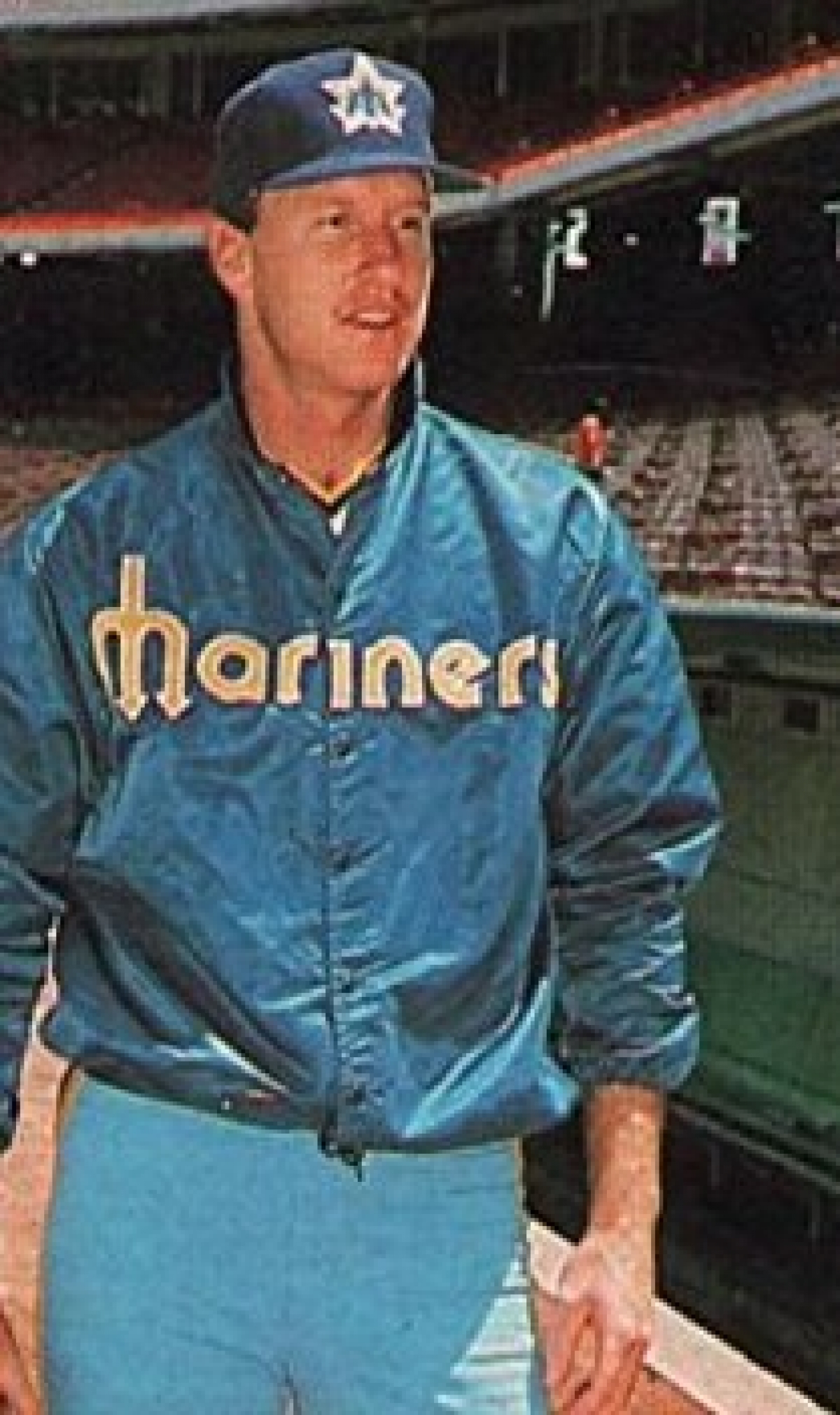
Jim Beattie came to the Pacific Northwest with credentials that few of his new teammates could rival. An Ivy League star from Dartmouth, this tall 6-foot-5 right-hander had already achieved baseball's highest honor as a rookie in 1978 by starting and winning Game 5 of the World Series for the New York Yankees. But the intense New York environment changed quickly, and after just two winters, Beattie was traded to the expansion Seattle Mariners in a multi-player deal. He went from the high-pressure spotlight of New York to the challenges of a franchise seeking its identity, moving from a playoff contender to the bottom of the American League.
His initial time on the Kingdome turf was a tough baptism, marked by misfortune and little local support. Beattie faced a difficult 1980 debut, ending with a 5–15 record and a 4.85 ERA. After a similarly tough start in 1981, which included a brief demotion to Triple-A Spokane, he returned to the major leagues with a completely revised approach. Despite continuing to post losing records—a common outcome for a team that often finished last in the division—Beattie quietly became a reliable, intelligent mainstay of the starting rotation.
His major breakthrough as a key pitcher came in a remarkable 1982 season. Over 26 starts, Beattie posted a strong 3.34 ERA, ranking seventh in the American League, and his 140 strikeouts placed him eighth in the league. He combined impressive swing-and-miss ability with effective efficiency, becoming a star attraction for local fans who saw that his talent greatly surpassed his misleading 8–12 record.
That durability reached its peak during the crucial summers of 1983 and 1984. On September 27, 1983, Beattie achieved a historic milestone by pitching a one-hit shutout against the Kansas City Royals—the first in franchise history. He continued with a heavy workload in 1984, pitching 211 innings and completing 12 games. His consistent ability to go deep into games and keep his bullpen fresh earned him top-ten bWAR rankings among American League pitchers in both years, exemplifying a model of stable and focused performance.
After a sharp decline over two injury-plagued winters, Beattie threw his final major league pitch in August 1986. He left with a 43–72 record, 24 complete games, and 563 strikeouts over 944.1 innings.

Comments powered by CComment