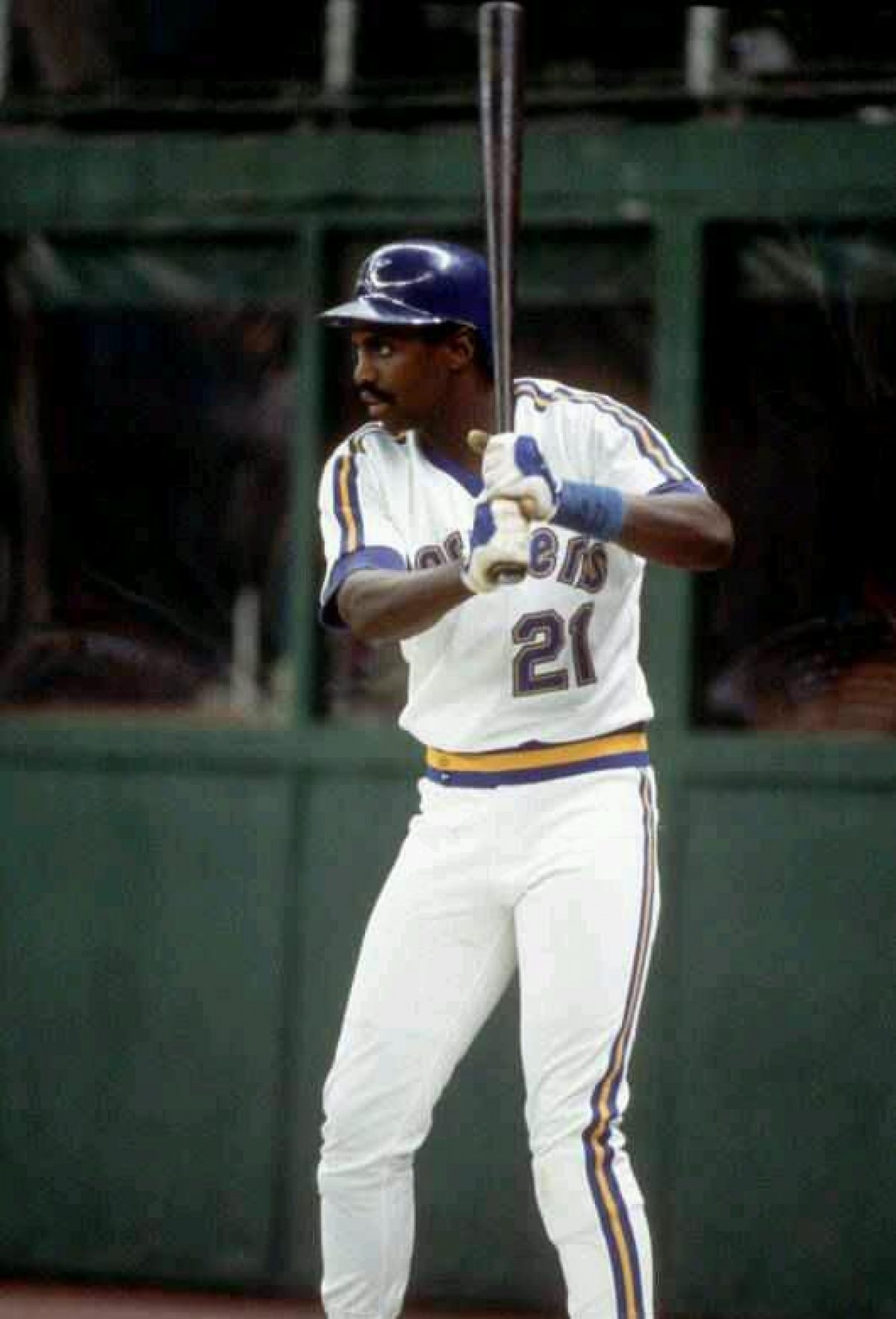
When one is unconditionally bestowed with the moniker "Mr. Mariner," it is inherently evident that the local footprint bears significant historical importance. Prior to the franchise's transformation into a prominent regular-season contender in the late 1980s and 1990s, the Seattle Mariners were a perpetually struggling expansion team, searching for a distinctive identity. This identity was found in the spring of 1984 in the form of a poised, left-handed hitting first baseman. Alvin Glenn Davis did not merely inherit a position in the batting order; he emerged as the unequivocal face of the franchise during a period when the club was in desperate need of a hero. He initiated a historic, multi-era residency characterized by exceptional strike-zone discipline, which laid the foundational offensive standards for the young team.
His introductory 1984 rookie showcase was an exemplary display of immediate, high-velocity run production. Davis entered the major-league scene by hitting home runs in his first two games, triggering widespread euphoria across the Pacific Northwest. He established a rigorous daily routine for reaching base, setting a major-league rookie record by safely reaching in each of the first 47 games of his career. He proceeded to earn his sole career All-Star selection, recording 34 doubles, 27 home runs, and 116 runs batted in while maintaining a strong .284 batting average. His advanced efficiency metrics dominated the landscape; he drew 97 walks, resulting in a notable .391 on-base percentage and a 147 OPS+, thereby confidently securing the American League Jackie Robinson Rookie of the Year award.
Davis wasn’t just a flash in the pan; he truly made a lasting impact over the following five years. His rookie season laid a solid foundation, and he proved incredibly dependable, maintaining a steady presence on the field. He hit back-to-back 18-homer seasons and maintained a batting average well above .270 during 1985 and 1986. His raw power reached its peak in 1987, when he completely dominated American League pitching. That year, Davis achieved personal bests in many areas, smashing 37 doubles, 29 home runs, and driving in 100 runs. He also collected a personal-high 171 hits and boasted a strong .516 slugging percentage, ensuring his place as a true star.
He backed that up with another 18 long balls in 1988, before staging a magnificent on-base clinic during the 1989 calendar. That summer, he clobbered 21 home runs, drove in 95 runs, and weaponized his elite zone awareness to draw a career-high 101 walks—fueling a brilliant, lifetime-best .424 on-base percentage that ranked second in the entire junior circuit.
To be fair, where Davis lost significant ground under modern analytical filters was his highly limited defensive footprint. He lacked range and quick lateral movement on the infield dirt, never registering a single season with a positive defensive bWAR or pacing American League first basemen in any traditional metric.
As the calendar turned to the 1990s and young star Tino Martinez progressed through the minor leagues, the coaching staff increasingly shifted the aging veteran into a permanent designated-hitter role. His production suffered a steep decline during the 1991 campaign, where he labored through mechanical inconsistency to bat a personal-low .221 with 12 home runs across 145 appearances. He became a free agent afterward and signed with the California Angels.
Davis would collect 1,163 hits with 160 home runs and a slash line of .281/.381/.453 over his Mariners career, and in 1997, he became the first member inducted into the Mariners Hall of Fame.
Comments powered by CComment