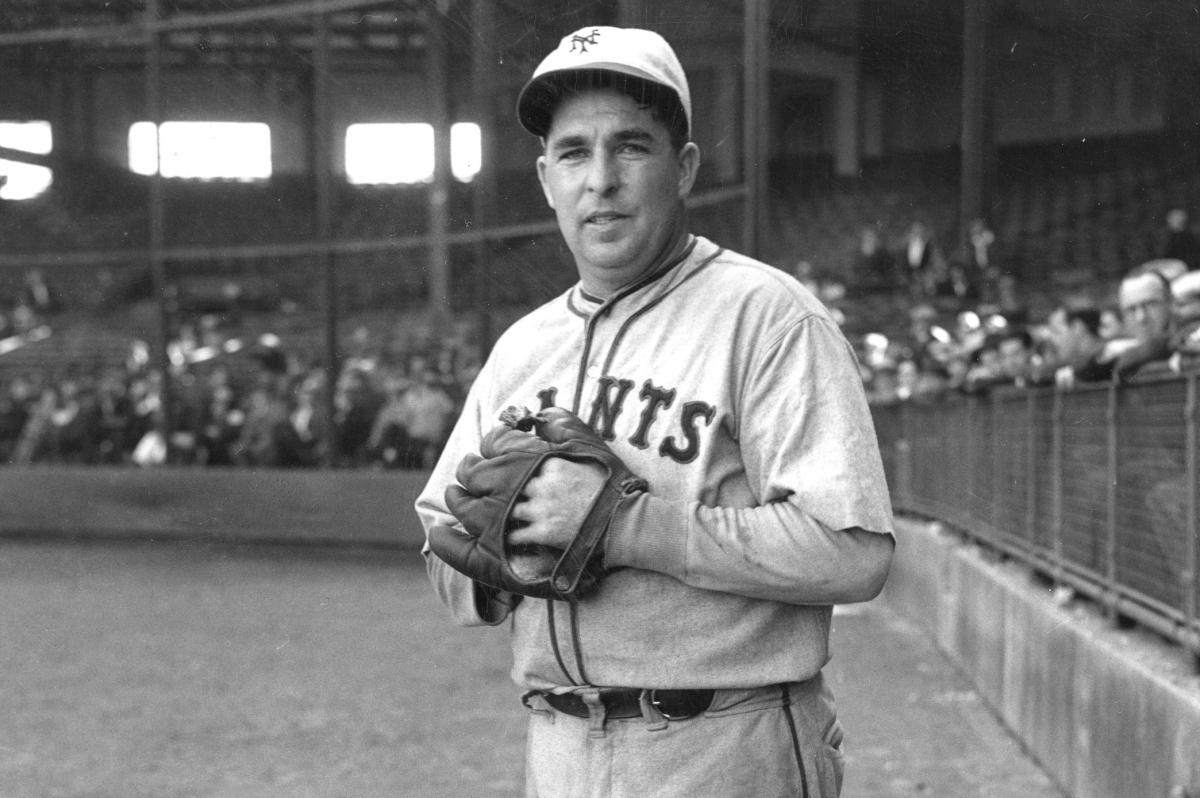
The modern pitching "workhorse' concept finds its true origin in an unorthodox yet formidable right-hander from Indiana. Freddie Fitzsimmons, not resembling the typical athletic star with his heavy frame—earning him the nickname "Fat Freddie"—mastered one of the most powerful, knee-buckling knuckle-curves in the game. Picked up from the Indianapolis Indians in 1925, he employed a distinctive, spinning delivery, turning his back completely to the batter before releasing his pitches. Once he secured a spot under John McGraw at the Polo Grounds, Fitzsimmons became the dependable, relentless force in the New York pitching staff.
Fitzsimmons was best known for his extraordinary durability and ability to pitch heavy workloads. During a time when pitching staffs were often pushed to exhaustion, he was a stable presence in the regular season, consistently pitching over 200 innings for nine straight summers from 1926 to 1934. Although he didn't rely on high strikeout numbers, his sensible approach focused on making contact, which often resulted in weak groundballs. He excelled at preventing runs and frequently ranked in the top ten in WHIP in the National League, with his peak coming in 1928 when he achieved a remarkable 20–9 record over 261 innings.
Demonstrating that his substantial workload was effectively complemented by a high level of efficiency, Fitzsimmons secured the National League batting average crown during the 1930 season, leading the Junior Circuit with an impressive 19–7 record (.731). This consistent excellence ensured that he would not suffer a losing record in any regular season during his first decade with the New York team. Together with the left-handed pitcher Carl Hubbell, Fitzsimmons formed a formidable lefty-righty combination that regularly propelled the Giants into October. He supported his peak of 20 wins with 19 victories in 1930, followed by consecutive 18-win seasons in 1931 and 1934. His reliable performance was a crucial factor in guiding the team to National League pennants in 1933 and 1936, as well as during a notably competitive pursuit of the 1934 pennant. Although a series of unfortunate circumstances in the postseason resulted in a 0–3 record in those Fall Classic appearances, his consistent regular-season effort was the primary reason the franchise secured a World Championship banner in 1933.
By the summer of 1937, a shifting roster dynamic and a 6–10 start to his campaign prompted the front office to make a difficult transitional decision, trading the beloved veteran to the Brooklyn Dodgers in exchange for Tom Baker. Fitzsimmons defied the aging curve in Flatbush, even setting a historic National League record with an astonishing .889 winning percentage (16–2) at age 38 in 1940, before eventually transitioning into a successful major-league manager and coach.
With the Giants, Fitzsimmons had a 170–114 record, a 3.69 ERA, and 619 strikeouts across 398 total appearances.
Comments powered by CComment