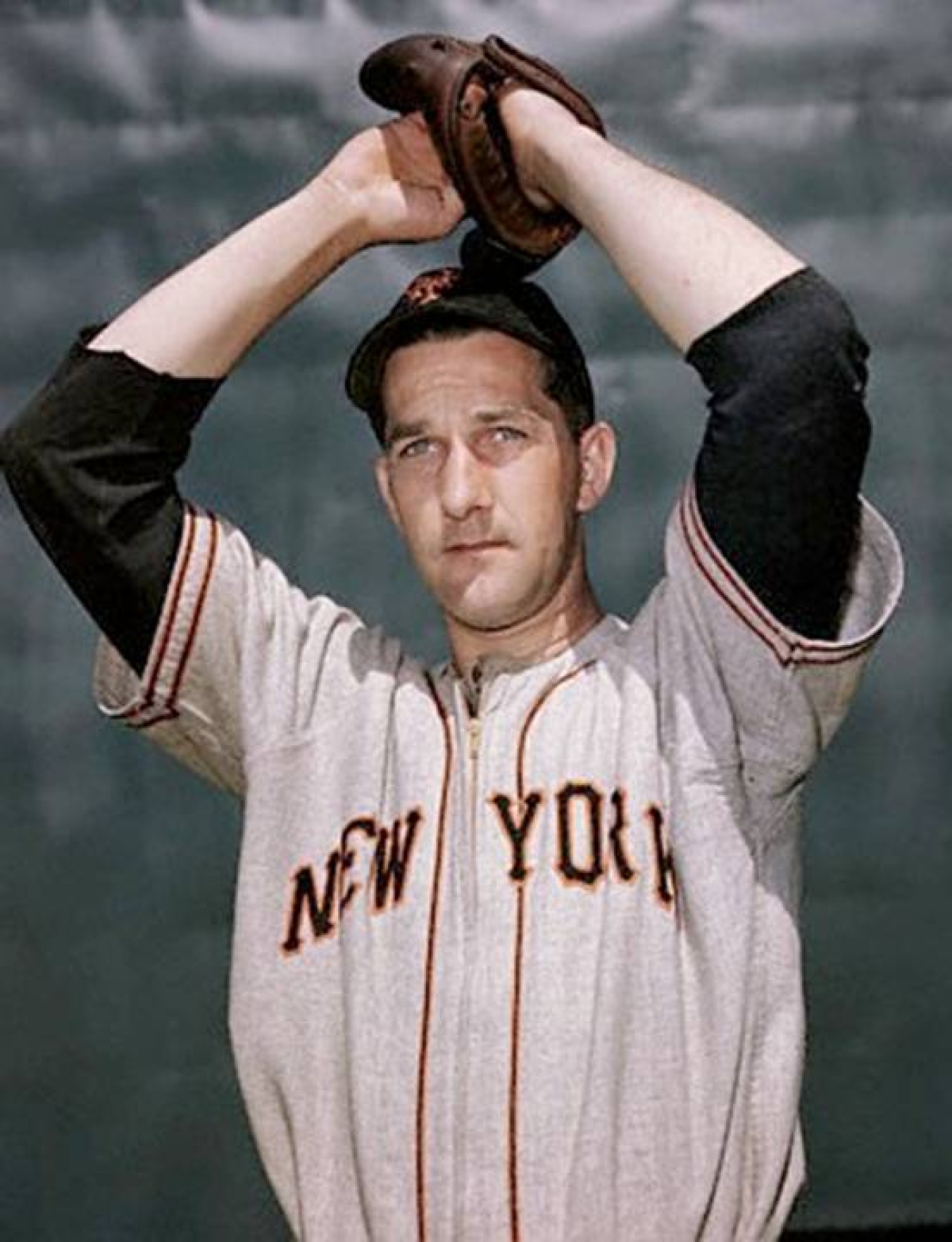
The onset of World War II significantly reconfigured the course of Larry Jansen’s athletic career, resulting in a substantial delay before he could attain his professional aspirations in the major leagues. Instead of progressing directly to the majors in his early twenties, the Oregon native dedicated much of the 1940s to excelling in the Pacific Coast League, notably achieving an extraordinary 30-win season for the San Francisco Seals in 1946. By the time the New York Giants acquired his contract, Jansen was already a 27-year-old novice prepared for the prominent stage of the Polo Grounds. Immediately affording him a position in manager Mel Ott’s starting rotation for the 1947 season, the precise right-hander swiftly demonstrated that his maturity was a considerable strength, exhibiting an immediate dominance over hitters in the National League.
His inaugural summer in Manhattan was remarkable, characterized by an exceptionally efficient rookie campaign during the post-war period. Employing an advanced, newly developed slider and demonstrating impeccable control, he achieved an impressive 21–5 record while leading the senior circuit with a distinguished .808 winning percentage. Jansen pitched 248 innings with a commendable 3.16 ERA, supported by a league-best 2.1 walks per nine innings. In most other seasons in baseball history, such immediate dominance would have ensured him the highest honors; however, he ultimately finished as a highly regarded runner-up for the Rookie of the Year Award, losing to a player who had been compelled to wait for his opportunity to play in the majors for a significantly different historic reason: Jackie Robinson.
He remained a premier front-line force as the calendar turned to the new decade, earning consecutive National League All-Star selections in 1950 and 1951. His refined approach on the mound was defined by an absolute refusal to beat himself with free passes; Jansen topped the National League in strikeout-to-walk ratio in both of his All-Star campaigns, highlighted by a phenomenal 1950 summer where he went 19–11 and paced the junior circuit with a microscopic 1.065 WHIP.
His highest statistical achievement was attained during the notable 1951 season, a remarkable summer in which Jansen leveraged his durability to lead the Giants through a distinguished pennant race. He made 39 appearances and pitched 278 innings of high-intensity play, securing the National League wins title by achieving a commendable 23–11 record, tying with teammate Sal Maglie for the league's top spot. Jansen was the integral force behind New York's remarkable late-summer rally to overcome a 13-game deficit against the Brooklyn Dodgers, consistently serving as a dependable and stabilizing presence whenever he pitched.
That unforgettable pennant race secured its place in baseball lore on October 3, 1951, in the deciding Game 3 of the National League tie-breaker series. Summoned from the bullpen by manager Leo Durocher in the top of the ninth inning, with the Giants trailing 4–1, Jansen delivered a clutch, scoreless relief performance to hold the line. His steady execution set the stage for the bottom of the frame, when Bobby Thomson blasted the legendary walk-off "Shot Heard 'Round the World." While Thomson’s home run remains the enduring image of that autumn afternoon, it was Jansen who officially walked off the mound as the winning pitcher of the most famous game in the sport’s history.
Tragically, the heavy workload of nearly 1,350 innings in his first five seasons severely damaged his arm. After 1951, persistent back injuries and shoulder inflammation led to a decline, and by 1954, during a championship season, Jansen was broken down, making only 13 appearances before being released. He left with a successful 120–86 record, 826 strikeouts, and a 3.44 ERA in 275 games with the Giants.
Comments powered by CComment