
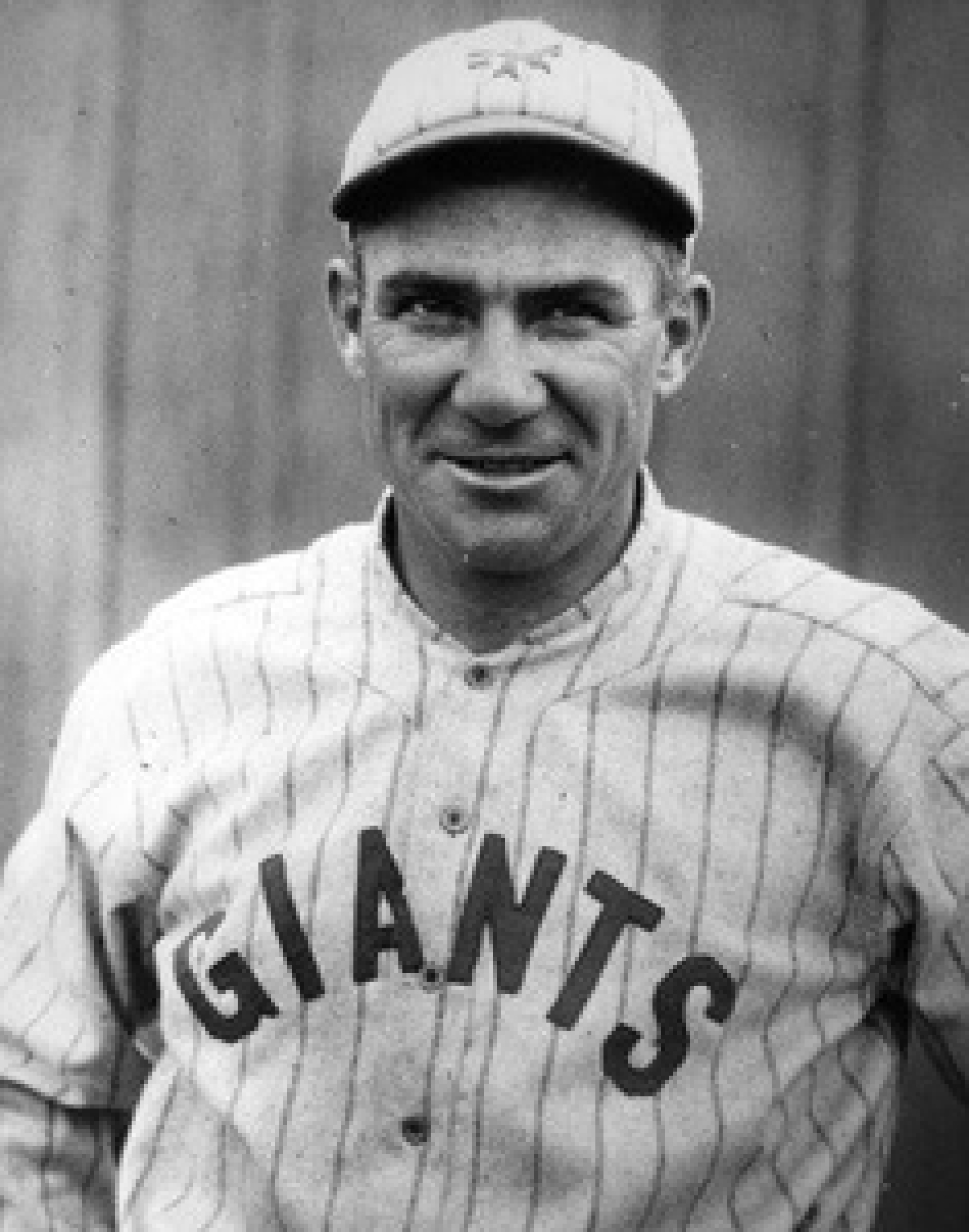


When John McGraw spends a record-breaking amount on an unproven minor leaguer, the baseball world pauses to see the risky move unfold. In June 1907, the legendary Giants manager made a then-unprecedented $4,500 purchase from the Springfield Senators to acquire a charismatic second baseman. This significant investment turned out to be a great deal. Known for his cheerful attitude, earning him the nickname "Laughing Larry," Doyle didn't just fill a vacant infield spot; he became a powerful offensive force for the Giants during the Deadball Era. His career spanned multiple eras, marked by his unwavering love for the game despite the pressures of playing in New York.
His introductory phase in Manhattan was significantly disrupted by a severe episode of pleurisy and a fractured clavicle, prompting many local writers to prematurely doubt the high valuation. The decisive breakthrough occurred during the 1909 season. Fully recovered and committed to his line-drive approach, Doyle established a rigorous daily routine that enabled him to lead the entire National League with 172 hits while maintaining an impressive .302 batting average.
He carried that upward trajectory into the 1911 campaign, setting a magnificent standard for extra-base power. He weaponized his elite speed and gap-to-gap power to lead the Senior Circuit with an astonishing 25 triples—a total that remains a modern franchise record—while driving the Giants to the first of three consecutive National League pennants.
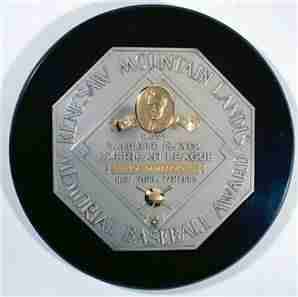
The peak of his hardware-certified legacy reached its zenith during an extraordinarily exceptional 1912 regular-season performance. Serving as team captain and the indispensable driving force of the lineup, Doyle delivered an exemplary display of high-pressure productivity. He systematically dismantled opposing pitching staffs to achieve a remarkable .330 batting average, with 91 runs batted in and 36 stolen bases across 143 games. His advanced efficiency metrics were entirely unmatched; he led all second basemen in the Senior Circuit with a formidable .500 slugging percentage, and was awarded the distinguished Chalmers Award—the direct predecessor of the contemporary Most Valuable Player accolade—thereby definitively establishing his status as an elite frontline athlete.
Although his Most Valuable Player (MVP) campaign of 1912 garnered the most historic accolades, his unequivocal peak in individual statistics as a pure hitter occurred three summers later during the 1915 season. Doyle unequivocally dominated the National League leaderboards, transforming the summer into a personal exhibition. He led the league in hits (189), doubles (40), and total bases (268), while securing the National League batting championship with an impressive .320 average. He complemented this contact ability with 26 stolen bases and a career-high 11 home runs, demonstrating that even as the Deadball Era began to evolve, his compact left-handed swing remained exceedingly formidable.
The grind of playing a high-volume, hyper-aggressive style of second base eventually invited a sudden performance dip. Mechanical regression and declining foot speed caught up to him during the 1916 calendar, prompting McGraw to make a shocking, mid-season trade that sent the veteran captain to the Chicago Cubs.
Yet, in 1918, a final homecoming materialized, demonstrating the profound organizational identity that defined his life. Doyle returned to Manhattan to close out his career, willingly accepting a reduced, part-time utility role over his final three summers before officially retiring from the sport following the 1920 campaign.
Doyle had 1,751 hits, 280 doubles, 114 triples, and 750 runs batted in alongside a robust .292 batting average and 291 stolen bases in 1,623 games as a Giant.

Comments powered by CComment