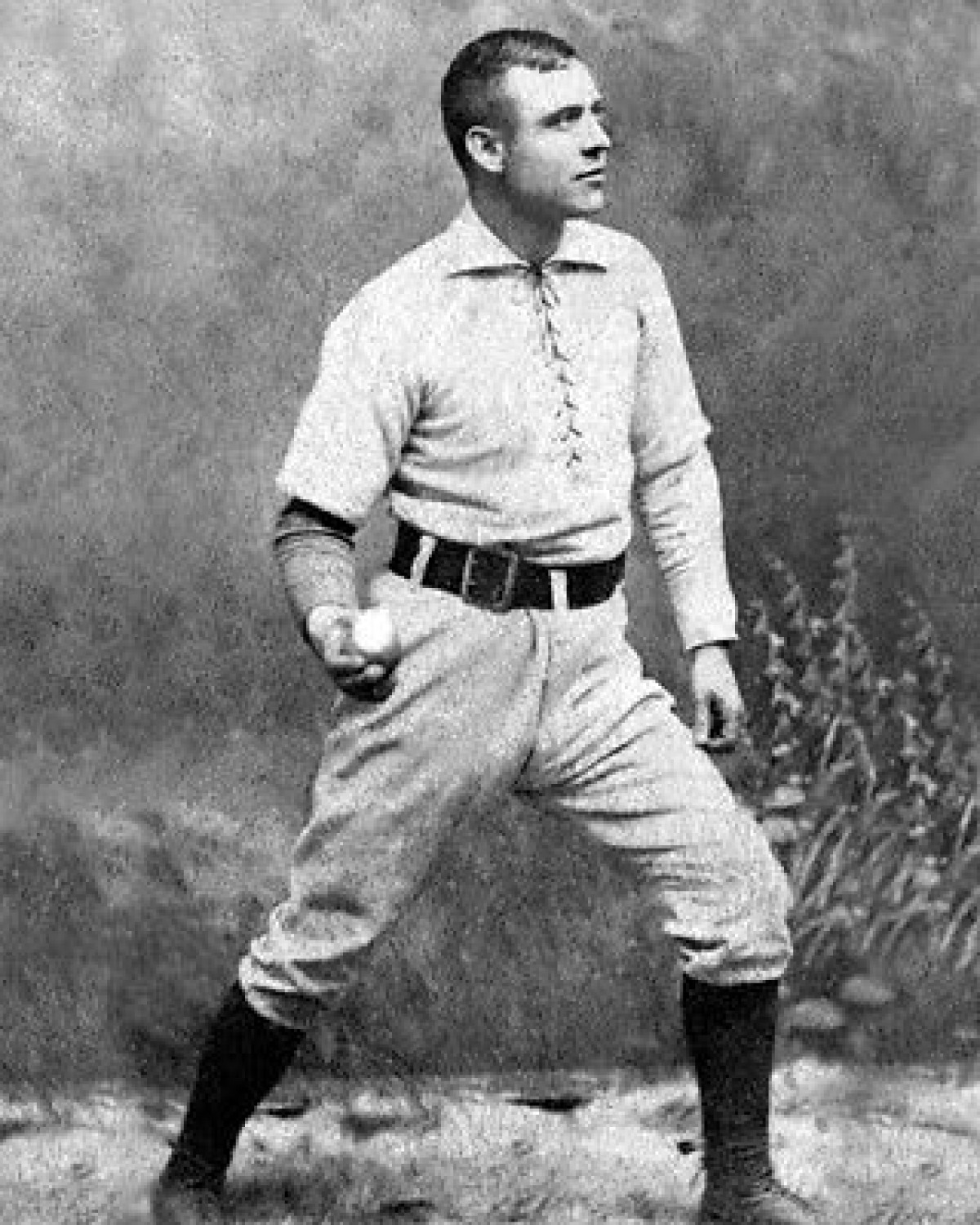
To truly understand what happened on Manhattan's baseball diamonds during the Gilded Age, we need to look beyond the basic 19th-century box scores. Mickey Welch was not just a part of the rotation; he was a consistent, strong presence that served as the foundation of the entire New York baseball franchise. He first gained fame with the short-lived Troy Trojans, alongside future stars Buck Ewing and Roger Connor, before moving south when the Troy team folded after the 1882 season. He then joined the newly formed New York Gothams (later known as the Giants), where he, affectionately called "Smiling Mickey,” began a legendary career that set the benchmark for long-term success in the majors.
His debut performance in New York demonstrated remarkable durability. On May 1, 1883, Welch pitched the first game ever for the franchise at the original Polo Grounds and won. He made logging extensive innings a daily routine, pitching 426 innings that season.
The breakthrough came in the summer of 1884, when he completed 62 of 65 starts, posting an impressive 39–21 record and achieving a career-high 345 strikeouts. On August 28, 1884, Welch made history by striking out the first nine Cleveland batters he faced, setting a major-league record for the most strikeouts at the start of a game that remains unbroken over the century that followed.
In 1885, Welch experienced his most successful year in baseball. Partnering with future Hall of Fame teammate Tim Keefe, they formed the most formidable two-man pitching duo in the country, emphasizing strong defensive play. Welch systematically shut down National League lineups by using a deceptive change of pace and developing an early version of the screwball, which he called a "reverse curve.” He achieved an impressive franchise-record of 44 wins and only 11 losses, completing all 55 games he pitched. His remarkable efficiency that summer was unmatched; he led the staff with an exceptional 1.66 ERA and a 1.022 WHIP, highlighted by a historic 17-game winning streak.
Welch consistently demonstrated high-volume authority throughout the decade, achieving an impressive seven straight 20-win seasons for New York. His recognized authority through awards directly contributed to historic team achievements when the Giants won back-to-back National League pennants in 1888 and 1889. As a co-ace of the pitching staff, Welch led a perfect performance in the early, pre-modern World Series against American Association champions, helping New York secure consecutive world titles over St. Louis and Brooklyn.
The brutal physical toll of throwing thousands of high-intensity innings under the era's rules eventually led to his career's end. By the 1890s, arm fatigue and declining velocity reduced his effectiveness. Although loyal to the club and refusing a lucrative move to the Players' League in 1890 for a guaranteed contract from owner John B. Day, his era as the dominant figure had ended. Following a brief, highly limited relief role and a minor-league stint in 1891, he made one final start in May 1892 before stepping away from the rubber for good.
Across his 10 seasons representing New York, he compiled a spectacular 238–146 record, maintaining a sharp 2.73 ERA while logging 3,472 innings and throwing 381 complete games. Welch entered the Baseball Hall of Fame in 1973 when the Veterans Committee chose him.
Comments powered by CComment