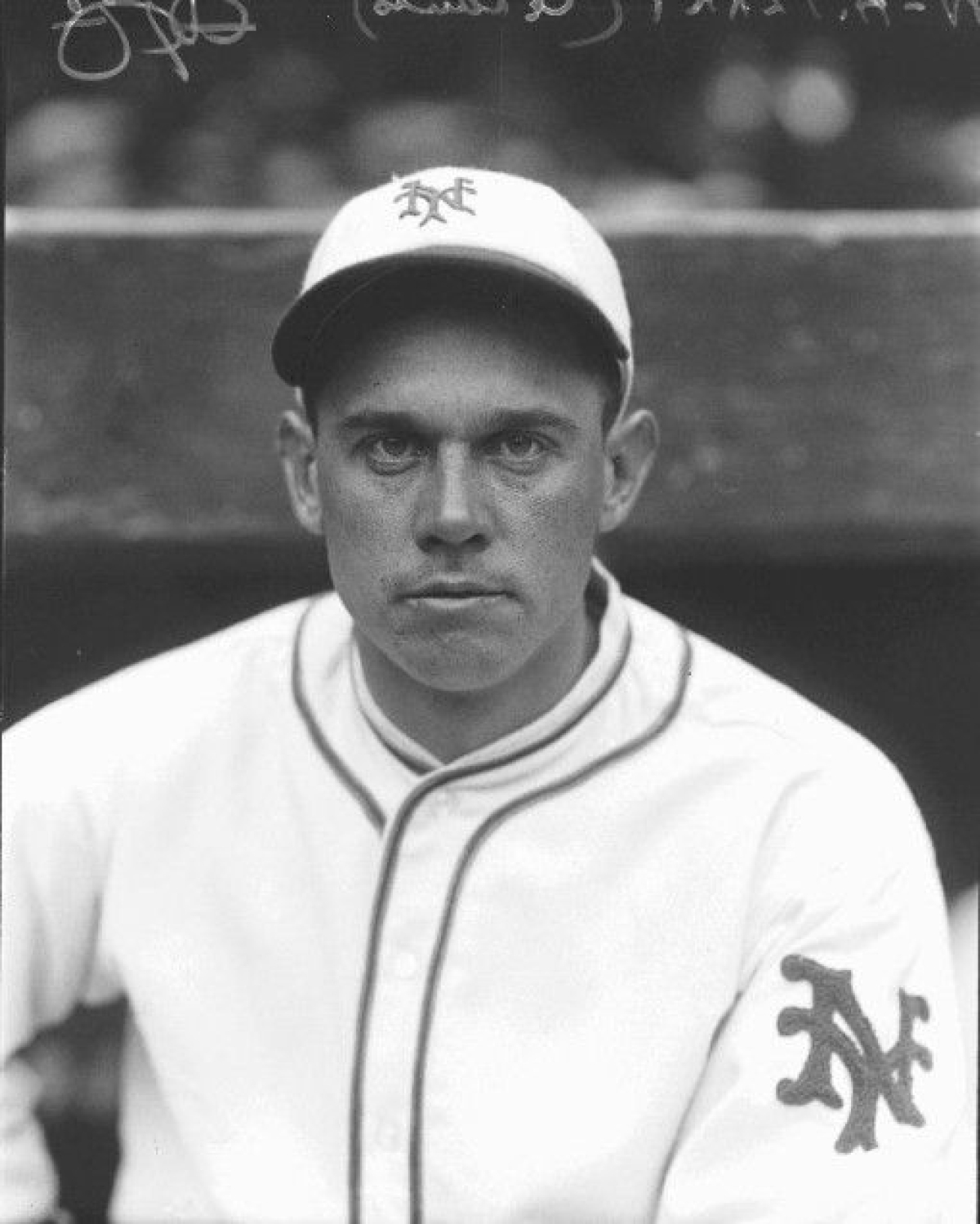
To get a full handle on the rich tapestry of the Giants franchise, you have to look back at the master contact hitters who dictated the tempo of the early 20th century. Bill Terry did not just occupy first base for the New York Giants; he defined the very upper limit of high-average hitting for an entire generation. Joining the flagship club in 1923, "Memphis Bill" emerged as the ultimate homegrown anchor under the legendary leadership of John McGraw. By the time he claimed the position entirely as his own, the smooth, left-handed swinging star began spinning a narrative of elite bat control that culminated in a historic, permanent reservation in the baseball record books.
Terry's legacy is often summarized by a single, remarkable achievement, but his career exemplifies consistent year-over-year performance. After a significant improvement in 1925, he made a disciplined daily practice of hitting line drives. He surpassed the 200-hit mark in six different seasons, maintaining a rapid pace that boosted his career batting average to an impressive .341 across fourteen active seasons.
His top offensive achievement occurred during a remarkable 1930 regular season. Terry delivered an outstanding performance against National League pitchers, amassing 254 hits and achieving a remarkable .401 batting average. This record remains a historic and unmatched standard, marking him as the last National League player to surpass the 400 batting threshold.
While a highly political and often combative baseball environment somehow denied him a regular-season Most Valuable Player award, the league's efficiency metrics heavily recognized his standing, as he anchored a top-ten finish in the MVP balloting six times. Far from a one-dimensional slap hitter, Terry generated respectable, high-leverage power, amassing 154 home runs and driving in 1,078 runs.
His profound baseball knowledge ultimately positioned him as the ideal successor to McGraw, leading to his appointment as player-manager halfway through the 1932 season. He quickly confirmed his leadership abilities in both roles by steering the Giants to a commanding World Series victory in 1933, demonstrating he could manage the team as effectively as he could control the strike zone.
Terry retired after the 1936 season, leaving behind a monumental, volume-dense statistical fortress that commands total reverence in the club archives: 2,193 hits, 373 doubles, 112 triples, and an exceptional .393 lifetime on-base percentage over 1,721 games in a New York uniform. The Baseball Hall of Fame called his name in 1954, and in 1980, the team retired his number 3.
Comments powered by CComment