
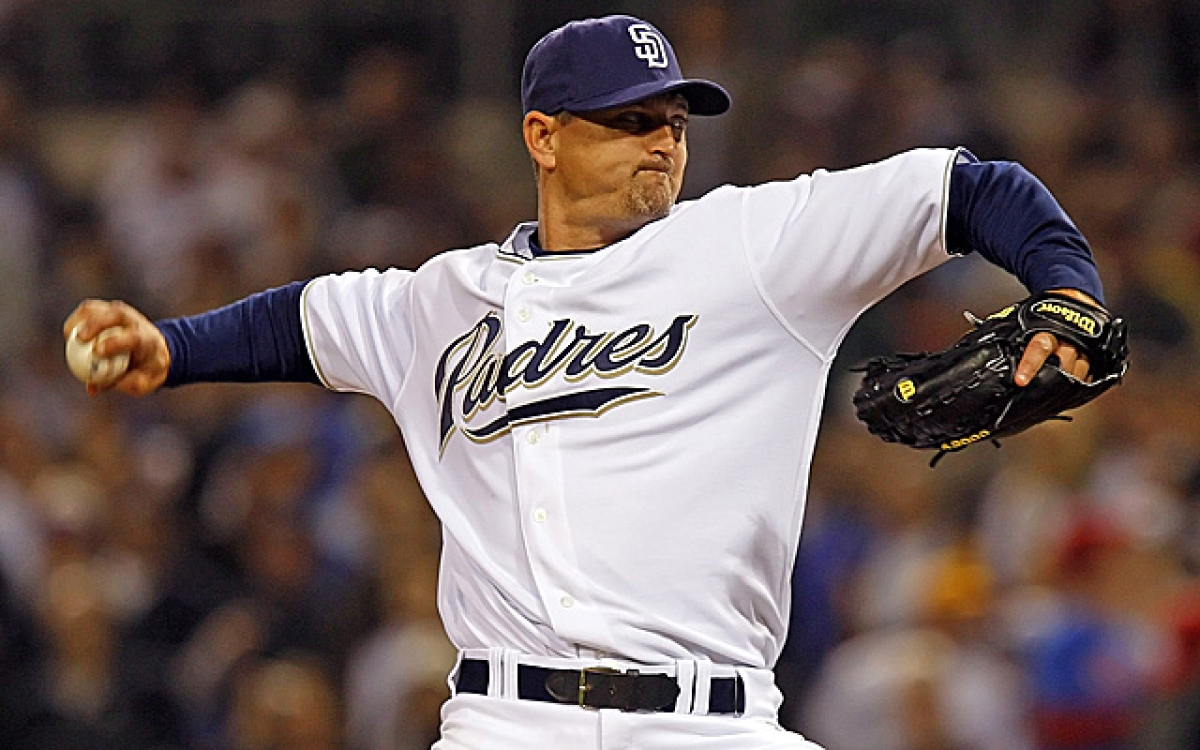






The loud groan that swept through San Diego in summer 1993 was entirely understandable. The Padres' management, amid a major salary dump, had just traded Gary Sheffield, the reigning batting champion and a franchise icon, to the Florida Marlins. Fans felt betrayed, but hidden within the traded players was a failed minor-league shortstop who became a rookie reliever and later transformed late-inning pitching. Trevor Hoffman didn't arrive as a top prospect, but over the next decade and a half, he became the gold standard for run prevention in the National League, anchoring the bullpen with a calm, relentless efficiency that redefined the closer role.
By 1994, Hoffman had fully established the role of the everyday closer, and the organization quickly recognized that they had found something extraordinary. Over time, his approach to games evolved into a true theatrical spectacle for stadium audiences.
As the stadium lights dimmed, AC/DC's "Hells Bells" echoed ominously through the ballpark, energizing the home fans and unsettling opposing teams. His true nightmare for hitters wasn't his fastball's velocity—often over 100 mph—but a powerful, high-concept changeup thrown with the same arm speed. The ball would vanish at the plate, leaving top sluggers lunging and off-balance.
Hoffman's emergence on the national stage was during the 1998 pennant race. He delivered an exceptional display of high-pressure performance, consistently shutting down National League batters to record a career-high 53 saves and a tiny 1.48 ERA. His steady hand in the ninth inning was the key driving force behind the Padres’ tough postseason run, leading them to their second National League pennant. Although they ultimately lost to the formidable Yankees in the World Series, Hoffman's reliable closing was vital in making October's journey possible.
Hoffman's impressive performance was not just a brief peak; he maintained his elite, low-variance output for more than ten years in Southern California. He made the ninth inning a daily, routine part of the regular season, leading the National League in saves again during a standout 2006 season. He also achieved nine seasons with at least 40 saves. His efficiency gains led to two second-place finishes in the National League Cy Young Award voting, including a very close result in 1998, and he was selected for seven All-Star Games, becoming a key representative of the franchise.
As he chased historic milestones, his unyielding longevity shattered the existing boundaries of baseball history. He became the very first pitcher to cross the mythical 500-save threshold, and though he would later collect his 600th career save while wearing a Milwaukee Brewers uniform at the twilight of his journey, the overwhelming volume of his historic footprint was compiled right by the beach.
Hoffman accumulated a staggering 552 of his 601 career saves representing San Diego, establishing a franchise record that may never be approached. San Diego retired his number 51 in 2011 and inducted Hoffman to their franchise Hall of Fame three years later. In 2018, Cooperstown came calling, inducting Hoffman in the third year of his eligibility. Appropriately, the player considered the best reliever in the NL now wins the Trevor Hoffman Award.

Comments powered by CComment