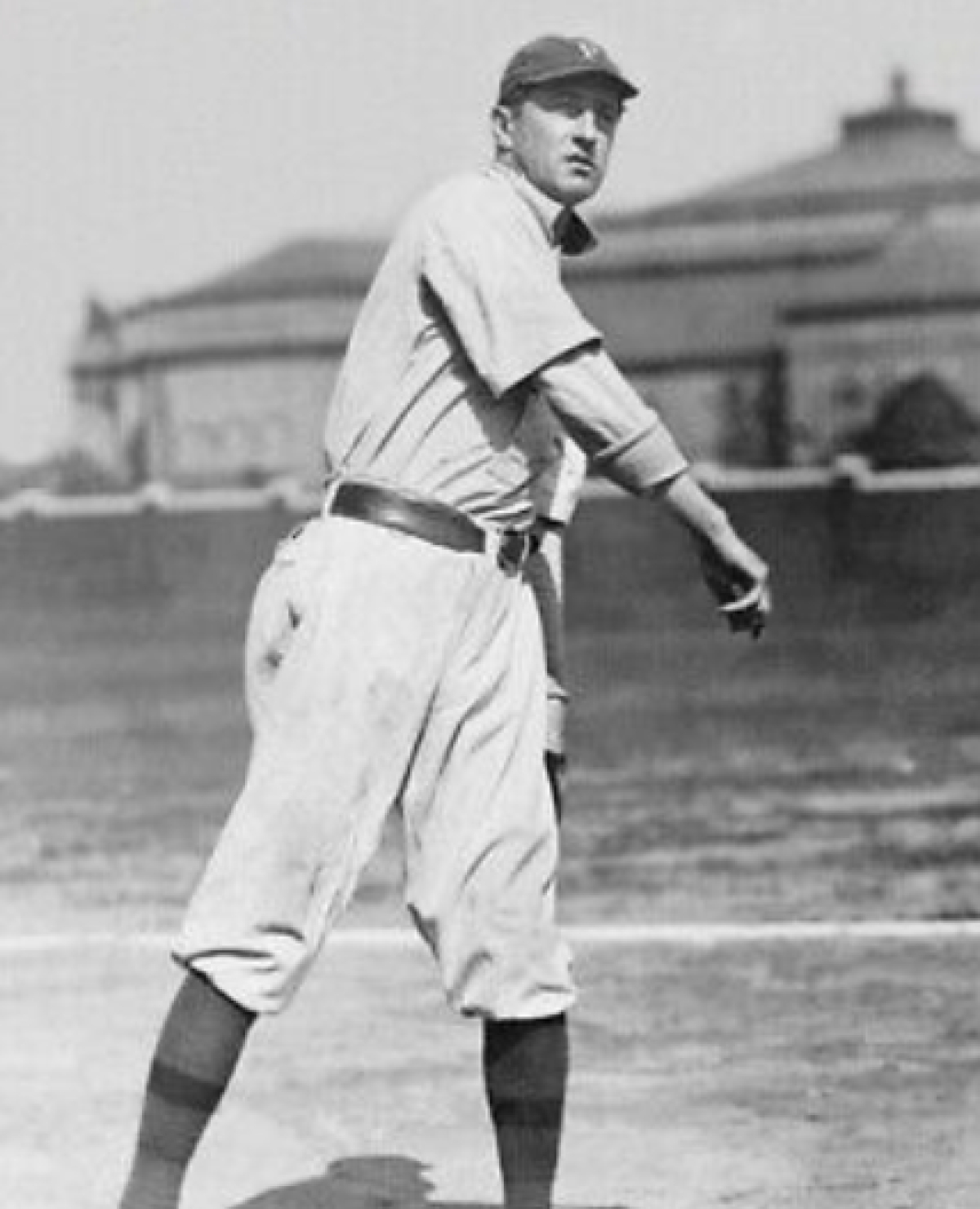
The early-20th-century baseball landscape was marked by a focus on run prevention, but few pitchers employed the Deadball Era's tactics as effectively as Vic Willis. Coming to the Pirates before the 1906 season through a major trade with the Boston Beaneaters, the tall right-hander featured a sweeping overhand drop curve that baffled hitters. Known as "The Delaware Peach," Willis had an exceptional, low-variance pitching style and remarkable durability. While his last years in New England were hampered by poor run support—including a record 29-loss summer in 1905- his move to Pittsburgh sparked one of the franchise's most dominant, efficient pitching stretches.
His first summer with the Pirates was a masterclass in run prevention. Willis adapted smoothly to his new team, leading a stellar 1906 season with a 22–13 record and an ERA of just .1.73 over 322 tough innings. A nightmare for National League hitters, he didn’t allow a single home run all season. This impressive debut set the tone for consistent, high-volume performances at Exposition Park, as he reached 20 wins in all four summers anchoring the Pittsburgh rotation.
Willis's remarkable longevity allowed him to stand alongside legends like Sam Leever and Deacon Phillippe, routinely delivering deep, complete-game performances. He accumulated innings at an astonishing rate, exceeding 280 frames annually and reaching a peak with a 24-win season in 1908, as the Pirates fought fiercely for the pennant. Besides his consistent pitching, Willis achieved a special place in local history on June 30, 1909, when he was chosen to pitch the inaugural game at the team’s new, scenic Forbes Field on the riverfront, performing before a lively crowd of over 30,000 fans.
The pinnacle of his team's success was achieved during the historic 1909 world championship season, in which his 22 victories acted as a key catalyst for a formidable roster that attained a franchise-record 110 wins. Willis was a crucial, high-velocity driving force during the pennant race, at one stage securing 11 consecutive individual victories to propel the club toward a decisive encounter with Ty Cobb and the Detroit Tigers in the Fall Classic.
After that championship winter, he left the organization with a remarkable four-year local record: 89–46, 115 complete games, 23 shutouts, and an outstanding 2.08 ERA over 1,207.2 innings. Advanced stats strongly support the quality of his peak, and this legendary period helped secure his place in history, culminating in his induction into the National Baseball Hall of Fame in 1995.
Comments powered by CComment