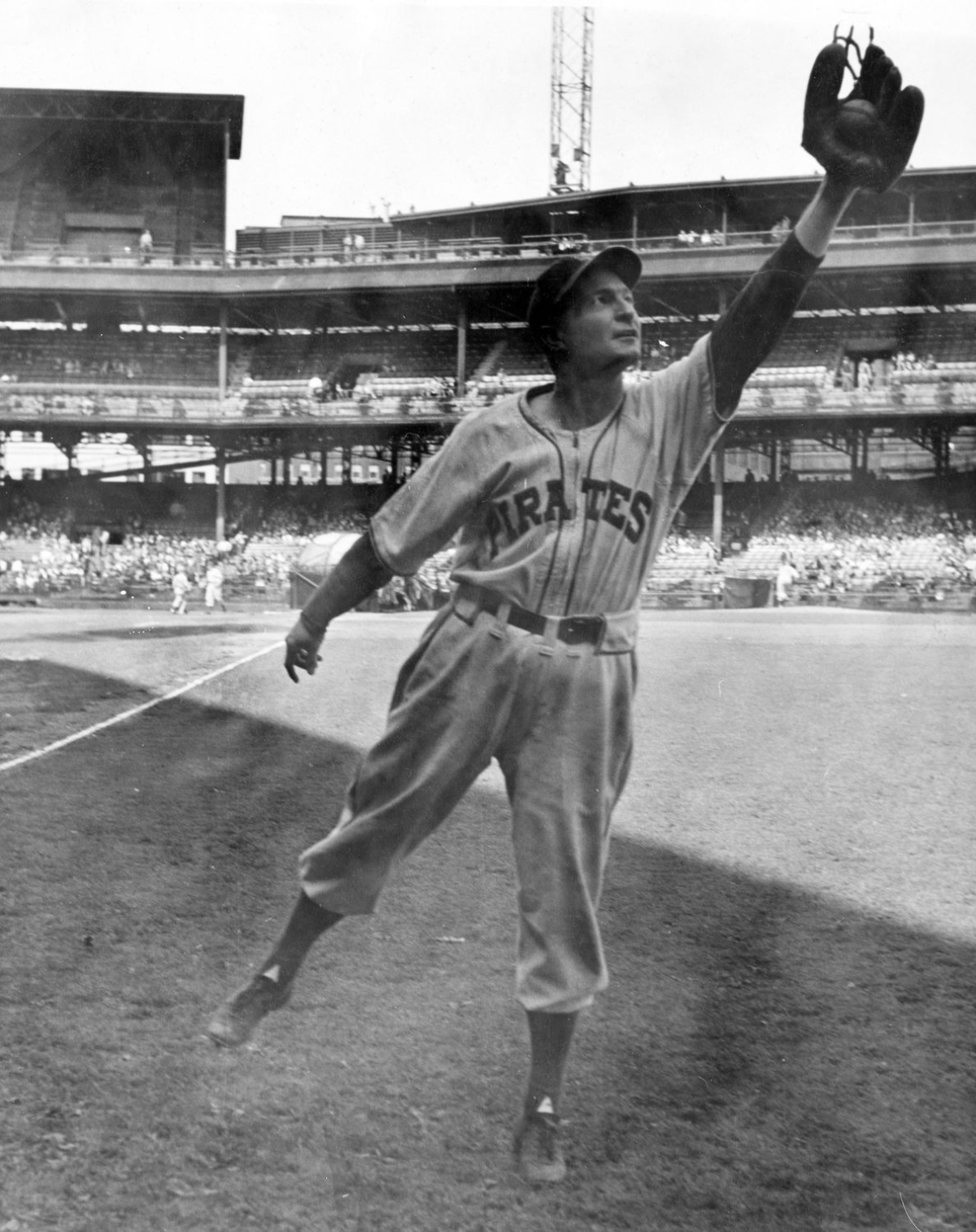
Lloyd Waner, a 5-foot-9, 150-pound Oklahoma native, was a contact hitter known as "Little Poison,” with a short, quick right-handed swing. Often paired with his Hall of Fame brother Paul, he specialized in line drives and contact hitting, contrasting with power sluggers and making contact hitting a season-long routine.
His debut appearance during the 1927 campaign remains one of the most explosive and prolific in Major League history. If the Rookie of the Year award had been available then, Waner would have won it by an overwhelming margin. As a 21-year-old rookie, he consistently overwhelmed National League pitchers, hitting a career-best .355 and leading the league with an impressive 133 runs scored. He achieved an astonishing 223 hits, establishing a rookie benchmark that kicked off a remarkable decade of leading the lineup with outstanding table-setting skills.
While he never quite eclipsed that spectacular rookie batting average again, Waner remained a model of unshakeable, low-variance consistency for the next ten summers. He cleared the coveted .300 threshold nine more times in a Pittsburgh uniform and orchestrated four distinct 200-hit masterclasses.
He possessed elite spatial awareness on the basepaths, routinely stretching singles into extra bases, as highlighted by a brilliant 1929 season in which he paced all of baseball with a career-high 20 triples.
However, when examined with modern, advanced run-creation filters, his overall analytical evaluation hits a clear limit. Despite his localized hit volume, "Little Poison’ lacked the power to clear the fence, hitting only 24 home runs in his extensive career. Additionally, his highly aggressive style meant he seldom took free passes, drawing just 151 walks in total, resulting in a low walk rate and a career on-base percentage of .354. Although he had excellent speed on the field, he was surprisingly cautious on the bases, rarely posting large stolen base numbers.
As aging and declining contact skills appeared in the late 1930s, the organization signaled a transition, trading the franchise icon to the Boston Braves in early 1941. Waner, showing his strong community ties, returned to the Bucs briefly during 1944-1945 World War II rosters to finish his career.
With Pittsburgh, Waner had 2,317 hits, 1,143 runs scored, and a stellar .319 batting average across 1,803 games. He entered the Baseball Hall of Fame in 1967 via the Veterans Committee.
Comments powered by CComment