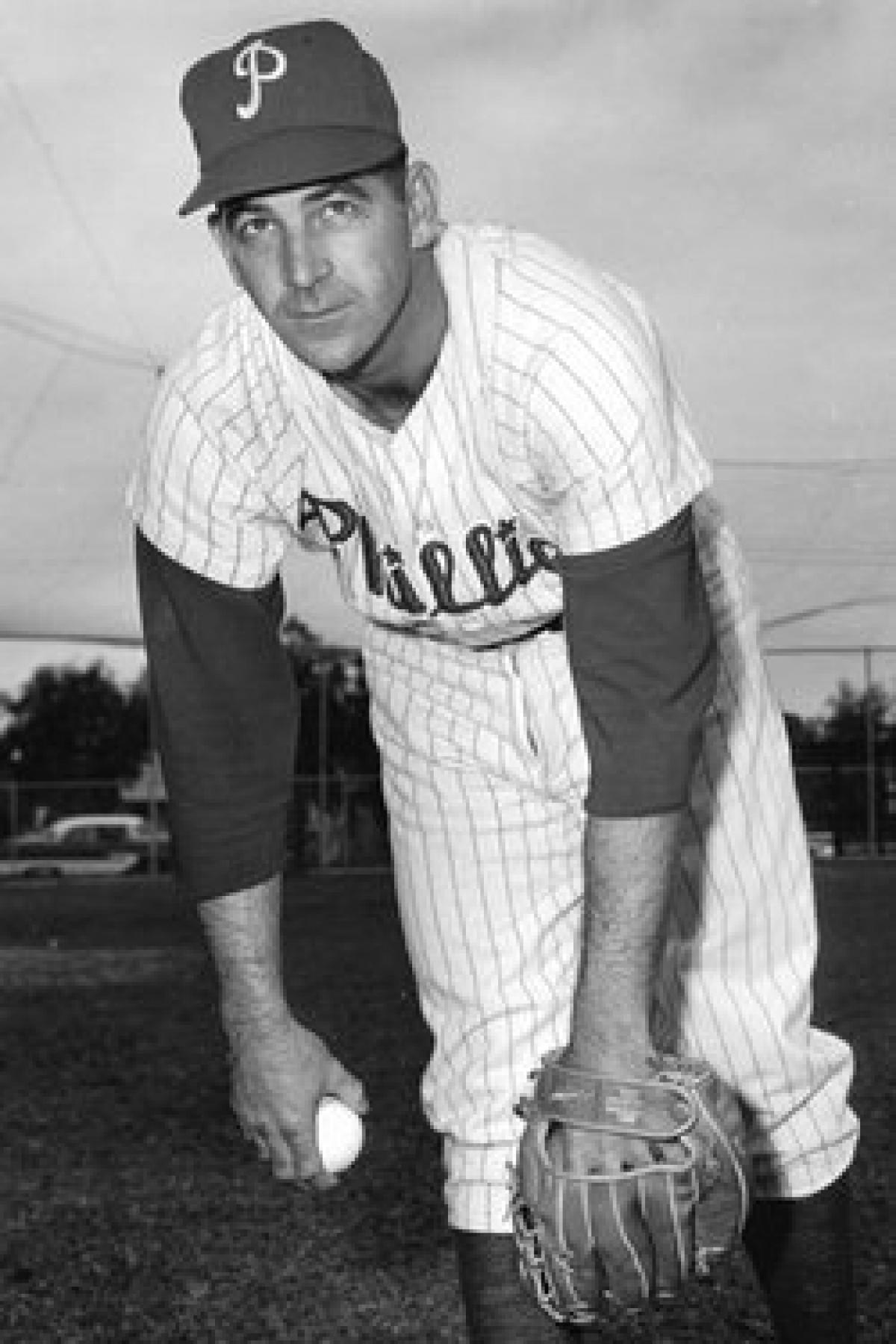
The wartime roster shuffle of the mid-1940s prompted many organizations to fast-track prospects before they were fully physically or tactically ready. Granny Hamner serves as a compelling example. Signed from Virginia as a very raw 17-year-old talent, he was thrown into the major leagues during the 1944 season and set an unbreakable record in 1945 as the youngest player to start on Opening Day. Although these early appearances revealed his developmental gaps, Hamner worked systematically to improve, earning the regular shortstop position by 1948. He quickly matured into the gritty, vocal leader and team captain of the popular 1950 "Whiz Kids”.
His consistent presence at the middle of the field during the franchise's golden era showcased unmatched durability. Hamner made taking the field a daily habit, anchoring the infield during a remarkable period from 1949 to 1954, when he ranked among the top ten shortstops in the National League for defensive assists and double plays.
Far from a passive defender, his advanced efficiency filters were highly effective; his perfect positioning and raw arm strength earned him steady recognition among the top defensive bWAR anchors in the Senior Circuit, helping stabilize the field for elite arms like Robin Roberts and Curt Simmons.
However, measuring Hamner’s impact only by his defensive stats overlooks the highly effective middle-of-the-order power he consistently displayed at his peak. He recorded six straight seasons with at least 150 hits and was a key run-scorer, finishing with over 80 RBIs four times, a significant amount of production for an infielder in the post-war period.
His national profile and local prominence reached their peak during a remarkable three-year period from 1952 to 1954, when he was selected for the National League All-Star team three consecutive years. Notably, he secured starting positions at two different positions: shortstop in 1952 and second base in 1954.
Although his elite regular-season performance was a key factor for the team, his reputation in crucial games became legendary during the 1950 Fall Classic against the highly favored New York Yankees. Even though the young Whiz Kids were ultimately swept in four close games, Hamner delivered an outstanding offensive display, dominating the Bronx bombers with a remarkable .429 batting average and three extra-base hits.
The main reason his overall historical valuation hits a ceiling under modern analysis is his low-efficiency on-base approach. Known for his aggressive, high-velocity swing, Hamner seldom sought free passes, resulting in a lengthy 1,501-game career in red pinstripes with a modest .305 on-base percentage that significantly limited his run-creation potential.
Evaluating his extensive real estate in franchise history solely by traditional stats like on-base percentage fails to capture the powerful influence of his leadership and long career. He ultimately left via a trade to Cleveland halfway through the 1959 season, leaving an outstanding record of 1,518 hits and 103 home runs.
In 1987, he was chosen for the Philadelphia Wall of Fame.
Comments powered by CComment