
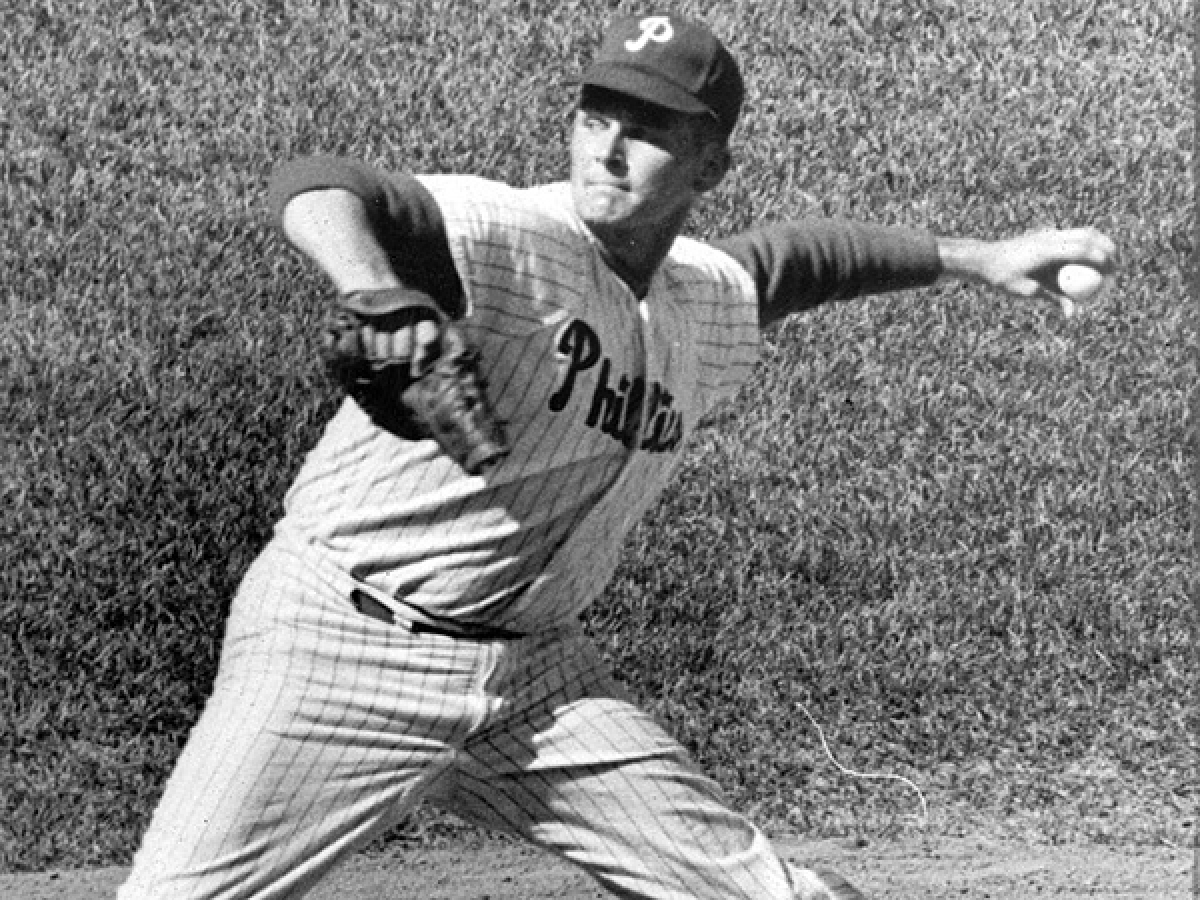

Though post-war baseball history often highlights legendary right-handers, Chris Short stood out in the mid-1960s as one of the top left-handed pitchers. Signed by the Philadelphia Phillies as an amateur free agent in 1957, this lanky Delaware native spent several summers developing before securing a spot in the starting rotation in 1963. Following this, he enjoyed a remarkable peak, where his sharp slider and deceptive delivery established him as a leading force on the mound.
Between 1964 and 1968, Short led the pitching staff alongside Jim Bunning, establishing a five-year period marked by exceptional individual performances. He made success a consistent achievement, recording a minimum of 17 victories in four separate seasons. The peak of his workload occurred during the 1966 schedule, demonstrating remarkable resilience by completing 272 innings and achieving an impressive 20-10 record. Not merely a compiler, his underlying efficiency metrics were extraordinarily elite; Short received two National League All-Star selections in 1964 and 1967, posting a minuscule 2.20 ERA in 1964 and a stellar 2.39 ERA in 1967, ranking third in the Senior Circuit's ERA standings during both summers.
Any historical review of Short’s career inevitably centers on the infamous, heartbreaking pennant race of 1964. With a seemingly unbeatable six-and-a-half-game lead and only twelve games left, the Phillies experienced a disastrous and highly unpredictable collapse. In a desperate and controversial move to stop the decline, manager Gene Mauch overused his two key pitchers, forcing Bunning and Short to start eight of the last twelve games on short rest. Despite Short’s brave pitching and minimal earned damage, the depleted team around him collapsed, creating a tragic story that has overshadowed his impressive summer performance.
Yet, allowing that autumn collapse to diminish his legacy completely miscalculates the immense regular-season volume he generated for the franchise across fourteen dedicated winters. A recurring back injury in 1969 permanently compromised his high-velocity edge, but he departed Philadelphia following the 1972 campaign, holding an exceptional club baseline of 132 victories, 24 shutouts, and 1,585 strikeouts over 459 appearances in red pinstripes.
He was chosen for the Philadelphia Baseball Wall of Fame in 1991.

Comments powered by CComment