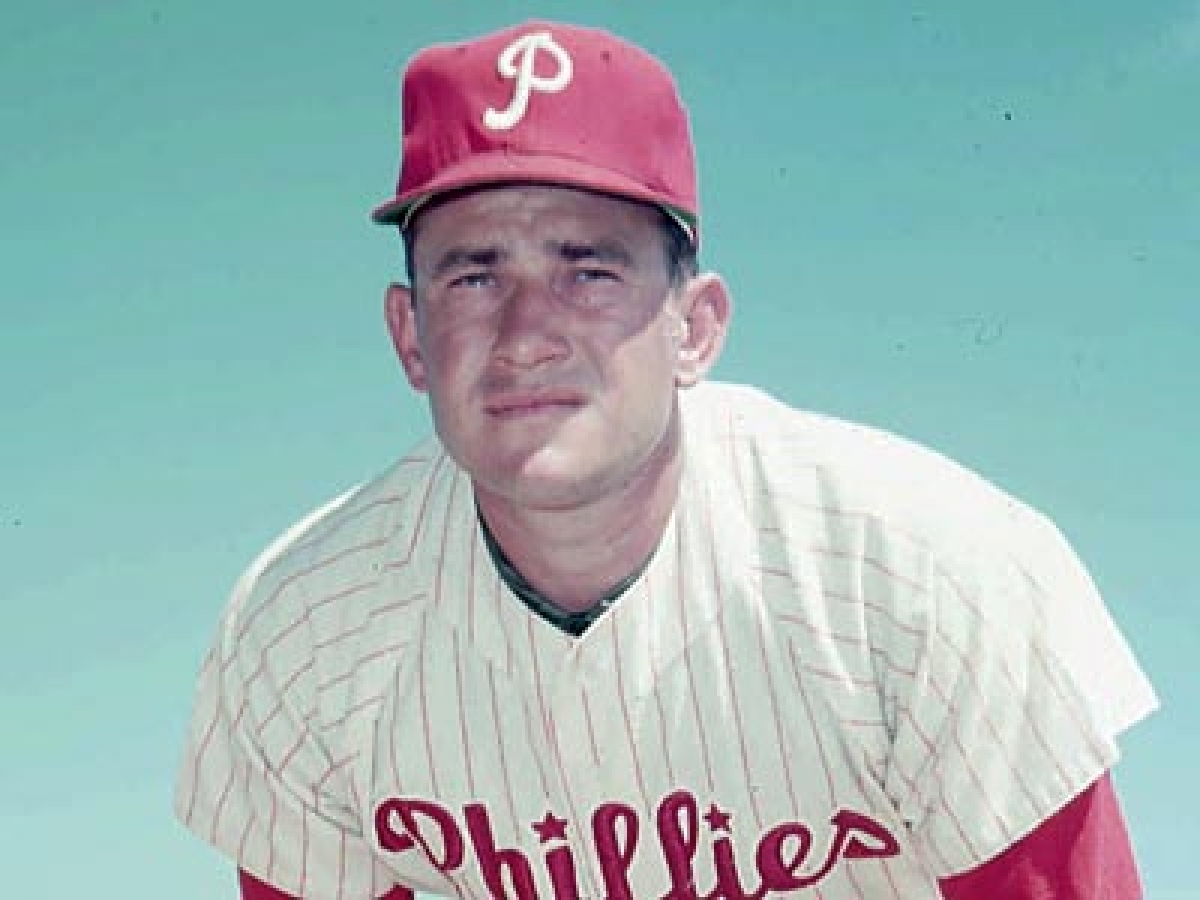
The relationship between the Philadelphia fans and Del Ennis was particularly complex, especially given the city's fiercely protective nature. Born in the city and excelling at Olney High School, Ennis had all the qualities of a hometown hero. He was also a key part of the iconic "Whiz Kids" team that transformed the city at the beginning of the 1950s. Despite his impressive regular-season stats, Ennis often became a target for harsh criticism and boos from the Shibe Park crowd.
His debut on Broad Street in 1946 is a true standout achievement. After completing a three-year stint with the United States Navy, Ennis excelled against National League pitchers, achieving an impressive .313 batting average. He made history as the first rookie in franchise history to be selected as an All-Star and was named The Sporting News Rookie of the Year.
This marked the beginning of a decade of display of powerful middle-of-the-order batting. Ennis mastered driving in runs, achieving seven seasons with at least 20 home runs and seven seasons surpassing 100 RBIs. He had a deadly right-handed swing capable of making high-quality contact, hitting over .300 for three seasons in red pinstripes.
His peak performance occurred during the memorable 1950 pennant race, where Ennis delivered an outstanding regular season by hitting 31 home runs and leading the Senior Circuit with a career-high 126 RBIs, helping the young "Whiz Kids" secure their first National League pennant in 35 years. This achievement earned him a career-high fourth-place MVP finish, one of seven seasons where he was a serious MVP contender.
The main reason "Ennis the Menace" was sometimes heavily criticized by local fans was because of his defensive skills. Although he had a strong, high-velocity throwing arm that occasionally led the league in outfield assists, his footwork and defensive positioning were consistently problematic. He was known for making errors and had significant difficulty with spatial awareness, never recording a positive defensive bWAR season throughout his career.
Trying to downplay his historical impact solely because of his defensive weaknesses ignores his remarkable ability to produce runs over a long career. When he was traded to the St. Louis Cardinals before the 1957 season, he left as the Phillies' all-time home run leader, with impressive career totals of 1,812 hits, 259 home runs, and 1,124 RBIs in 1,601 games with Philadelphia.
The Phillies chose Ennis for their Philadelphia Baseball Wall of Fame in 1981.
Comments powered by CComment