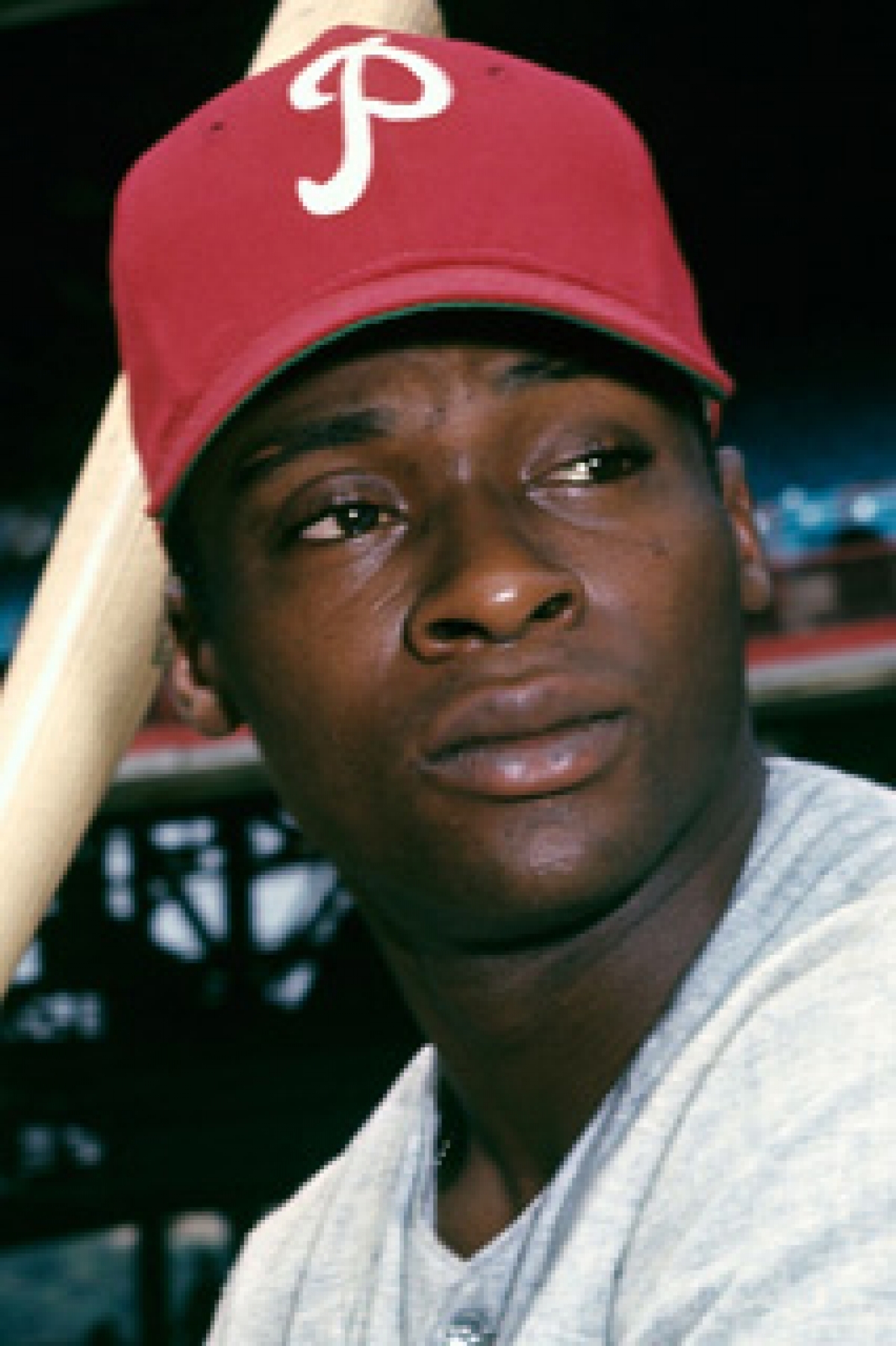
Dissecting Dick Allen's historical impact requires confronting the turbulent, racially charged controversy of his era in eastern Pennsylvania. As the first Black superstar in a conservative Philadelphia Phillies organization, Allen carried an overwhelming psychological weight. The franchise was among the last in the National League to integrate, and Allen had already faced severe systemic racism as the sole Black player on their minor league team in Little Rock. When he reached the major leagues, he entered a highly volatile environment, often targeted by parts of the local fanbase and a hostile media that refused to see him as a person or an elite athlete.
Nevertheless, solely concerning the diamond, Allen was an immediate and extraordinary force that defied logic. He distinguished himself by receiving the 1964 National League Rookie of the Year award in an impressive manner, wielding a swiftly swinging, 40-ounce bat that decisively penetrated the pitching-dominated landscape of the 1960s.
He was a leading offensive player, achieving three seasons with at least 30 home runs—a remarkable feat at the time, and hitting a career-high 40 home runs in 1966. More than just a power hitter, he excelled at contact hitting, with four straight seasons batting over .300 from 1964 to 1967, ending with a league-best .404 on-base percentage in 1967.
While his exceptional offensive performance captivated purists, his defensive shortcomings at third base offered ample opportunity for his detractors to criticize. Allen twice led the National League in errors, demonstrating an inconsistent glove that significantly fell below the major league average.
The fractures escalated into a full-scale mutiny in 1965 following a pre-game altercation with white teammate Frank Thomas, who reportedly struck Allen in the shoulder with a baseball bat. When management subsequently dismissed Thomas, the local press portrayed Allen as a destructive influence within the club. Refusing to assume the submissive role expected by reporters, Allen defiantly inscribed messages in the infield dirt with his cleats, ultimately demanding a trade to escape the toxic environment.
After a highly successful decade, including a standout 1972 American League MVP season with the Chicago White Sox, time eventually mended old wounds. In a fitting turn of history, veteran Allen was traded back to Philadelphia in 1975. While he was no longer the explosive, high-speed superstar of his earlier years, the city had transformed itself and embraced him with great warmth and respect.
With Philadelphia, Allen blasted 204 Home Runs, batted .290, and had 1,143 Hits. The Phillies added Allen to their Philadelphia Baseball Wall of Fame in 1993. The team retired his number 15 in 2020, shortly before he died. His eternal standing in baseball history was cemented soon after, when the Golden Days Era Committee posthumously elected Allen into the National Baseball Hall of Fame as part of the Class of 2022.
Comments powered by CComment