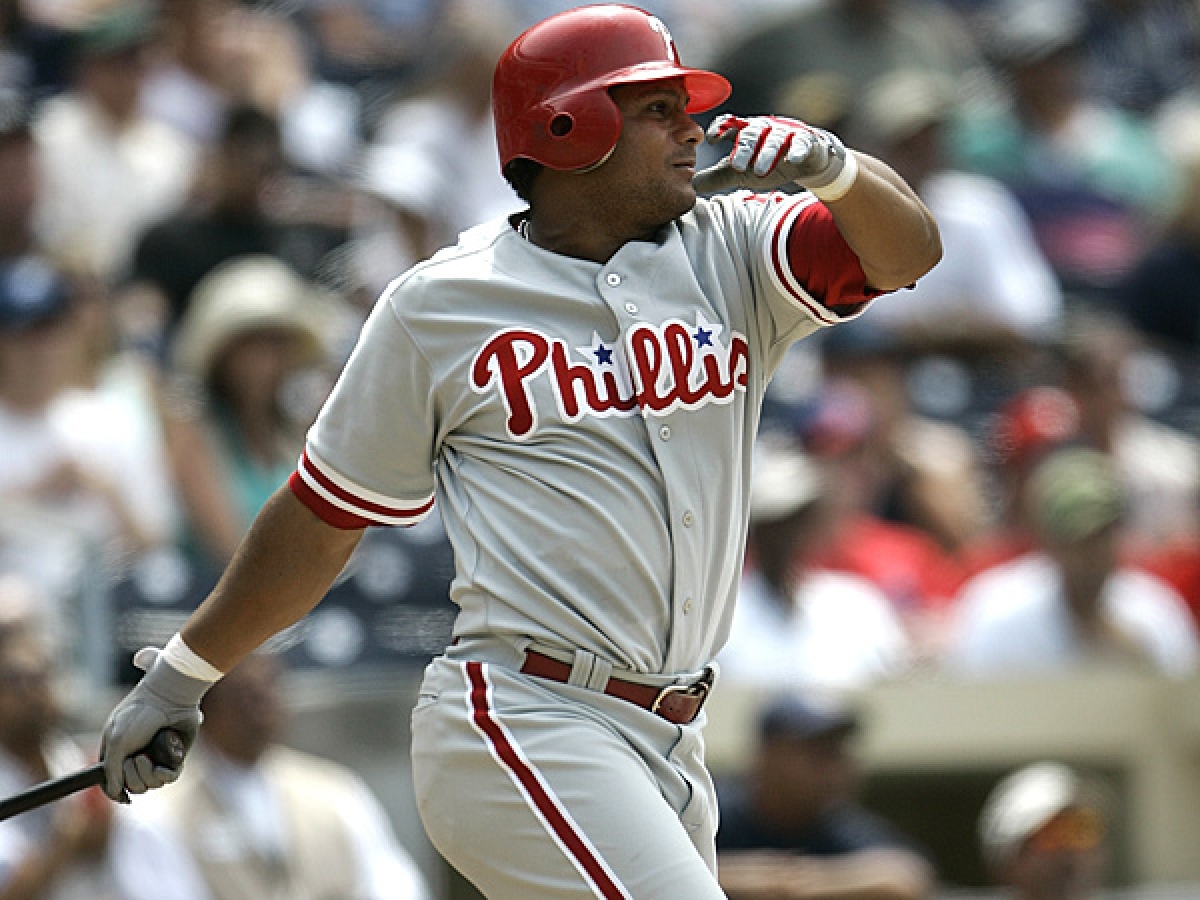
When modern spreadsheet analysts and advanced metric enthusiasts think of the standout example of the sabermetric movement, they often point to Bobby Abreu. Even before he gained widespread attention with his high-profile trade to the New York Yankees, the talented Venezuelan outfielder made the batter's box in Philadelphia feel like his own research lab. Abreu was a true master at working deep pitch counts, blending a sharp eye for the strike zone with a quick, graceful left-handed swing that kept opposing strategies at bay.
While some casual observers in the late 1990s and early 2000s overlooked his quiet efficiency for more flamboyant sluggers, Abreu was building one of the most complete, high-volume peaks in modern franchise history. His remarkable consistency on Broad Street was almost surreal. Over 1,353 games with the Phillies, Abreu showcased a stunning level of multi-dimensional performance, recording six straight seasons with at least 170 hits, 20 home runs, and 20 stolen bases.
More than just a compiler, his efficiency metrics were exceptionally elite; five campaigns saw him reach a .300 batting average and a .400 on-base percentage simultaneously. He consistently ranked high on senior circuit leaderboards, finishing in the top ten of the National League in OBP eight times while anchoring the middle of the lineup.
His consistent run production resulted in an outstanding .303/.416/513 slash line, making history with the franchise and becoming a rare example of the elite "3/4/5" triple-slash that few modern players maintain over many seasons. Abreu combined this exceptional plate discipline with quick instincts on the bases, often stealing 30 or more bases annually to consistently challenge opposing defenses.
He even showcased a highly capable, intelligent toolset out on the grass, navigating the tricky caroms of Veterans Stadium and Citizens Bank Park with fluid efficiency to capture a National League Gold Glove Award in 2005.
Despite his outstanding performance in the regular season and earning two well-deserved All-Star selections in red pinstripes, the front office often struggled to assemble a robust, championship-quality pitching staff around Abreu's exceptional on-base skills. As the team shifted toward developing a new core, management decided to free up financial resources by trading their veteran star to the Bronx partway through the 2006 season.
Abreu departed Philadelphia having accumulated 1,474 hits, 348 doubles, 195 home runs, and 254 stolen bases.
Comments powered by CComment