
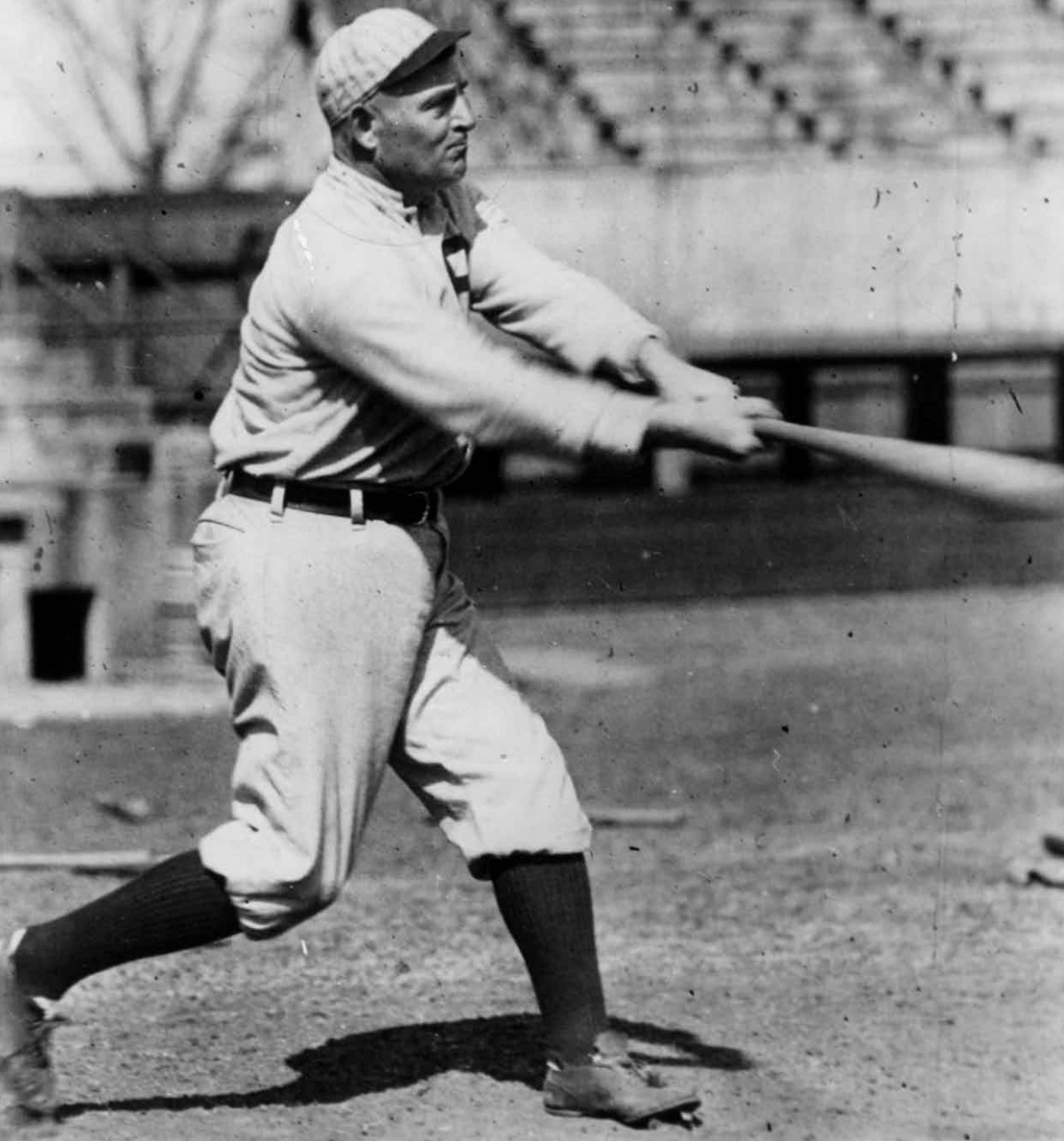


Prior to Babe Ruth fundamentally altering the landscape of professional baseball with his formidable power hitting to the upper deck, the unparalleled home run king during the dead-ball era was Gavvy Cravath. Nonetheless, in accordance with the prevailing baseball rationale of the early 20th century, Cravath was expected to be entirely phased out of the sport. Making his Major League debut at the age of 27 with the Boston Red Sox, he was widely criticized by teammates, fans, and front offices for his painfully slow on-field foot speed. He remained within the minor league system for several years, seemingly relegated to the lower levels on organizational depth charts, until a highly unconventional clerical error in a telegram, at the age of 31, afforded him a second opportunity with the Philadelphia Phillies, an opportunity he capitalized on to completely rewrite the record books.
Arriving at Shibe Park in 1912, Cravath promptly established himself as a formidable force at the plate. During an era characterized by scuffed baseballs, heavy bats, and low-scoring tactical contests, his right-handed power-hitting was remarkably exceptional. He secured the National League home run title an impressive six times within a seven-year period.
Although his 24 home runs in 1915 was a modest total by today's standards, it was a remarkable and extraordinary feat for its era, surpassing the combined power of entire opposing teams. He skillfully used his strong pull-hitting ability to take advantage of the small size of Philadelphia’s Baker Bowl, making the right-field wall his own personal launching pad.
However, labeling Cravath just as a powerful hitter ignores his impressive offensive efficiency. He wasn't a free swinger; instead, he had a keen, disciplined eye at the plate, leading the National League in on-base percentage twice, including an outstanding .412 in 1915. He was a highly effective run scorer, leading the senior circuit in RBIs twice, most notably with 128 RBIs in 1913, and was a league leader in slugging percentage and OPS twice, helping build the franchise's historic 1915 pennant-winning team.
The sheer density of his production during his nine-year stay on Broad Street yielded an exceptional .291/.391/.489 slash line—a statistical fingerprint that commands immense respect across any generation of baseball history. He even stepped up to serve the organization as a player-manager during his final two summers, providing a steady, respected hand through a difficult transitional era before officially retiring after the 1920 season.
He was chosen for the Philadelphia Baseball Wall of Fame in 2000.

Comments powered by CComment