
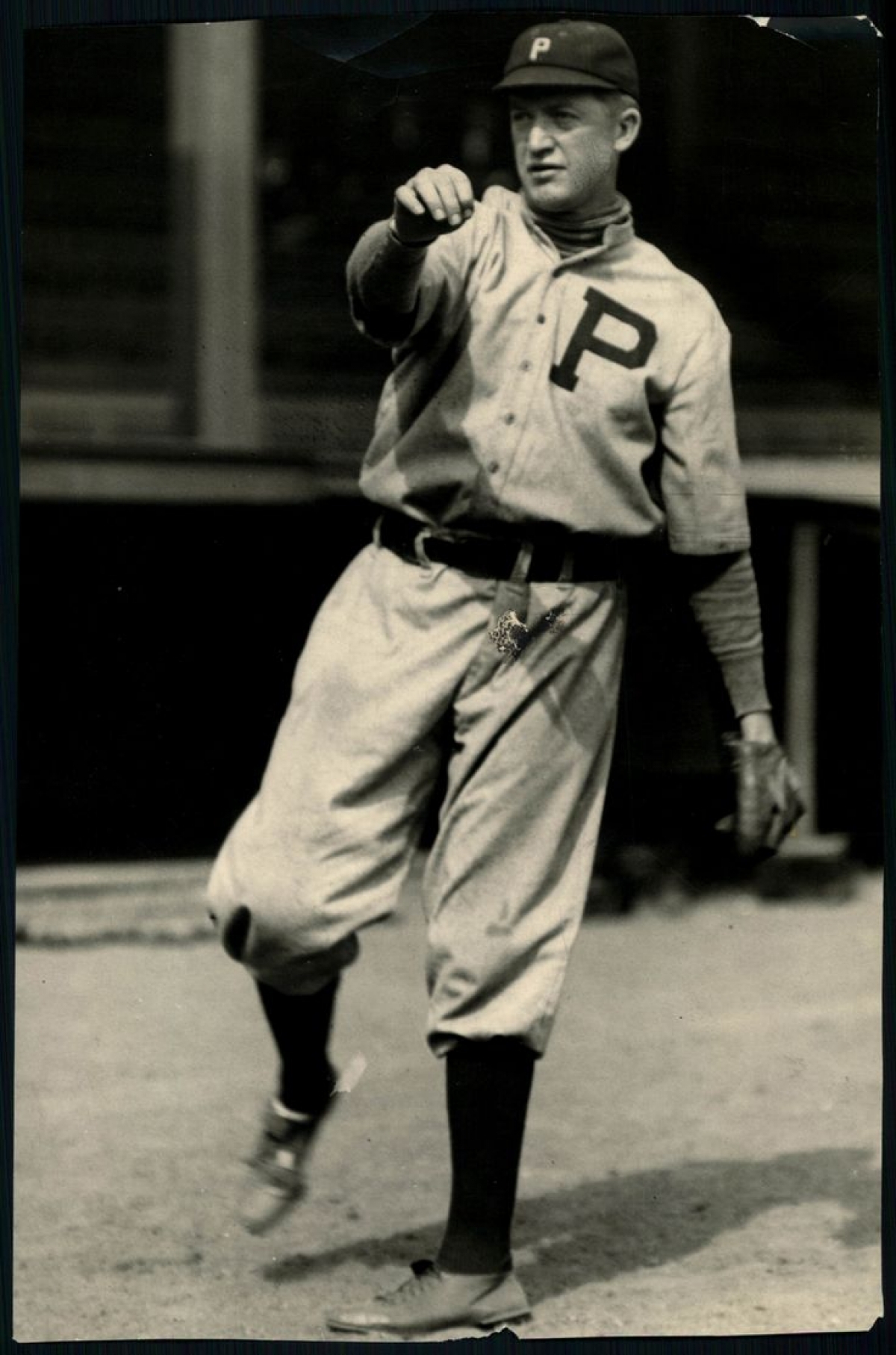



Inducted into the Baseball Hall of Fame in 1938, Grover Cleveland “Old Pete” Alexander might be surprising to see ranked so highly, considering he only played eight seasons for Philadelphia. In fact, we typically consider just the first seven seasons, as his eighth was his final at age 43, during which he was less effective. Still, examining Alexander’s first seven years of professional play reveals he’s a deserving top-five choice among the greatest Philadelphia Phillies of all time.
Hardly anything was expected of the tall, unassuming farm boy from Nebraska when he arrived in the spring of 1911. He went on to deliver a historic rookie masterpiece, capturing 28 victories and setting an enduring modern major-league rookie record. He paced the senior circuit in wins, shutouts (7), and innings pitched (367.0), instantly establishing himself as the primary horsepower of the Philadelphia staff.
After a series of highly successful follow-up seasons, Alexander reached an unmatched level of dominance between 1914 and 1917. He consecutively led the National League in wins for four seasons, with tallies of 27, 31, 33, and 27. Renowned for his efficiency and workload, he earned four straight strikeout titles, two ERA championships, and two WHIP titles. His peak value was crucial for the franchise, as he topped all NL pitchers in pitcher wins above replacement (bWAR) during these summers, including a remarkable 1915 season where he posted a minuscule 1.22 ERA, guiding the Phillies to their first-ever National League pennant.
The athlete's career sharply declined after 1917. Fearing the loss of their key player to the World War I draft without compensation, his team sold him to the Chicago Cubs in a quick cash-and-player deal. Alexander was drafted and served as a sergeant in France's artillery units. The intense shellfire damaged his physical health, causing partial deafness in his left ear and epilepsy, leading to a lifelong struggle with alcoholism. Despite his perseverance and winning 183 more games post-war, his peak performance was never fully realized, remaining hidden in Baker Bowl.
He concluded his primary tenure in Philadelphia with 190 victories, a stellar 2.18 ERA, and a franchise-record 61 shutouts. His status as an immortal pioneer was cemented by his induction into the National Baseball Hall of Fame in 1938.
Decades later, the organization carefully reconstructed his rightful legacy. In 1981, the team inducted Alexander into the Philadelphia Baseball Wall of Fame. Since he played before uniform numbers were standard, the Phillies devised a creative and lasting way to commemorate him: in 2001, they officially celebrated his memory by retiring a stylized, vintage 1915-style "P" logo alongside the team's other iconic numbers.

Comments powered by CComment