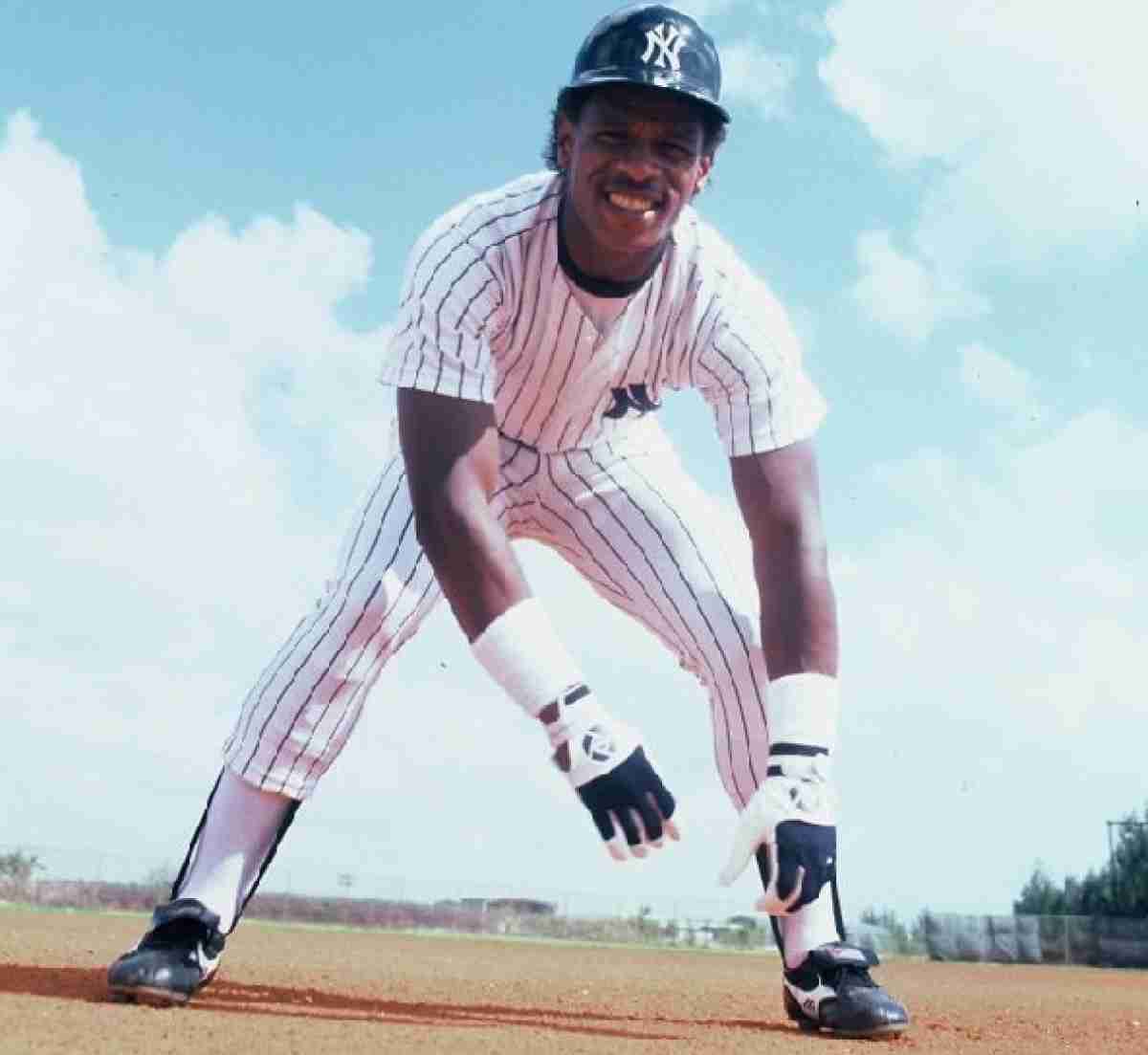
Rickey Henderson is, and will always be, an Athletic. Yet…
His move to New York was anything but ordinary—it was an exciting winter event at the 1984 Winter Meetings, highlighting George Steinbrenner's strong passion for top talent. By the end of 1984, the Athletics, his hometown team, were struggling with consecutive losing seasons and hesitated to offer Henderson a lucrative contract extension as he was nearing free agency. Seeing a special opportunity to acquire a legendary player at his peak, the Yankees eagerly joined a competitive bidding battle with the Orioles, Dodgers, and Rangers.
To win the sweepstakes, New York had to meet Oakland GM Sandy Alderson’s demand for a five-player package. On December 5, 1984, the Yankees made the deal, trading future talent for Henderson and reliever Bert Bradley. They sent reliever Jay Howell and four top prospects, Tim Birtsas, Stan Javier, Eric Plunk, and Jose Rijo, seen as Oakland's key piece, while receiving Henderson and Bert Bradley.
Henderson did more than just play baseball in New York; he controlled the pace and flow of the game entirely. With a highly disciplined strike zone and an advanced visual clock, he transformed the leadoff position into a key threat for opposing pitchers. His 1985 debut season in the Bronx was a masterclass in modern run production, as he posted a .314/.419/516 batting line, hit 24 home runs, drew 99 walks, and scored 146 runs, leading the league. His quick baserunning created chaos, leading all players with 80 stolen bases. Achieving a remarkable 9.9 bWAR that summer, he delivered one of the most dominant individual seasons in franchise history, finishing third in AL MVP voting.
While the casual fan fixated on his historic stolen base totals, his tenure in New York unlocked a rare, multi-dimensional completeness. He averaged over 20 home runs per season during his first three full summers in the Bronx, providing a shocking power baseline for a leadoff hitter.
Surprisingly, his defensive skills peaked during his time patrolling the outfield at Yankee Stadium. With an exceptionally quick first step and excellent spatial awareness, Henderson regularly turned difficult line drives into easy outs, significantly improving his efficiency in advanced metrics. He was a constant presence on the national stage, earning an All-Star selection in every complete season he played for the junior circuit in pinstripes.
Despite internal turmoil and roster changes in the late 1980s, Henderson’s impact remained significant. Even after being traded back to Oakland in June 1989, he left a lasting legacy on the team's leaderboard. He finished his Bronx career with 326 stolen bases, a remarkable figure that still places him among the top five in franchise history, despite playing fewer than 600 games in pinstripes. His time with the Yankees achieved an impressive 30.6 bWAR, a notable accumulation of value that surpasses many long-standing organization icons.
Appropriately, Henderson was a first ballot Baseball Hall of Fame inductee in 2009.
Comments powered by CComment