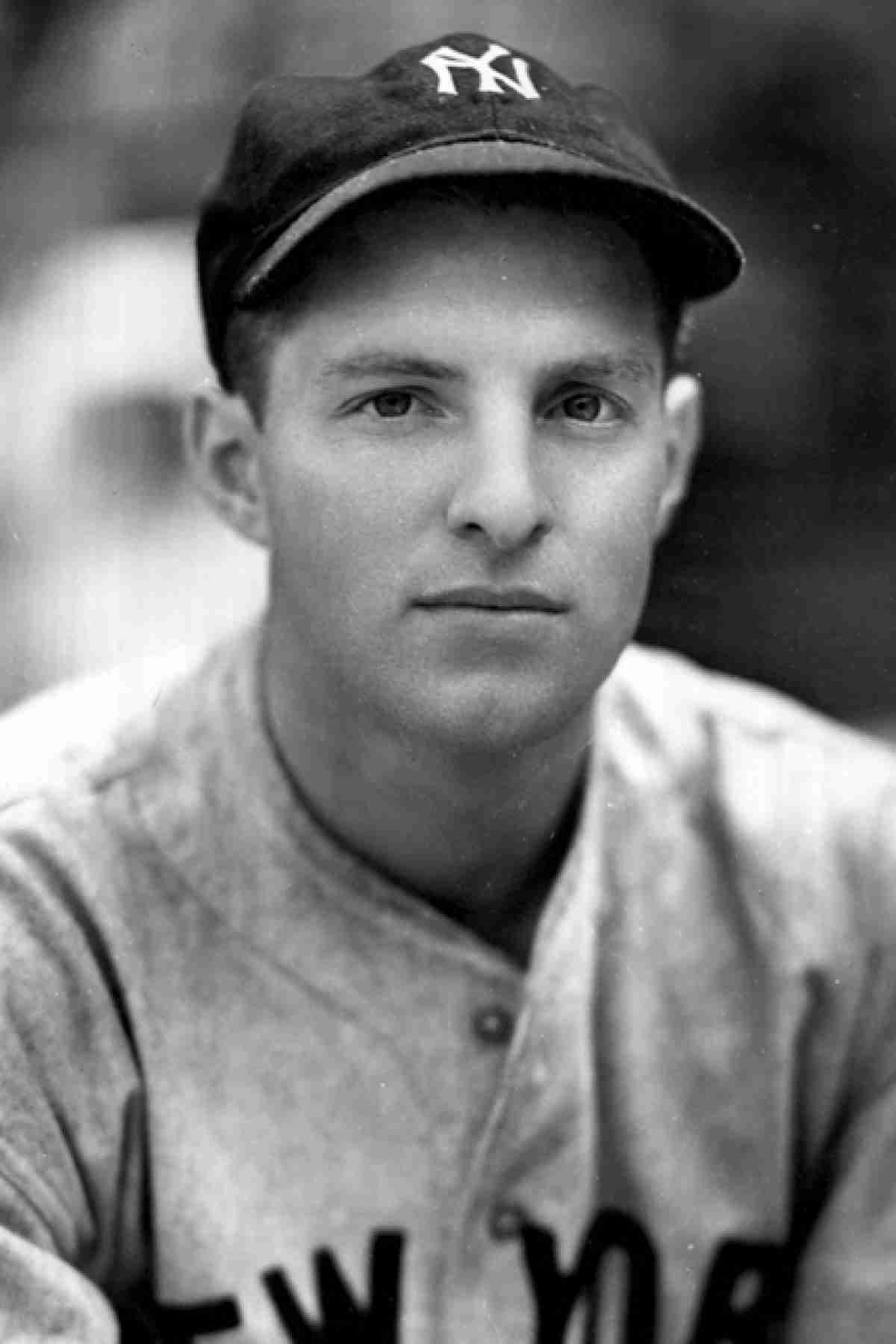
When legal issues in spring 1937 freed Thomas David Henrich from the Cleveland Indians' minor league system, a heated bidding war arose for the talented young outfielder. It was only through a personal meeting with Yankees business manager Ed Barrow that Henrich, a native of Ohio, agreed to sign with New York. This move proved to be a strategic victory for the franchise. By teaming up with Joe DiMaggio and Charlie Keller, Henrich completed the legendary outfield trio and proved himself to be the ultimate teammate, often saving his best performances for the most important moments.
His teammates and the New York press called him "Old Reliable" not just out of politeness. Henrich approached hitting with a calculated, intelligent approach, perfectly adjusting his smooth left-handed swing to take advantage of the short porch in right field at Yankee Stadium. He was an exceptional table-setter and run-producer, surpassing 20 home runs in four separate seasons and demonstrating impressive plate coverage that boosted his career on-base percentage to an outstanding .382. When he wasn't hitting home runs, he used an advanced visual clock to create scoring opportunities, leading the American League in triples twice and finishing the 1948 season with 138 runs scored, showcasing his all-around offensive prowess.
However, his regular-season stats only tell part of the story. Henrich's real legacy lies in his legendary capacity to perform under pressure. He was a dominant force on baseball's biggest stage, guiding the Yankees to four World Series titles (1938, 1941, 1947, and 1949).
His postseason achievements include a legendary performance in Game 1 of the 1949 Fall Classic against the Brooklyn Dodgers. In a scoreless, intense pitching duel during the ninth inning, Henrich faced Don Newcombe and hit a towering home run over the right-field wall. This was the first walk-off home run in World Series history, dramatically shifting the series momentum.
Similar to many of his contemporaries, his career was greatly affected by World War II, during which he gave up three peak seasons from 1943 to 1945 to serve in the United States Coast Guard. After returning to the Bronx in 1946, he quickly resumed his role as the dependable, professional backbone of the team.
A five-time All-Star, Henrich spent his entire 11-year major league career exclusively in a pinstriped uniform, retiring after the 1950 schedule with 1,297 hits, 183 home runs, and a spectacular, robust .282/.382/.491 slash line.
Comments powered by CComment