
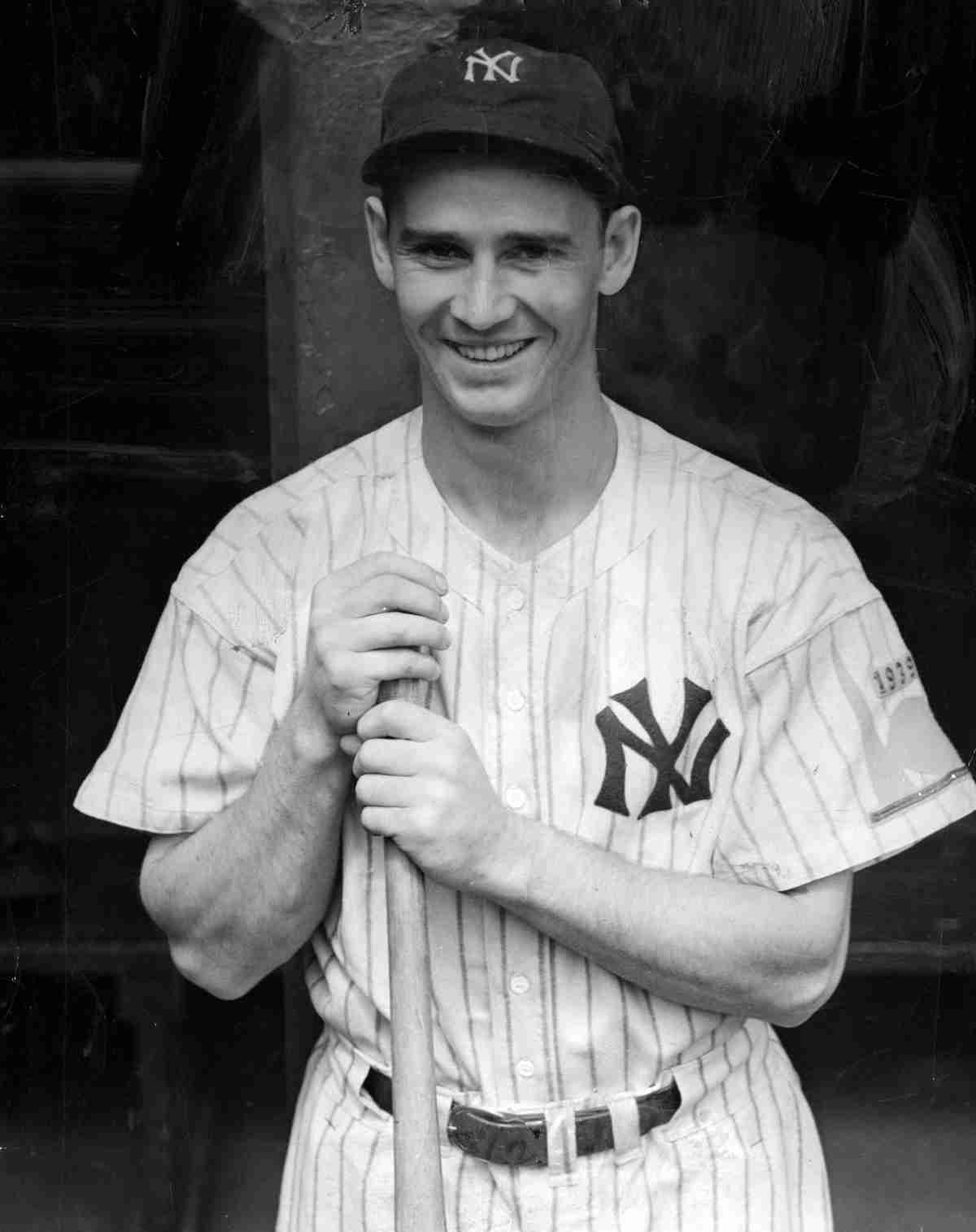



In 1938, Joe Gordon replaced Tony Lazzeri. At 23, he handled the pressure and transformed second base defense into acrobatics, covering the right side with aerial, diving range that redefined physical limits at the position.
Gordon was a complete defensive force, greatly influencing the game's pace. He had a lightning-fast transfer and an exceptional sense of spatial awareness, often grabbing balls from the dirt and twisting mid-air to start double plays. Advanced statistics support his reputation, as he ranked in the top five in defensive bWAR in the American League seven times with the team, including four outstanding seasons surpassing 2.0 defensive bWAR. He led all second basemen in the junior circuit with assists four times and double plays three times, setting a high standard for middle-infield excellence.
While his acrobatic glove work kept the infield steady, Gordon added a powerful, groundbreaking bat to the bottom of the order. By hitting 25 home runs as a rookie, he broke the mold for middle infielders and set a new major league record for second basemen. Over his career, he exceeded 20 home runs seven times, serving as the clutch power hitter who maintained the offense behind Joe DiMaggio.
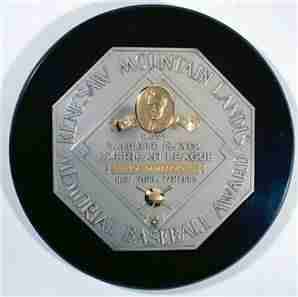
The unique blend of elite run prevention and powerful middle-infield play reached its peak in the historic 1942 season. Gordon delivered a remarkable offensive performance, hitting a career-high .322 with 29 doubles, 18 home runs, and 103 RBIs. His outstanding all-around contribution earned him the 1942 American League Most Valuable Player award, narrowly beating Triple Crown winner Ted Williams due to his significant, multi-faceted value to the pennant-winning Yankees.
He was a relentless winner who regarded October as his personal stage. Gordon led New York to five American League titles and four World Series wins (1938, 1939, 1941, and 1943), batting an impressive .400 during his first Fall Classic sweep of Chicago. Like many icons of that time, his prime years were interrupted by World War II, as he gave up two key seasons in 1944 and 1945 to serve in the Army Air Corps.
Upon returning, he played one final season in the Bronx in 1946 before the front office executed a historic, challenge-ending blockbuster trade, sending Gordon to Cleveland in exchange for starting pitcher Allie Reynolds. The move proved brilliant for both sides; Gordon immediately anchored the Indians' infield and clubbed a career-high 32 home runs to pilot Cleveland to its historic 1948 World Series title.
Gordon played exactly 1,000 games for the Yankees, accruing 1,000 hits, 153 home runs, and 617 RBIs. He was inducted into the Baseball Hall of Fame through the Veterans Committee in 2009.

Comments powered by CComment