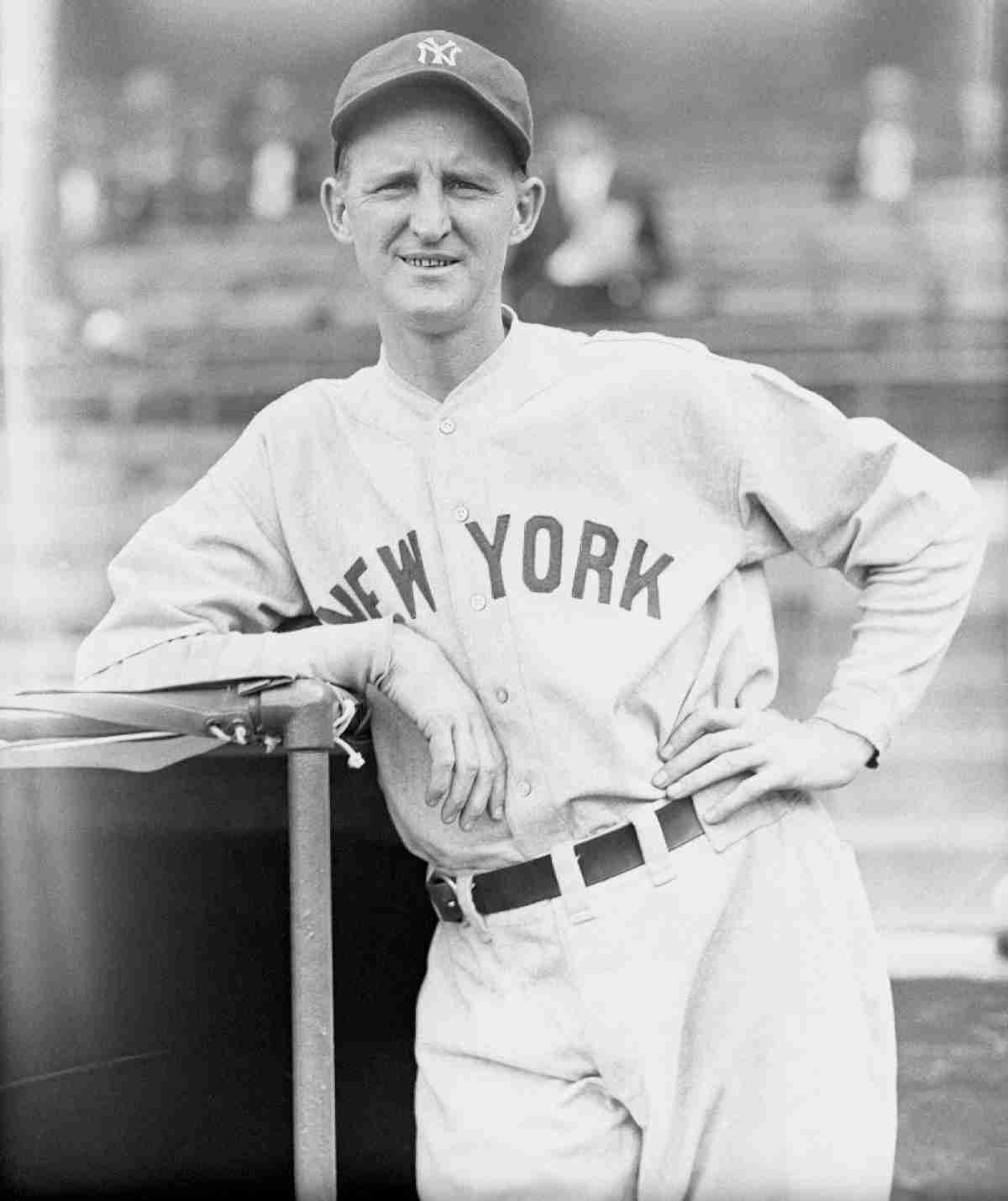
Miller Huggins once said that if his ace's head was cut open, "the weakness of every batter in the league would fall out," highlighting Herbert Jeffries Pennock's operational intelligence. While the 1920s Bronx were known for their power hitting, "The Knight of Kennett Square" was the smooth, elegant southpaw who stabilized the rotation. Acquired in January 1923 from Boston, the veteran left-hander had a graceful, refined delivery that made heavy workloads seem effortless.
Pennock demonstrated a masterclass in refined, strategic control. Instead of relying on overwhelming velocity to break down lineups, he utilized a diverse, deceptive speed repertoire and an exceptionally sharp curveball to keep hitters constantly off balance. His advanced visual perception enabled him to consistently target the very edges of the strike zone, leading the American League in WHIP twice and ranking among the best in fewest walks per nine innings three times. This careful efficiency resulted in two top-five finishes in American League MVP voting: third in 1924 with 21 wins and a tiny 2.83 ERA, and fourth in 1926 during a dominant 23-win season.
This exact regular-season performance set the stage for a remarkable and unparalleled big-game record. Pennock maintained an immaculate 5-0 record in his World Series career, displaying consistent calmness on baseball's biggest platform. In the historic 1927 "Murderers' Row" Fall Classic, he delivered a pitching masterclass in Game 3 against the Pittsburgh Pirates, nearly pitching a perfect game into the eighth inning before completing a game of just three hits. He was a key pillar on four different Yankees championship teams (1923, 1927, 1928, and 1932), providing a steady pitching presence that complemented Babe Ruth’s powerful, high-pressure role.
His arm gave out after an 11-year career in pinstripes, ending with a sentimental return to Boston before retiring in 1934. Pennock finished in the Bronx with a 162–90 record, a .643 winning percentage, a 3.54 ERA, and 165 complete games.
As a Yankee, Pennock gave the team 162 Wins against 90 Losses with a 3.54 ERA. He would enter the Baseball Hall of Fame in 1948, just months after he passed away from a cerebral hemorrhage
Comments powered by CComment